
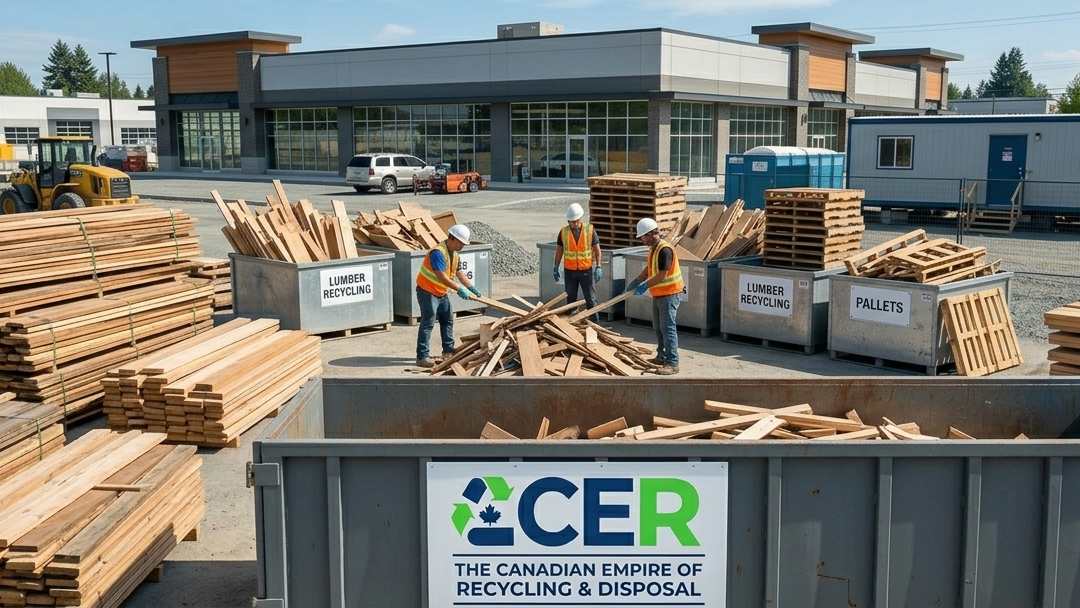
Quick Answer
Construction companies can significantly reduce waste by separating wood materials from general debris and sending them to appropriate recycling facilities. Wood recycling helps divert reusable materials from landfills, lowers disposal costs, supports sustainability goals, and contributes to a cleaner construction industry in Surrey.
Why Wood Waste Is a Growing Concern in Construction
Construction and demolition projects generate large amounts of waste every year. While concrete, metal, and drywall often receive attention during cleanup, wood remains one of the most commonly discarded materials on job sites.
From framing lumber and pallets to plywood and offcuts, a considerable portion of construction debris can often be recovered, reused, or recycled instead of being sent directly to a landfill.
As environmental regulations and sustainability expectations continue to evolve, many contractors are looking for smarter ways to manage project waste.
What Is Wood Recycling?
Wood recycling involves collecting, sorting, and processing wood materials so they can be reused or transformed into new products.
Common recyclable wood materials include:
- Untreated lumber
- Pallets
- Wooden crates
- Timber offcuts
- Plywood
- Framing materials
- Packaging wood
Instead of occupying valuable landfill space, these materials can often be repurposed for manufacturing, landscaping products, biomass fuel, and other applications.
How Construction Companies Can Reduce Waste Through Wood Recycling
1. Separate Wood Materials at the Job Site
One of the simplest ways to improve waste management is to separate wood from mixed construction debris.
When recyclable wood is kept separate, contamination is reduced, and more material can be diverted from disposal facilities.
Dedicated bins and clear labeling can help workers sort materials efficiently throughout the project.
2. Plan Waste Management Before Construction Begins
Waste reduction starts during project planning.
Construction companies that establish recycling procedures before work begins are often more successful at minimizing landfill waste.
A waste management plan should identify:
- Expected material volumes
- Recycling opportunities
- Collection methods
- Disposal requirements
- Site responsibilities
This proactive approach helps improve efficiency and reduce unnecessary waste.
3. Reuse Materials Whenever Possible
Not all wood waste needs to be recycled immediately.
Usable lumber, pallets, and timber can often be reused on future projects or repurposed for temporary site applications.
Reusing materials extends their lifecycle and reduces the need for new resources.
4. Train Workers on Proper Waste Sorting
Even the best recycling program can fail without employee participation.
Construction crews should understand:
- Which materials can be recycled
- How materials should be separated
- Why contamination should be avoided
- Where designated recycling containers are located
Regular training can improve recycling rates and support project sustainability goals.
5. Partner With Professional Recycling Providers
Working with experienced waste management professionals can simplify recycling efforts.
Companies that specialize in Wood Recycling Surrey services can help contractors identify recyclable materials, provide suitable collection containers, and ensure waste is handled responsibly.
Professional support often improves recovery rates while helping projects remain organized and compliant.
Environmental Benefits of Wood Recycling
Conserves Natural Resources
Recycling usable wood reduces demand for newly harvested timber and helps preserve forests for future generations.
Reduces Landfill Waste
Construction projects can generate substantial volumes of debris. Recycling helps divert recoverable materials away from disposal sites.
Lowers Greenhouse Gas Emissions
When wood decomposes in landfills, it can contribute to greenhouse gas emissions. Recycling helps reduce this environmental impact.
Supports Sustainable Construction Practices
Many clients and municipalities increasingly value environmentally responsible building practices. Recycling programs can help construction companies meet sustainability objectives.
Financial Benefits for Construction Companies
Wood recycling is not only beneficial for the environment—it can also improve project economics.
Potential advantages include:
- Lower disposal costs
- Reduced landfill fees
- Improved site organization
- Better resource utilization
- Enhanced company reputation
For many contractors, recycling programs become a practical business strategy rather than simply an environmental initiative.
The Role of Commercial Waste Recycling in Surrey
Many construction companies are expanding their sustainability efforts by incorporating broader recycling programs.
Effective Commercial Waste Recycling Surrey solutions can help businesses recover valuable materials while reducing the amount of waste requiring disposal.
By integrating recycling into daily operations, contractors can create more efficient and environmentally responsible job sites.
Managing Construction Debris More Effectively
Construction waste often consists of multiple recyclable materials, including wood, metal, cardboard, and concrete.
Combining recycling initiatives with professional construction waste recycling Surrey helps ensure projects remain clean, safe, and productive while maximizing material recovery opportunities.
Why Surrey Construction Companies Are Embracing Recycling
As environmental awareness grows, more contractors are recognizing the value of diverting reusable materials from landfills.
Wood recycling offers a practical way to reduce waste, improve sustainability performance, and support responsible construction practices. Whether working on residential developments, commercial buildings, or renovation projects, recycling programs can create long-term benefits for businesses and the community alike.
Looking for Professional Recycling Solutions?
If your construction project requires reliable waste management and recycling support, Canadian Empire Recycling & Disposal provides customized solutions for contractors, developers, and commercial property owners throughout Surrey and surrounding areas. Their team helps businesses improve material recovery while maintaining efficient site operations.
Contact Canadian Empire Recycling & Disposal
For expert assistance with wood recycling, construction debris management, and sustainable waste solutions, contact Canadian Empire Recycling & Disposal today to discuss your project requirements and discover how professional recycling services can help reduce waste and improve efficiency.
Frequently Asked Questions
Why should construction companies recycle wood waste?
Wood recycling reduces landfill waste, conserves natural resources, lowers disposal costs, and supports sustainable building practices.
Can wood recycling help reduce project costs?
Yes. Diverting recyclable materials may reduce landfill fees and improve overall waste management efficiency.
Is recycled wood reused for new products?
In many cases, recycled wood can be processed into mulch, biomass fuel, composite products, landscaping materials, and other applications.
How can contractors improve recycling rates on job sites?
Implementing waste management plans, separating materials, training workers, and partnering with professional recycling providers can significantly improve recycling performance.