Hazardous waste disposal is the safe collection, transportation, and disposal of regulated materials that can harm people or the environment, while regular commercial waste is non-regulated trash suitable for a standard dumpster. Businesses in Surrey that mix the two risk fines and disposal delays — proper separation and a licensed disposal partner keep operations compliant with British Columbia’s Hazardous Waste Regulation.
For business owners, property managers, and contractors across Surrey, knowing the line between these waste streams is a compliance requirement with real financial and environmental consequences.
What Is Hazardous Waste?
Hazardous waste is any material that is corrosive, ignitable, reactive, toxic, or infectious enough to pose a risk to human health or the environment if not handled, stored, and disposed of correctly. Under BC’s Environmental Management Act and Hazardous Waste Regulation, businesses generating this material are legally classified as “waste generators” and must manage it under provincial rules, from registration through final disposal. It falls into two broad categories:
- Acute hazards — materials that cause immediate harm, such as corrosive acids, ignitable solvents, or reactive chemicals.
- Chronic hazards — materials that cause harm gradually over repeated or long-term exposure, such as heavy-metal sludges or certain pesticides.
What Is Regular Commercial Waste?
Regular commercial waste covers the non-hazardous byproducts of everyday operations — packaging, food waste, paper, and construction debris that hasn’t been contaminated by regulated substances. It’s the material that can legally go into a standard dumpster or be diverted through commercial and industrial waste recycling streams like cardboard, plastic, or metal.
Key Differences Between the Two
| Factor | Regular Commercial Waste | Hazardous Waste |
|---|---|---|
| Regulatory oversight | Municipal waste bylaws | BC Hazardous Waste Regulation |
| Disposal method | Standard dumpster or recycling bin | Licensed collection, transport, and treatment |
| Documentation | None typically required | Manifests and generator registration may apply |
| Risk if mishandled | Minor (odour, overflow) | Fines, contamination, environmental harm |
| Example materials | Cardboard, food scraps, office paper | Solvents, batteries, asbestos, waste oil |
Common Hazardous Waste Found in Businesses
Most Surrey businesses generate at least one category without necessarily thinking of it that way:
- Paints, lacquers, and coatings from renovations or manufacturing
- Solvents and degreasers from automotive shops and cleaning operations
- Chemical waste from labs, industrial processes, or maintenance
- Batteries, including lithium and lead-acid types
- Waste oils — hydraulic, motor, and engine oil
- Contaminated materials — asbestos-containing drywall, insulation, or flooring
Small quantities are regulated the same as large industrial volumes — no minimum threshold exempts proper handling.
Can Hazardous Waste Go in a Commercial Dumpster?
No. Placing hazardous materials in a regular commercial dumpster is illegal under BC waste regulations and can lead to fines, rejected loads, and liability if material leaks or harms waste workers. Landfills aren’t licensed to accept regulated hazardous materials, and mixing them with general waste can force an entire bin to be reclassified at the business’s expense.
Risks of Improper Disposal
Improper storage of hazardous waste is one of the most common compliance issues identified during environmental inspections in BC. The risks extend well beyond a fine: regulatory penalties, site contamination requiring costly remediation, safety hazards from corrosive or reactive materials, and liability exposure if waste is traced back through a hauler’s manifest.
How Businesses Can Identify and Separate Hazardous Materials
A simple internal process prevents most contamination issues:
- Train staff to recognize hazard symbols on labels.
- Keep materials in original, labelled containers whenever possible.
- Designate a separate storage area with secondary containment for liquids.
- Never combine different chemical waste streams — mixing can create dangerous reactions.
- Review Safety Data Sheets (SDS) where hazard status is unclear.
Safe Storage Before Pickup
Store hazardous materials in closed, compatible containers away from heat and direct sunlight, ideally on a secondary containment tray. Keep incompatible materials — acids and bases, oxidizers and flammables — physically separated, and schedule pickup before storage volumes become a compliance or space concern.
When Should a Business Schedule Hazardous Waste Pickup?
Arrange pickup as soon as hazardous materials start accumulating beyond immediate needs — waiting until storage space runs out increases risk and regulatory exposure. Businesses generating waste regularly, such as automotive shops, manufacturers, and labs, typically benefit from a recurring schedule rather than one-off calls. Renovation and demolition projects involving asbestos should schedule disposal before work begins to avoid site delays.
How Professional Hazardous Waste Disposal Works
Licensed providers assess and classify materials, package them compliantly, transport them with a certified carrier, and treat, recycle, or dispose of them at an approved facility, with documentation maintained throughout. Commercial hazardous waste disposal Surrey services typically include scheduled or on-demand pickup.
Where Can Businesses Dispose of Hazardous Waste in Surrey?
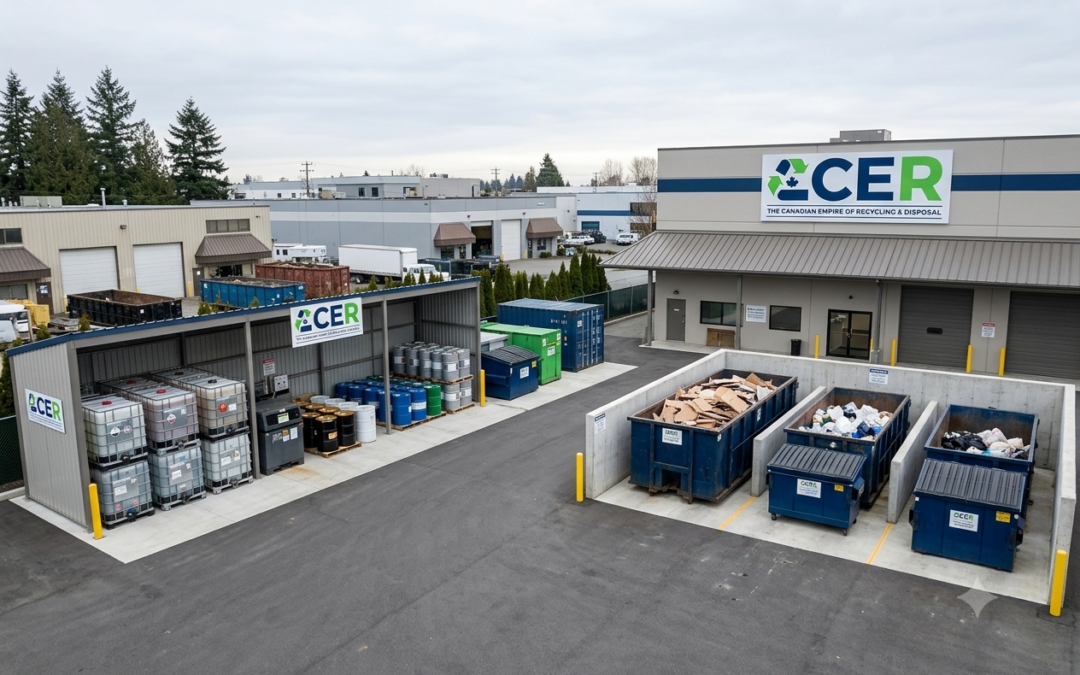
Surrey businesses can arrange pickup directly from a licensed provider, or drop materials at a dedicated hazardous waste depot. Canadian Empire Recycling operates a drop-off location in Surrey for businesses that prefer to bring materials in directly.
Recycling and Responsible Disposal Options
Not all hazardous materials are simply destroyed — many are recycled. Waste oil can be re-refined, batteries processed for metal recovery, and solvents sometimes reclaimed. For non-hazardous streams, plastic recycling and metal recycling help divert material from landfill.
Practical Commercial Waste Separation Checklist
- Identify hazardous materials generated on-site
- Label and store hazardous waste separately
- Train staff on hazard recognition
- Never place chemicals, batteries, oils, or asbestos in a regular dumpster
- Set a pickup schedule based on volume
- Keep disposal documentation on file
- Partner with a licensed provider
Why Surrey Businesses Should Use a Professional Provider
Regulatory requirements and disposal logistics are easier to manage with an experienced partner than in-house. A licensed provider reduces liability, keeps documentation audit-ready, and handles materials according to BC law — freeing owners and managers to focus on operations, not compliance research.
If your business or job site has accumulated chemicals, solvents, batteries, waste oil, or asbestos-containing material, don’t risk placing it in a regular dumpster. Canadian Empire Recycling provides licensed hazardous waste disposal Surrey businesses rely on, including commercial hazardous waste pickup and drop-off depot access. Request a Waste Pickup →
Frequently Asked Questions
What is the difference between hazardous and regular commercial waste?
Regular commercial waste is non-regulated material like cardboard and food scraps. Hazardous waste is regulated under BC's Hazardous Waste Regulation and requires licensed collection, transport, and disposal.
Can hazardous waste go in a commercial dumpster?
No. It's illegal in BC, and doing so can result in fines and rejected waste loads.
How should businesses store hazardous waste?
In closed, labelled, compatible containers, away from heat and incompatible materials, ideally with secondary containment, until a licensed provider collects it.
When should a business schedule hazardous waste pickup?
As soon as materials start accumulating beyond immediate needs, regular generators should set up a recurring schedule rather than waiting.