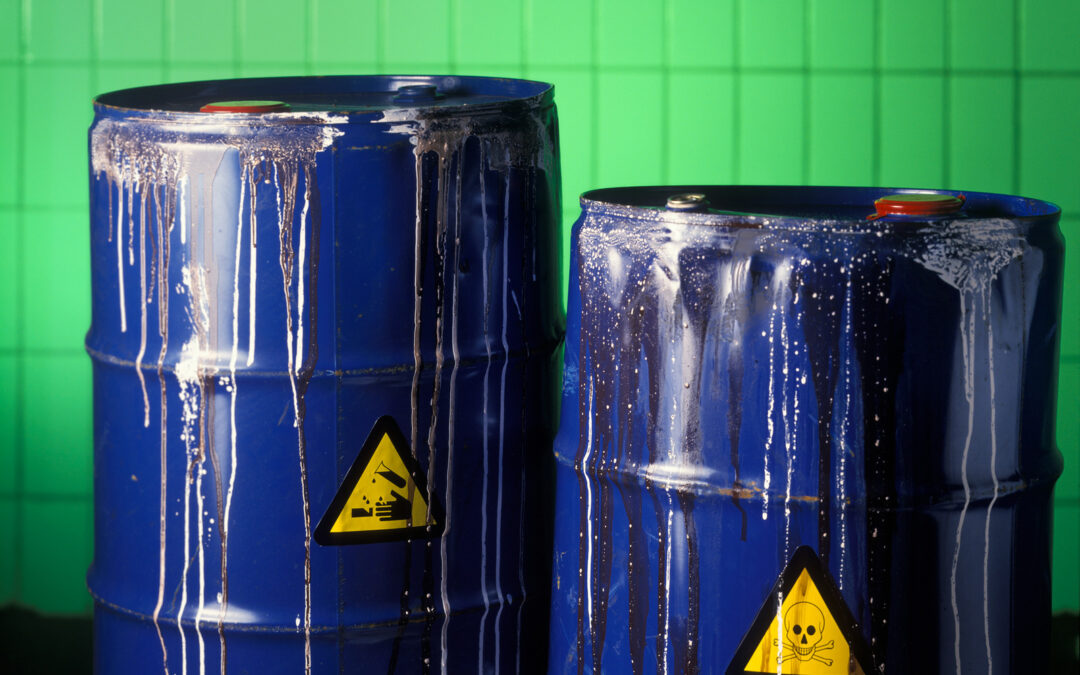
Quick answer: Some commercial chemicals cannot go out with regular garbage because their properties can create risks during storage, collection, transportation, processing, or disposal. A chemical that is no longer being used may become regulated hazardous waste depending on its characteristics and classification. In Surrey, businesses need to identify chemical waste correctly and use an appropriate waste-management route rather than assuming it belongs in a regular garbage stream.
For a business cleaning out a workshop, warehouse, office, construction site, retail space, or industrial property, this distinction matters. A few forgotten containers in a storage room may look like ordinary unwanted products, but their contents can create very different disposal requirements.
Why Regular Garbage Is Not the Right Stream for Every Chemical
Regular garbage systems are designed for general waste—not every substance a business may have accumulated over time.
Commercial chemicals can present different hazards, including:
- Flammability
- Corrosiveness
- Toxicity
- Reactivity
- Environmental contamination
- Harmful vapours or exposure risks
- Dangerous reactions when incompatible materials are mixed
The problem becomes even more complicated when a container is damaged, poorly labelled, expired, or partially full.
Under B.C.’s Hazardous Waste Regulation, certain dangerous goods that are no longer being used for their original purpose and meet specified federal dangerous-goods criteria can fall within the definition of hazardous waste. The definition also includes categories such as waste oil, waste asbestos, certain pesticide-related waste, and other listed wastes.
That means “it’s just a chemical we don’t need anymore” isn’t enough to determine how it should be handled.
What Happens When a Chemical Enters the Regular Waste Stream?
The risk does not end when a business puts a container in a garbage bin.
Once waste leaves a commercial property, it may be compacted, transferred, transported, sorted, processed, or otherwise handled. A chemical container that leaks, breaks, reacts with another material, or releases vapours can create a problem far beyond the original storage area.
For businesses, that can mean:
- Worker exposure
- Spills during collection or transportation
- Damage to equipment
- Chemical reactions with other waste
- Contamination of surrounding materials
- Environmental concerns
- Additional cleanup requirements
This is one reason chemical waste disposal Surrey should be assessed before it is placed into a general waste container.
Which Commercial Chemicals May Need Special Handling?
The answer depends on the actual product, its condition, quantity, classification, and how it is being managed.
A Surrey business might encounter materials such as:
- Solvents and degreasers
- Industrial cleaners
- Paint-related chemicals
- Adhesives and chemical products
- Fuels and certain petroleum products
- Pesticides and pesticide-related containers
- Laboratory chemicals
- Corrosive products
- Reactive or oxidizing substances
- Waste oils
- Unknown chemicals left by a previous tenant
Not every product in these categories automatically follows the same disposal route. Identification comes first.
This is particularly important when a business has several different products that have accumulated over years.
What If You Don’t Know What the Chemical Is?
Unknown chemicals are one of the situations where guessing can create unnecessary risk.
A container without a readable label should not automatically be treated as harmless simply because it has been sitting untouched for years.
Instead, businesses should look for available information such as:
- Original product labels
- Safety Data Sheets (SDS)
- Product names or manufacturer information
- Container markings
- Previous purchasing records
- Storage records
- Information from the previous tenant or property manager
If the material still cannot be identified, avoid opening, mixing, transferring, or experimenting with it.
The goal is to determine what the material is and what waste stream applies to it before moving it into a regular garbage system.
Don’t Mix Chemicals Just to Make Cleanup Easier
One of the biggest mistakes during a commercial cleanup is treating different liquids as if they are interchangeable.
They are not.
Two products that appear similar may have completely different chemical properties. Combining unknown or incompatible materials can create heat, vapours, pressure, or other dangerous reactions.
B.C.’s Hazardous Waste Regulation specifically prohibits mixing or diluting hazardous waste with solid or liquid materials, including waste and water, when the action falls within the regulation’s prohibited practices.
So if your Surrey business has several containers of unwanted chemicals, keep them separated until their proper handling requirements are established.
What About Old or Expired Chemicals?
Age alone does not tell you whether a chemical is hazardous waste.
A product that has been sitting on a shelf for five years is not automatically hazardous simply because it is old. At the same time, a business should not assume an old chemical is safe to discard with ordinary garbage.
The important questions are:
- What is the product?
- Is it still being used for its original purpose?
- What hazards does it present?
- Is the container intact?
- Is the material contaminated or degraded?
- How much is present?
- What disposal or recycling route applies?
This is especially relevant during business closures, warehouse cleanouts, renovations, tenant turnovers, and facility relocations.
A Previous Tenant Left Chemicals Behind. Who Should Deal With Them?
This situation is more common than many property owners expect.
A new tenant may discover containers of paint products, solvents, cleaners, oils, or other chemicals that were left in a storage room or service area.
The first step should be identification—not disposal.
Before moving the materials into a general garbage bin, determine what they are and whether they require specialized handling. Keeping an inventory and documenting the condition of the containers can also make the cleanup process easier to manage.
If the contents are unknown, damaged, leaking, or potentially hazardous, avoid opening or combining them while trying to identify them.
How Should a Surrey Business Prepare Commercial Chemical Waste?
A little preparation can make a chemical-waste cleanup much safer and more efficient.
1. Separate chemical products from ordinary waste
Do not put questionable chemical containers into a general garbage pile simply because the business is already cleaning out the property.
2. Keep containers closed and intact
Unless there is a safety reason requiring emergency action, avoid opening containers to inspect their contents.
3. Gather product information
Labels, SDS documents, purchase records, and manufacturer information can help determine the appropriate waste stream.
4. Make an inventory
Record what you have, approximately how much is present, and whether the containers appear damaged or compromised.
5. Get the waste route confirmed
If a material may qualify as hazardous waste, determine the appropriate handling, transportation, recycling, treatment, or disposal option before arranging removal.
This approach is much better than putting everything into one bin and trying to sort it out later.
Why Commercial Chemical Disposal Needs More Planning Than Regular Garbage
For a Surrey business, chemical cleanup is not simply about getting unwanted containers off the property.
The waste needs to be managed according to what it actually is.
B.C.’s regulatory framework includes requirements around hazardous-waste facilities, storage, handling, transportation, registration, and other management activities. The current regulation was amended in July 2026, so businesses should rely on current requirements rather than an old disposal practice they may have used years ago.
That is particularly important for businesses that generate chemical waste regularly rather than dealing with a one-time cleanup.
Commercial Hazardous Waste Disposal in Surrey: What Should Businesses Do?
If your business has unwanted chemicals, start by identifying the materials and separating them from regular garbage.
Don’t pour chemicals down a drain, mix different products together, transfer unknown liquids into another container, or place questionable chemical waste into a general commercial bin simply to finish the cleanup faster.
The right disposal route depends on the material.
For businesses looking for commercial Hazardous Waste Disposal, the practical starting point is to assess what chemicals are present, how they are packaged, and what type of waste they represent.
For Hazardous Waste Disposal Surrey, proper identification and handling help reduce the risk of unsafe storage, accidental mixing, spills, and inappropriate disposal.
And when a business is managing a broader property cleanout, Commercial Waste Disposal Surrey may involve several different waste streams that should be separated rather than combined.
Some commercial chemicals cannot go out with regular waste because their hazards do not disappear simply because a business no longer needs them.
The safest approach is straightforward: identify the material, keep incompatible products separated, protect the containers, and determine the correct waste-management route before disposal.
That can prevent a simple commercial cleanup from turning into a chemical spill, worker-safety issue, or environmental problem.
Need Help With Commercial Chemical Waste in Surrey?
Contact Canadian Empire Recycling & Disposal to discuss unwanted chemicals and other commercial waste from your Surrey business. The team can help you determine the appropriate waste-management solution for the materials you need to remove.
Frequently Asked Questions
What should a business do with unknown chemicals in Surrey?
Keep the container closed and separated from ordinary waste, and gather any available label, SDS, or product information. Do not mix, open, or transfer an unknown chemical simply to identify it. Professional assessment may be appropriate when the material cannot be identified safely.
Are expired commercial chemicals automatically hazardous waste?
No. Expiration alone does not determine whether a product meets the definition of hazardous waste. The product's characteristics, intended use, condition, and applicable regulatory criteria need to be considered.
Can different commercial chemicals be combined for disposal?
Businesses should not combine chemicals simply to reduce the number of containers. Incompatible materials can react or create additional hazards, and B.C.'s Hazardous Waste Regulation contains restrictions on mixing and dilution of hazardous waste.
Why is commercial chemical waste different from ordinary business garbage?
Chemical waste can present hazards that ordinary garbage does not, including fire, exposure, chemical reactions, leaks, and environmental contamination. Its disposal route therefore depends on the material rather than simply on the fact that a business no longer wants it.