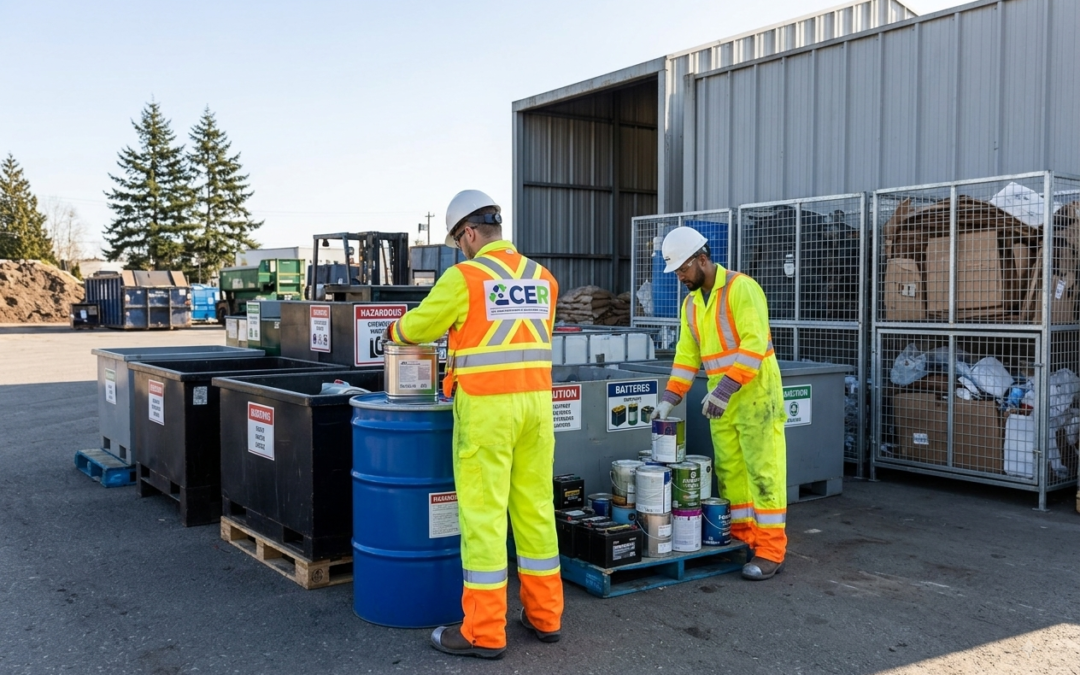
Identifying hazardous waste means checking whether a material is flammable, corrosive, toxic, or reactive — the four characteristics that determine handling and disposal requirements under British Columbia’s Hazardous Waste Regulation. Businesses that separate these materials from regular recyclables and garbage from the start avoid contamination, safety risks, and non-compliance during pickup.
For Surrey businesses—auto shops, contractors, warehouses, property managers, and manufacturers alike—the challenge usually isn’t knowing that hazardous waste exists. It’s knowing which materials on-site actually qualify, and building a habit of separating them before they end up mixed into a general waste bin. This guide covers both.
What Makes Waste Hazardous?
Hazardous waste is any material whose physical or chemical characteristics pose a significant risk to people, property, or the environment. Regulators define this using four core characteristics:
- Flammability — materials that ignite easily under normal conditions (solvents, gasoline, aerosols)
- Corrosiveness — materials that can burn skin or destroy other materials on contact (acids, strong cleaning chemicals)
- Toxicity — materials harmful if inhaled, ingested, or absorbed (certain paints, pesticides, chemical cleaners)
- Reactivity — materials that react dangerously with air, water, or other chemicals
Common examples on a commercial property include chemical cleaners, solvents, used oils, certain paints, pesticides, batteries, and fluorescent lamps. A key point businesses often miss: a product’s original purpose doesn’t determine how it must be handled once it becomes waste. A cleaning solvent that was perfectly safe to use in a workshop still needs specialized handling the moment it’s discarded — the hazard classification follows the material, not its intended use.
For full-service pickup, transport, and disposal of these materials, see our hazardous waste disposal services in Surrey.
Why Surrey Businesses Need to Separate Hazardous Materials
Commercial waste in Surrey comes in a wide range of forms — auto shops generate used oil and automotive fluids, contractors accumulate paints and solvents, and warehouses regularly turn up old chemical containers during cleanouts. When these materials aren’t separated from general waste, three problems follow:
- Handler safety risk. Workers and waste handlers may not know a container is hazardous. A leaking or unlabeled container can expose people to harm or contaminate everything else in the same load.
- Contaminated recycling streams. Hazardous residue can ruin an entire batch of otherwise recoverable material — cardboard, wood, or plastics that touch a leaking chemical container are no longer recyclable.
- Environmental and regulatory risk. Improper disposal can contaminate soil or water well beyond the original disposal site, and it’s one of the most common issues found during environmental compliance inspections in BC.
Getting ahead of this starts with identification and segregation — not sorting everything out after it’s already mixed into one bin. For businesses that need routine or one-time pickup once materials are separated, our commercial hazardous waste pickup service is built around exactly this kind of mixed-material site.
Commercial Waste Recycling Can Reduce What You Send to Disposal
Not everything removed from a commercial property during a cleanout is garbage. Recyclable materials — cardboard, metals, plastics, electronics, wood — can often be recovered alongside whatever hazardous waste needs specialized handling. This matters most during larger jobs: a commercial cleanout, renovation, warehouse reorganization, or business closure, all of which tend to generate a mix of recyclable and hazardous material at once.
A practical process for these situations:
- Identify all waste generated by the job
- Separate hazardous materials from general waste immediately
- Sort recyclables by type (cardboard, metal, plastic, electronics)
- Inspect containers for leaks or damage before moving them
- Keep incompatible chemicals physically apart from each other
- Arrange specialized handling for anything that doesn’t fit standard recycling or garbage streams
Following this order keeps the waste stream controlled and reduces what ultimately goes to landfill. For a closer look at recovering recyclable material during a larger cleanout, see our commercial and industrial waste recycling services.
The Hidden Hazard of Old Chemical Containers
Cleanouts of garages, warehouses, maintenance rooms, and storage areas often turn up unlabeled containers of unknown origin. These can look harmless but shouldn’t be treated as ordinary garbage without knowing what’s inside — deterioration over time (damaged lids, rusted metal, cracked plastic, leaking packaging) increases the risk of exposure or contamination the longer a container sits.
Do not open an unknown container simply to determine what’s inside. Keep people away from it, and arrange for a professional assessment. If a container appears to be actively leaking or otherwise immediately dangerous, treat it as an emergency and take additional precautions before anyone approaches it.
How Businesses Can Prepare for Hazardous Waste Removal
A bit of preparation makes a cleanout safer and more efficient for everyone involved:
1. Create an inventory. Identify chemicals, paints, oils, batteries, solvents, and other hazardous products on-site before a major cleanout begins.
2. Keep materials separated. Don’t combine unknown chemicals just because they’re broadly “chemical waste” — different substances can react dangerously with each other.
3. Protect containers. Keep materials in their original containers where possible, and avoid unnecessary handling or transferring between containers.
4. Identify labels and safety information. Use product labels, Safety Data Sheets (SDS), and purchase records to determine what a material is and how it needs to be handled.
5. Separate recyclables. Keep cardboard, metals, plastics, and other recoverable materials apart from anything hazardous.
6. Use appropriate waste services. For larger commercial quantities or specialized materials, use a qualified waste management provider rather than regular garbage collection — see our industrial hazardous waste service for larger-scale jobs.
Why Mixing Hazardous and Recyclable Waste Is a Bad Idea
A common mistake is assuming sorting can happen later, once everything is already in one pile. Once hazardous substances leak into cardboard, wood, plastics, or soil, those materials become contaminated and are no longer recyclable. It’s far more effective to set up separate waste streams from the start — for example, during a warehouse cleanout, designate distinct areas for recyclable cardboard, scrap metal, general commercial waste, electronics, and hazardous-handling materials before work begins.
When Should a Business Consider Professional Help?
Professional assistance is worth arranging when a business encounters:
- Large quantities of chemicals or hazardous materials
- Unidentified or unlabeled containers
- Contaminated materials mixed with general waste
- Anything employees can’t safely identify or handle themselves
This tends to come up during warehouse cleanouts, commercial property renovations, business closures, industrial facility cleanups, shop or garage cleanouts, property redevelopment, and long-term storage cleanouts. The earlier hazardous materials are identified, the more disposal options remain — waiting until they’re already mixed into general waste limits how they can be managed. For smaller quantities, businesses can also use our Surrey hazardous waste drop-off depot instead of arranging a full pickup.
Managing Hazardous Waste at Home
This guide is built for businesses, but many of the same materials — paints, solvents, pesticides, automotive fluids, batteries — show up in household cleanouts too. If you’re managing hazardous waste at home rather than at a business, see our guide to residential hazardous waste disposal for household-specific drop-off and pickup options.
A Safer Waste Strategy for Surrey Businesses
Effective waste management goes beyond simply removing material from a property — it’s about understanding what you have, separating it appropriately, recovering what can be recycled, and giving hazardous products the handling they require under BC regulations. For full-service hazardous waste pickup, transport, and disposal that meets BC compliance requirements, see our hazardous waste disposal services in Surrey.
If your Surrey business has accumulated chemicals, contaminated materials, or waste you’re unsure how to handle, contact Canadian Empire Recycling & Disposal — we’ll help you sort out what needs specialized handling and what can be recovered.
Frequently Asked Questions
Can hazardous waste be placed in regular commercial garbage?
No. Hazardous materials shouldn't be placed in regular garbage without first assessing their characteristics and quantity. Mixing them into a general waste load risks contaminating recyclable materials, exposing waste handlers to harm, and can result in the entire load being rejected or the business facing compliance issues..
Can businesses recycle materials alongside hazardous waste?
Recyclable materials should generally be kept separate from hazardous waste. Once cardboard, metals, plastics, or other recoverable materials come into contact with a hazardous substance, they're typically no longer recyclable — separating waste streams from the start protects both worker safety and recycling outcomes.
When should a Surrey business arrange professional hazardous waste services?
Professional help is worth arranging when a business has significant quantities of chemicals, unidentified containers, leaking materials, contaminated waste, or anything employees can't safely identify or handle on their own — most often during cleanouts, renovations, closures, or facility reorganizations.
Where can Surrey businesses get hazardous waste picked up or dropped off?
Surrey businesses can arrange scheduled pickup through a licensed provider or bring smaller quantities directly to a hazardous waste drop-off depot. See our hazardous waste disposal services for pickup options or our drop-off depot page for accepted materials, fees, and hours.