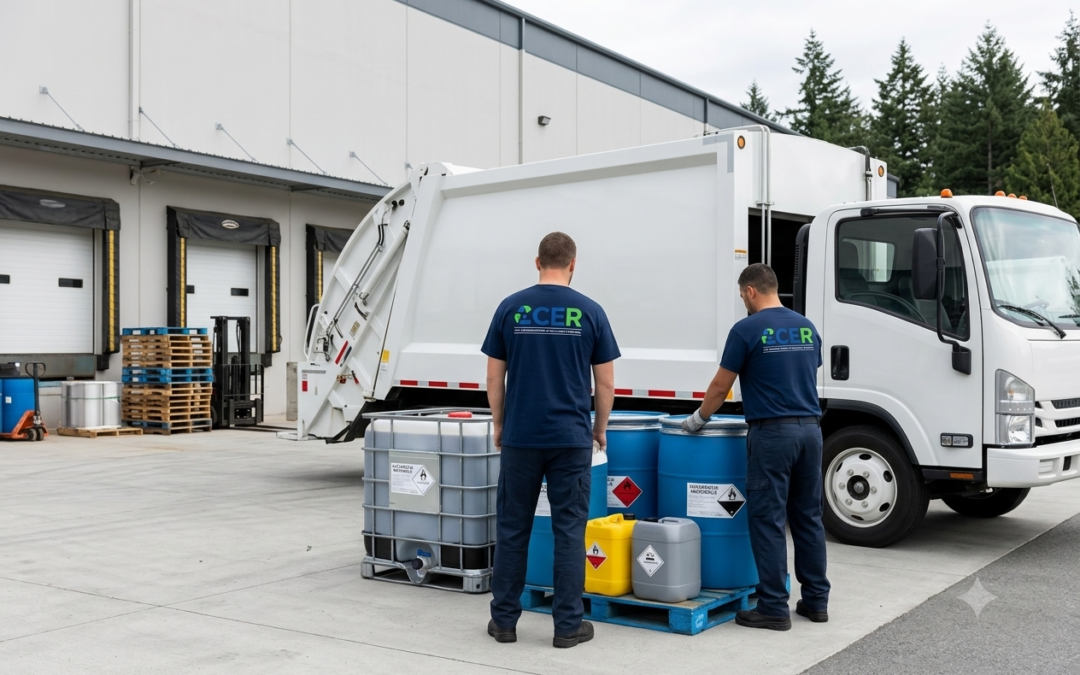
Businesses in Vancouver can generate many types of waste during normal operations, renovations, maintenance, manufacturing, and property cleanouts. While cardboard, packaging, general garbage, and many recyclable materials can follow standard waste streams, certain materials require much more careful handling.
Chemicals, oils, solvents, batteries, contaminated materials, and other potentially dangerous substances should never automatically be placed with ordinary commercial garbage. Before arranging a Hazardous Waste Drop Off Vancouver option, businesses should identify what they have, determine whether it is classified as hazardous, and confirm which facility or service is authorized to accept it.
This distinction is important because Vancouver’s regular waste facilities do not accept every type of hazardous material. The City of Vancouver advises businesses to use appropriate waste service providers and provides separate guidance for waste requiring special handling.
What Is Considered Hazardous Waste?
Hazardous waste is generally material that can pose a risk to people, property, or the environment if it is improperly stored, transported, treated, recycled, or disposed of.
Depending on the business and its operations, hazardous materials can include:
- Used oils and petroleum-based products
- Certain solvents and degreasers
- Chemical products
- Batteries
- Paint-related materials
- Contaminated absorbents
- Certain laboratory or industrial chemicals
- Some pesticides and other chemical products
- Materials containing hazardous substances
Not every material that appears dangerous is necessarily regulated in the same way. Classification can depend on its composition, concentration, quantity, source, and intended handling method.
British Columbia’s Hazardous Waste Regulation establishes requirements for the management of regulated hazardous waste, including provisions related to storage, treatment, recycling, and disposal.
Why Regular Garbage Disposal May Not Be Appropriate
One of the biggest mistakes businesses can make is treating hazardous materials like ordinary garbage.
A material that contains flammable, toxic, reactive, corrosive, or otherwise dangerous properties may require specific handling. Putting it into a general garbage load can create risks during collection, transportation, processing, or disposal.
The City of Vancouver states that certain dangerous goods and hazardous materials are not accepted at the Vancouver Landfill or Transfer Station. Businesses should therefore verify the appropriate disposal route before transporting these materials.
For current municipal guidance, businesses can review the City of Vancouver‘s official information on waste that needs special handling before deciding where a material should go.
What Materials May Require Special Handling?
Chemicals and Solvents
Commercial facilities may accumulate chemicals through cleaning, maintenance, manufacturing, automotive work, laboratories, or other operations.
Solvents and chemical products should be kept properly contained and identified rather than mixed with general waste. Some spent solvents are specifically identified within British Columbia’s hazardous waste classifications.
If containers are old, damaged, leaking, or poorly labelled, businesses should take additional precautions and seek professional guidance rather than attempting to combine their contents.
Used Oil and Automotive Fluids
Automotive shops, equipment operators, maintenance facilities, and industrial businesses may generate used oil, antifreeze, and related fluids.
These materials should be stored in appropriate containers and kept away from drains, ignition sources, and incompatible materials.
Depending on the source and quantity, different collection and handling requirements can apply. Businesses should confirm the appropriate route before arranging transportation.
Batteries
Commercial properties can accumulate batteries from vehicles, equipment, emergency systems, tools, and other operations.
Batteries should not simply be mixed with general garbage. Different battery types can have different handling requirements, particularly where damaged or leaking batteries are involved.
Paints and Chemical Products
Businesses involved in construction, renovation, property maintenance, manufacturing, and other activities may have leftover paints, coatings, cleaners, adhesives, or chemical products.
Before disposal, identify the product and check whether it falls under a regulated or special-handling category.
What Does Commercial Waste Recycling Have to Do With Hazardous Waste?
Hazardous waste management and recycling are not always completely separate concepts.
Some materials generated by businesses may have recycling or recovery opportunities, while others require specialized treatment or disposal.
This is why businesses should sort commercial waste before sending everything into one disposal stream.
For example, a commercial cleanup might contain:
- Cardboard
- Scrap metal
- Clean wood
- Plastics
- General garbage
- Batteries
- Chemical containers
- Used oils
The recyclable materials can potentially be directed toward appropriate recycling streams, while hazardous materials should be separated and handled according to their specific requirements.
A well-planned Commercial Waste Recycling Vancouver strategy can therefore reduce unnecessary disposal while making it easier to identify materials requiring special handling.
Why Businesses Should Separate Hazardous Materials Before Removal
Sorting waste at the source makes the entire process easier.
When hazardous and non-hazardous materials are mixed together, identifying the contents can become more difficult and potentially create additional handling concerns.
A basic commercial waste sorting system can include separate areas for:
- General garbage
- Recyclable materials
- Scrap metal
- Wood and construction materials
- Organic materials
- Hazardous or special-handling materials
Hazardous materials should remain properly contained and clearly identified according to applicable requirements.
The goal is to prevent accidental mixing while giving waste handlers enough information to determine the appropriate next step.
Is a Hazardous Waste Drop-Off Location the Same as a Regular Landfill?
No.
A regular landfill or transfer station does not necessarily accept every hazardous material. In Vancouver, the City specifically identifies hazardous waste among materials that are not accepted through standard landfill operations, except for certain approved materials and circumstances.
This is why searching for a Hazardous Waste Disposal Vancouver option should not simply mean finding the nearest landfill.
Businesses should first determine:
- What material they have
- Whether it is hazardous
- How much material they have
- Whether it is liquid, solid, or another form
- How it is packaged
- Whether the receiving facility accepts commercial sources
- Whether transportation requirements apply
These details can affect which disposal or recycling route is appropriate.
Commercial Waste Requires Additional Planning
Businesses can generate considerably larger quantities of waste than households. A commercial property may have drums, containers, multiple waste streams, or accumulated materials from months of operations.
British Columbia’s hazardous waste rules include requirements concerning hazardous waste generators and facilities, depending on the type and quantity of waste being managed.
For this reason, businesses should avoid assuming that a residential drop-off option automatically applies to commercial waste.
The receiving facility or waste service provider should be contacted in advance when there is uncertainty about acceptance requirements.
How to Prepare Hazardous Waste for Professional Handling
Preparation should focus on identification, containment, separation, and communication.
1. Identify the Material
Check product labels, safety information, container markings, and business records where available.
2. Keep Materials Separate
Do not mix chemicals or combine unknown substances. British Columbia’s Hazardous Waste Regulation prohibits mixing or diluting hazardous waste in circumstances covered by the regulation.
3. Use Appropriate Containers
Keep waste in suitable, secure containers that are compatible with the material. Leaking or damaged containers require particular attention.
4. Record Important Information
For commercial waste, it can be useful to document the material type, approximate quantity, source, and condition before contacting a waste provider.
5. Confirm Acceptance Before Transport
Do not assume that a facility accepts a particular hazardous material simply because it accepts other commercial waste. Confirm the requirements before arranging transportation or drop-off.
What Should Businesses Do With Unknown Chemicals?
Unknown chemicals require extra caution.
If a business discovers an unlabelled container during a warehouse cleanout, renovation, or property purchase, employees should not open it, mix it, smell it, or pour it into another container simply to determine what it is.
Instead, isolate the material from normal waste handling where safe to do so and seek professional guidance about identification and disposal.
This is especially important when the container is damaged, leaking, pressurized, or showing signs of deterioration.
How Professional Waste Services Can Help
Businesses do not always have the equipment, training, storage capacity, or transportation resources needed to manage specialized waste themselves.
A professional waste service can help businesses understand the material they have, determine the appropriate handling process, separate recyclable materials from waste requiring special treatment, and coordinate removal where applicable.
This can be particularly useful during:
- Warehouse cleanouts
- Commercial renovations
- Industrial property closures
- Automotive shop cleanouts
- Construction projects
- Facility maintenance
- Business relocations
- Large-scale property cleanups
Professional planning can also reduce the risk of sending restricted materials into a standard commercial garbage stream.
Don’t Assume Every Hazardous Material Goes to the Same Place
Another common misconception is that there is one universal drop-off location for every type of hazardous waste.
In reality, acceptance can vary by material, quantity, source, and facility.
Some return collection facilities may accept moderate-risk waste from commercial sources, while the regulations distinguish between residential, commercial, institutional, and industrial sources in certain circumstances.
This means businesses should verify the specific requirements for their waste rather than relying on general assumptions.
A Smarter Approach to Commercial Waste Management
Hazardous waste should be treated as part of a broader commercial waste management strategy rather than as an isolated problem.
When businesses establish separate waste streams, they can make recycling easier and reduce the possibility of hazardous materials entering ordinary garbage.
For example, a warehouse cleanup could separate cardboard, scrap metal, clean wood, general waste, and hazardous materials before removal. This makes it easier to determine which materials can be recycled and which require specialized handling.
That approach supports more effective Commercial Waste practices while helping businesses manage special-handling materials responsibly.
Finding the right Hazardous Waste Drop Off option starts with understanding what material you have and whether it requires special handling. Chemicals, oils, batteries, solvents, contaminated materials, and other hazardous substances should not automatically be placed into ordinary commercial garbage.
Businesses should identify and separate these materials, use appropriate containers, verify acceptance requirements, and arrange a suitable disposal or recycling route. Vancouver’s municipal guidance and British Columbia’s hazardous waste regulations are useful starting points when determining the appropriate handling process.
If your business needs help managing hazardous materials, recyclable commercial waste, or a larger property cleanup, Canadian Empire Recycling & Disposal can help you determine a practical waste management solution. Contact Canadian Empire Recycling & Disposal to discuss your commercial waste recycling and hazardous waste disposal requirements in Vancouver.
Frequently Asked Questions
Can hazardous waste be placed in regular commercial garbage?
Generally, businesses should not place materials requiring special handling into ordinary commercial garbage. The City of Vancouver identifies hazardous waste and certain dangerous goods as materials that are not accepted through standard landfill or transfer-station routes.
What are examples of commercial hazardous waste?
Examples can include certain chemicals, solvents, used oils, batteries, contaminated materials, and other substances that meet applicable hazardous waste criteria. The exact classification depends on the material and its properties.
Can hazardous materials be recycled?
Some hazardous materials or their components may be recovered or recycled through authorized processes. However, recycling does not mean that hazardous waste can be placed into a regular recycling bin. Appropriate facilities and handling procedures must be used.
What should a business do with an unknown chemical container?
Do not open, mix, pour, or experiment with an unknown chemical. Keep it separated from ordinary waste where it can be done safely and seek professional guidance to identify the material and determine the appropriate handling route.