Quick answer: Vancouver businesses can manage cardboard waste during rainy weather by using covered storage areas, flattening boxes before placing them in recycling containers, separating cardboard from food waste and liquids, and arranging collections before storage areas overflow. When indoor space is limited, businesses should review their bin placement, drainage, loading access and pickup schedule. A consistent system helps protect recyclable cardboard from excess moisture, reduce clutter around commercial properties and keep waste handling more organized throughout Vancouver’s rainy season.
For warehouses, retail stores, offices, restaurants and distribution facilities, wet weather can make cardboard management more challenging. Deliveries continue, packaging accumulates and outdoor waste areas can become difficult to manage. The solution is not simply to add another bin; businesses need a storage and collection plan that works in wet conditions.
Why Does Rain Create Problems for Commercial Cardboard Recycling?
Cardboard is made primarily from paper fibres, which can weaken when exposed to moisture. Prolonged exposure to rain can damage stacked boxes, make cardboard harder to handle and reduce the quality of material intended for recycling.
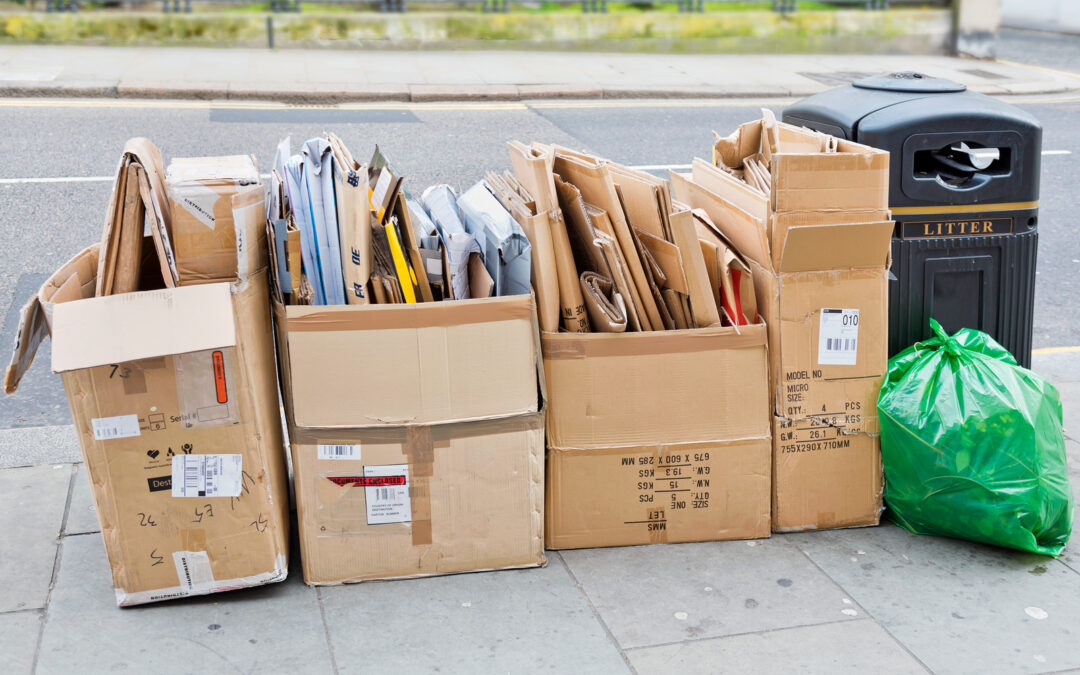
For Vancouver businesses, the problem often begins at the loading dock or outdoor waste enclosure. Employees may leave flattened boxes beside a container when it is full, or uncovered cardboard may sit outside while waiting for collection.
Common challenges include:
- Reduced material quality: Excess moisture can weaken cardboard and affect its suitability for recycling.
- Limited storage capacity: Unflattened delivery boxes take up valuable space in bins and storage rooms.
- Contamination: Food residue, leaking liquids and general garbage can compromise otherwise recyclable cardboard.
- Access difficulties: Pooled water, muddy approaches and clutter can complicate waste handling and collection.
- Overflowing waste areas: Infrequent collections may leave businesses with insufficient space during busy delivery periods.
A well-planned Cardboard Recycling Vancouver program should address both material quality and the practical conditions in which cardboard is stored before pickup.
6 Ways Vancouver Businesses Can Protect Cardboard During Rainy Weather
1. Move Cardboard Under Cover as Soon as Possible
Covered storage is one of the most practical ways to reduce direct rain exposure. Where possible, businesses should keep flattened cardboard inside a designated recycling room, beneath a suitable roof or within an appropriate covered enclosure.
Useful storage locations may include:
- Indoor recycling rooms near receiving areas.
- Covered loading docks with sufficient clearance.
- Sheltered commercial waste enclosures.
- Dry storage areas reserved for recyclable packaging.
The storage area should remain accessible to employees and collection teams without blocking emergency exits, pedestrian routes or loading operations.
If indoor storage is unavailable, discuss suitable weather-protection and container options with your recycling provider. Do not assume that every outdoor bin is weatherproof or suitable for loose cardboard.
2. Flatten Boxes Before They Enter the Recycling Bin
Flattening cardboard helps businesses use available container capacity more efficiently. Large boxes left intact create air gaps and can fill a bin long before it reaches its practical cardboard capacity.
Create a simple process for employees:
- Remove loose packing materials, including plastic film and foam.
- Empty boxes completely and check for food residue or liquid contamination.
- Flatten boxes safely using appropriate tools.
- Stack the cardboard neatly in the designated collection area.
- Keep the container closed when it is not being loaded.
This small operational change can reduce clutter, make the storage area easier to maintain and help businesses get more value from their existing collection arrangements.
3. Separate Cardboard From Food Waste and Liquids
Rain is not the only source of moisture in a commercial recycling area. Restaurants, grocery stores, food distributors and other businesses may also generate cardboard contaminated by spills, leaking containers or discarded food.
Keep cardboard separate from wet waste and liquid-bearing materials. Assign clearly labelled collection points so employees know where each material belongs.
Where cardboard has become saturated or contaminated, do not automatically mix it into the clean recycling stream. Ask the receiving provider how such material should be handled, as acceptance requirements vary.
For businesses seeking Commercial Waste Recycling Vancouver, a clear separation system helps identify recyclable materials before they become mixed with general waste.
4. Check Drainage Around Outdoor Recycling Areas
A covered container can still be difficult to access if the surrounding ground collects rainwater. Poor drainage may lead to standing water, slippery surfaces and restricted movement around the bin.
Inspect the waste storage area regularly, especially after heavy rainfall.
Check for:
- Blocked drains and catch basins.
- Low spots where water collects.
- Muddy or uneven approaches.
- Slippery surfaces around loading areas.
- Water entering the storage enclosure.
Keep drainage routes clear without directing contaminated runoff into storm drains. If a bin is located on private property, ensure that its position does not interfere with normal drainage or vehicle access.
5. Review Bin Capacity and Pickup Frequency
A storage system that works during a quiet week may fail when deliveries increase. Retail promotions, seasonal inventory changes, warehouse restocking and large shipments can produce more cardboard than usual.
Instead of waiting until a bin overflows, monitor how quickly it fills and review collection frequency with your provider.
| Business situation | Recommended action | Expected operational benefit |
| Frequent deliveries create large boxes | Flatten boxes immediately and schedule regular removal | Better use of available capacity |
| Outdoor cardboard gets exposed to rain | Move material to covered storage where practical | Less direct moisture exposure |
| Recycling bins fill before collection | Review container capacity and pickup frequency | Fewer overflow problems |
| Food or liquid contamination occurs | Separate wet waste and train staff on sorting | Cleaner cardboard recycling stream |
| Loading dock access becomes restricted | Keep the approach clear and review bin placement | Easier loading and collection |
| Cardboard volume changes seasonally | Track volumes and adjust the collection plan | More predictable waste management |
6. Give Employees a Clear Wet-Weather Waste Procedure
Even a well-designed storage area will not work consistently without staff participation. Employees handling deliveries need to know where cardboard belongs, how to prepare it and what to do when the bin is full.
A short written procedure can cover:
- Breaking down boxes before storage.
- Removing loose packaging and separating other materials.
- Keeping cardboard off wet ground.
- Closing lids or doors after loading.
- Reporting overflowing bins and drainage problems.
- Contacting the designated supervisor when cardboard becomes soaked or contaminated.
Post the instructions near receiving areas and recycling containers. Review them whenever storage arrangements or collection schedules change.
How Can Businesses Build a More Reliable Rainy-Season Recycling Plan?
A reliable plan combines storage, sorting and collection rather than treating them as separate tasks.
Start by tracking the volume of cardboard generated each week. Identify where it accumulates, how much storage space is available and whether the current pickup schedule leaves material outside for extended periods.
Next, assess the physical layout. A recycling area should provide adequate capacity, weather protection where practical, clear access for collection and a suitable surface for storing materials. Canada’s federal guidance on recyclable-material management also recommends protecting paper and cardboard from the weather and providing accessible storage and loading areas.
Finally, review the plan after periods of heavy deliveries or repeated rainfall. If overflow continues, consider a different container arrangement, more frequent collection or a designated indoor staging area.
For local requirements, businesses can consult the City of Vancouver’s guidance on waste collection and recycling for businesses. The City explains that businesses must arrange collection services for their garbage, food scraps and recycling.
How Canadian Empire Recycling & Disposal Can Help
Commercial properties generate different amounts of cardboard depending on their industry, delivery schedule and available storage space. Warehouses may need to manage large volumes of shipping cartons, while retail stores and offices may accumulate smaller quantities throughout the week.
Canadian Empire Recycling & Disposal lists cardboard and paper recycling among its commercial and industrial recycling services in Vancouver. Businesses can discuss their material volumes, storage limitations and collection needs to determine an appropriate arrangement.
Explore the Commercial and Industrial Waste Recycling Vancouver service to learn more about the company’s recycling options.
Rainy weather does not have to turn cardboard storage into a recurring problem. With appropriate covered storage, better sorting practices and a collection schedule that reflects your business’s needs, you can keep your recycling area more organized and protect the quality of recyclable materials.
Contact Canadian Empire Recycling & Disposal to discuss your cardboard collection needs, storage challenges and options for Cardboard Recycling Vancouver. Visit our Contact Us page or call 604-889-2377 to request a quote and discuss a practical approach to commercial recycling.
Frequently Asked Questions
Can wet cardboard still be recycled in Vancouver?
It depends on the extent of moisture exposure and the receiving facility's acceptance requirements. Slightly damp cardboard may be treated differently from saturated, mouldy or contaminated material. Keep clean cardboard separate and ask your recycling provider how to handle heavily wet boxes.
How often should a business schedule cardboard recycling pickup?
The appropriate frequency depends on the amount of cardboard generated, available storage capacity and how quickly the collection area fills. Businesses with frequent deliveries may need more frequent service than offices with limited packaging waste. Monitor volumes and adjust the schedule before overflow occurs.
What is the best way to prevent cardboard recycling bins from overflowing?
Flatten boxes, remove unnecessary packaging, keep cardboard separate from general waste and monitor bin capacity. If the container regularly fills before collection, review its size and pickup frequency with your provider.
Where can Vancouver businesses arrange commercial cardboard recycling?
Businesses can contact a commercial recycling provider to discuss cardboard volumes, storage arrangements and collection requirements. Canadian Empire Recycling & Disposal lists cardboard and paper recycling as part of its commercial and industrial recycling services in Vancouver.