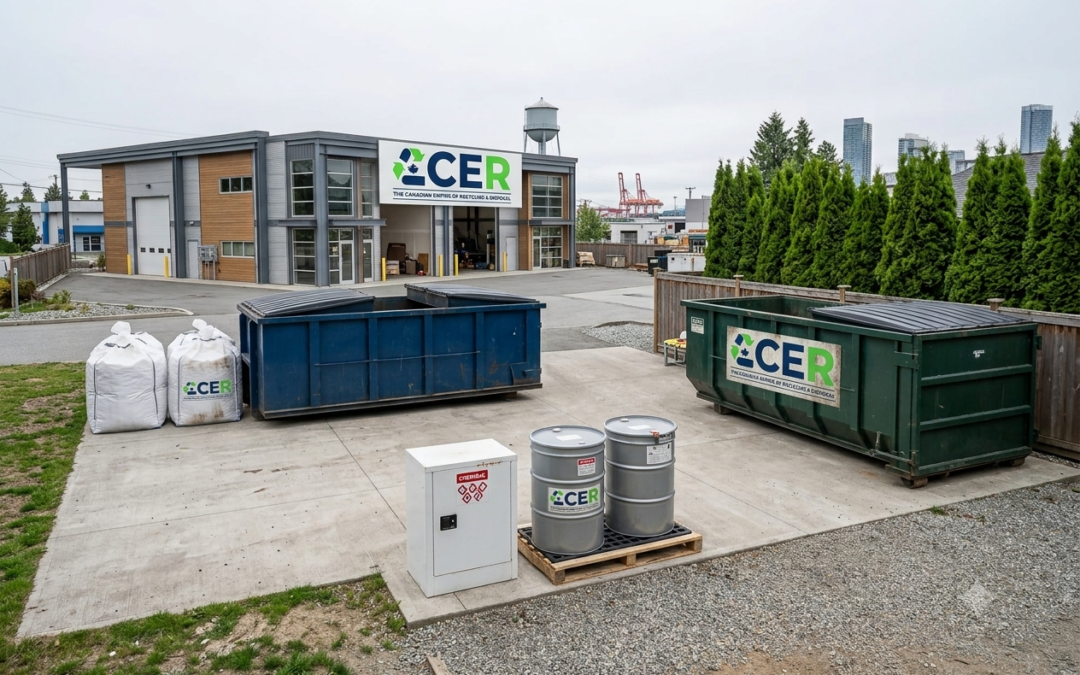
For Vancouver businesses, a regular dumpster can be a convenient solution for everyday garbage, packaging, and certain types of commercial debris. However, not every type of business waste belongs in a standard dumpster. Chemicals and other hazardous materials may require separate handling, containment, transportation, and disposal.
This distinction is especially important for businesses such as automotive shops, construction companies, manufacturers, warehouses, property-management companies, and commercial facilities that regularly work with chemical products.
In British Columbia, hazardous waste is subject to specific management requirements. The provincial Hazardous Waste Regulation includes several types of chemical-related waste within the definition of hazardous waste and requires hazardous waste to be properly confined and managed.
So, can chemical waste go in a regular dumpster in Vancouver? In most cases, businesses should not place chemical waste into a standard dumpster without first confirming that the material is acceptable for that waste stream.
Why Chemical Waste Should Not Automatically Go Into a Regular Dumpster
A regular dumpster is generally intended for approved commercial garbage or construction debris. Chemical waste can create additional risks if it is placed into the same container.
Some chemicals may be flammable, corrosive, toxic, reactive, or otherwise hazardous. If incompatible materials come into contact with each other, they can potentially leak, react, or create dangerous conditions.
BC’s Hazardous Waste Regulation specifically prohibits mixing or diluting hazardous waste with other substances to evade regulatory requirements. It also requires hazardous waste to be confined so it does not leak or escape into the environment.
For businesses, this means the safest approach is to identify the material first and determine the appropriate disposal route rather than assuming a dumpster can accept it.
What Types of Chemical Waste May Require Specialized Handling?
The exact requirements depend on the material and its characteristics. Examples of chemical-related waste that businesses may encounter include:
- Used solvents
- Certain paints and coatings
- Industrial cleaning chemicals
- Degreasers
- Chemical residues
- Laboratory chemicals
- Certain pesticides
- Contaminated absorbents
- Chemical containers containing hazardous residues
- Automotive fluids and related waste
- Manufacturing process chemicals
The provincial regulation identifies various hazardous waste categories, including certain dangerous goods, waste oil, waste asbestos, pest-control-product waste, leachable toxic waste, and other specified wastes.
Because different materials can have different requirements, businesses should not treat all chemical products as one waste category.
What Should Vancouver Businesses Do With Chemical Waste?
The first step is to identify the material and determine whether it is hazardous or otherwise subject to specialized disposal requirements.
Businesses should consider:
1. Check the Product Information
Look at the original product label, safety information, or other available documentation. This can help identify the substance and its potential hazards.
If the material is unidentified, businesses should avoid guessing. Unknown chemicals should not be poured down drains, mixed with other substances, or placed into a regular dumpster.
2. Keep Chemical Waste Separate
Chemical waste should be kept separate from ordinary commercial garbage and incompatible materials.
BC requirements state that hazardous waste must not be stored or transported in the same container when the hazardous wastes are incompatible with each other or with substances already in the container.
3. Use Appropriate Containers
The container needs to be suitable for the material being stored. It should remain closed and secure, with appropriate labels and markings where required.
For hazardous waste, BC regulations require containers to be maintained so the waste does not leak or escape into the environment and include specific requirements for labelling and compatibility.
4. Determine the Correct Disposal Method
Once the material is identified, the business can determine whether it belongs in a specialized hazardous-waste stream, recycling program, return-collection facility, or another authorized disposal route.
Can Chemical Containers Go Into a Dumpster?
An empty chemical container is not automatically the same as a container holding hazardous chemical waste.
The appropriate disposal method can depend on the product, the remaining residue, and applicable requirements. Businesses should therefore avoid assuming that simply because a container looks empty, it can immediately go into general garbage.
Some waste-product containers have specific requirements under BC’s Hazardous Waste Regulation, including provisions concerning emptying and rinsing certain containers.
When in doubt, businesses should identify the original chemical and confirm the correct waste stream before disposal.
What About Construction and Renovation Projects?
Construction and renovation businesses can encounter chemical waste during demolition, maintenance, painting, flooring work, equipment replacement, and site cleanouts.
Examples may include leftover coatings, solvents, adhesives, contaminated materials, fuel-related products, and other chemical residues.
These materials should be identified before being loaded into a Dumpster Rental Services Vancouver container. A dumpster intended for ordinary construction debris should not automatically be considered suitable for hazardous chemical waste.
Planning the waste streams before a project begins can help prevent accidental mixing and reduce the chance of delays during cleanup.
Why Proper Separation Matters
Separating chemical waste from general commercial waste provides several practical benefits.
It can help businesses:
- Reduce accidental exposure risks
- Prevent incompatible materials from mixing
- Keep regular waste streams cleaner
- Make disposal easier to organize
- Reduce contamination of recyclable materials
- Improve worksite organization
- Support appropriate hazardous-waste management
The Environmental Management Act requires hazardous waste to be kept confined in accordance with applicable regulations.
For businesses handling chemicals regularly, waste separation should be part of the normal workplace waste-management process rather than something addressed only during a major cleanup.
What Are Common Chemical Waste Disposal Mistakes?
Putting Chemicals Loose Into a Dumpster
Liquid chemicals, containers with hazardous residues, and other chemical waste should not simply be tossed into a standard dumpster without confirming that the waste stream permits them.
Mixing Different Chemical Products
Combining leftover chemicals can create unexpected reactions. Hazardous waste rules also restrict storing or transporting incompatible hazardous wastes together.
Pouring Chemicals Down Drains
Businesses should never assume that an unwanted chemical can be disposed of through a sink or drain. Disposal into municipal systems can be subject to specific authorization requirements. BC’s regulation prohibits depositing or discharging hazardous waste into municipal or other public waste-disposal systems unless expressly authorized.
Leaving Waste Unlabelled
Unidentified containers make safe handling more difficult. Keeping product information and appropriate labels with chemical waste can help waste handlers determine how it should be managed.
Waiting Until Cleanup Is Underway
Trying to figure out hazardous-waste disposal after a project has already started can cause unnecessary delays. Businesses should identify unusual waste before ordering containers or beginning a large cleanout.
How Does Hazardous Waste Disposal Differ From Dumpster Rental?
A dumpster is primarily a container and collection solution. Hazardous Waste Disposal Vancouver involves additional considerations because certain materials require specialized containment, transportation, handling, and disposal.
This does not mean businesses cannot use dumpster services. Instead, they should identify which portion of their waste is suitable for a regular dumpster and which materials need a separate disposal solution.
For example, a renovation project could have ordinary drywall, wood, and packaging alongside chemical products. Keeping those waste streams separate can make the entire cleanup more manageable.
How Can Vancouver Businesses Plan Waste Disposal More Effectively?
A simple waste-planning process can help businesses avoid many common mistakes.
Before starting a cleanup, renovation, or commercial project:
- Inventory the waste — Identify chemicals, general garbage, recyclables, construction debris, and other materials.
- Separate hazardous materials — Keep potentially hazardous products away from ordinary waste.
- Check disposal requirements — Confirm which materials require specialized handling.
- Choose the appropriate containers — Use containers suitable for each waste stream.
- Plan pickup or delivery — Arrange waste removal before containers become overloaded or hazardous materials accumulate.
- Keep documentation — Retain relevant product and waste information where appropriate.
This approach can make commercial waste management more predictable and help businesses avoid putting unsuitable materials into a standard dumpster.
What Should Businesses Do With Unknown Chemicals?
Unknown chemicals deserve extra caution.
If a business discovers an unlabeled container during a warehouse cleanout, renovation, equipment replacement, or property cleanup, employees should not open, mix, pour, or dispose of the material based on appearance alone.
Instead, keep the container secure and seek appropriate guidance for identification and disposal.
Knowing what the material is can determine whether it qualifies as hazardous waste and what containment, transportation, and disposal requirements apply.
Chemical waste should not automatically be placed in a regular dumpster simply because it is being discarded during a commercial cleanup. Vancouver businesses should identify chemical materials, keep incompatible waste separated, use suitable containers, and confirm the correct disposal route before arranging waste removal.
If your business has chemical waste or other materials that require specialized handling, Canadian Empire Recycling & Disposal can help you determine an appropriate waste-management solution. Contact Canadian Empire Recycling & Disposal to discuss Chemical Waste Disposal Vancouver for your commercial project.
Frequently Asked Questions
What chemical waste may require specialized disposal?
Depending on its characteristics, examples can include solvents, certain paints, chemical residues, industrial cleaners, pesticides, automotive fluids, and other hazardous substances. The exact requirements depend on the material and applicable regulations.
Can empty chemical containers go into commercial garbage?
Not necessarily. The disposal requirements can depend on the product and whether hazardous residue remains. Certain waste-product containers are specifically addressed by BC's Hazardous Waste Regulation.
Why should businesses keep chemical waste separate?
Separation helps prevent incompatible materials from mixing, reduces contamination risks, and supports appropriate handling and disposal. BC requirements specifically restrict the storage and transportation of incompatible hazardous wastes together.
What should I do if I find an unknown chemical during a cleanup?
Do not pour it out, mix it with another substance, or place it into a regular dumpster. Keep it secure and seek appropriate guidance to identify the material and determine the correct disposal method.