
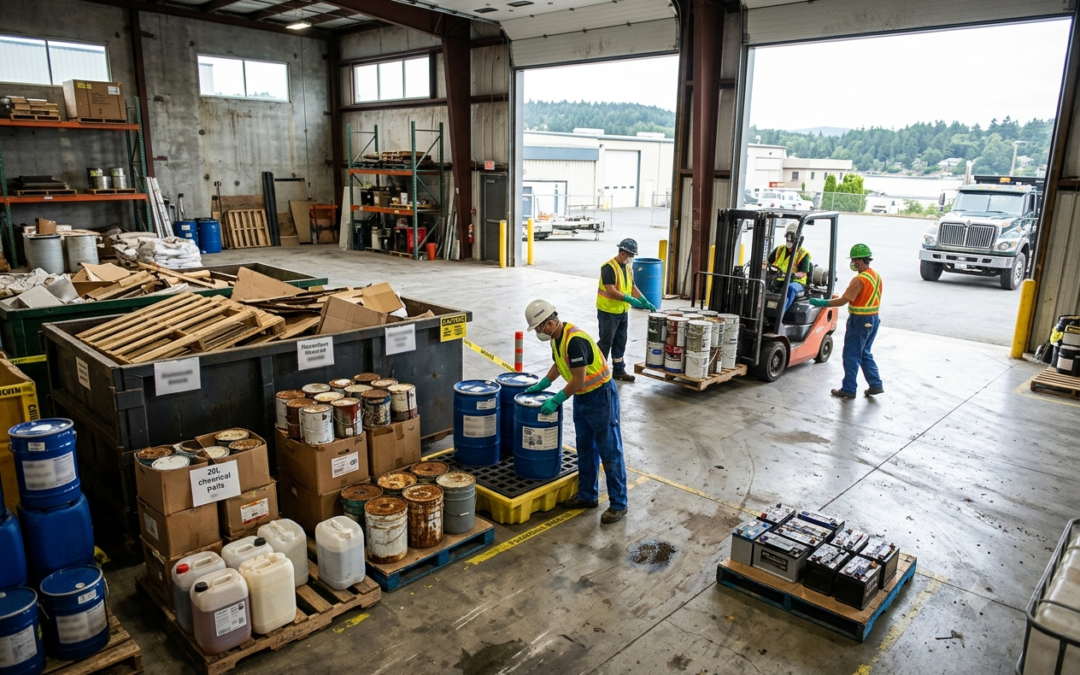
Commercial facility cleanouts often look straightforward at first. A business may expect to remove old furniture, packaging, equipment, scrap materials, and general debris before handing over the property or preparing it for its next use. However, once storage rooms, maintenance areas, workshops, or back-of-house spaces are cleared, businesses may discover materials that require more careful handling.
Old chemicals, contaminated containers, batteries, oily materials, paints, solvents, electronic components, and other regulated materials can turn an ordinary cleanout into a hazardous waste management challenge. For Nanaimo businesses, identifying these materials early can help prevent improper disposal, workplace risks, and unnecessary delays.
Understanding how to respond when unexpected hazardous materials are discovered is an important part of planning a commercial cleanout.
Why Facility Cleanouts Can Reveal Unexpected Hazardous Waste
Businesses can accumulate materials over many years without realizing how much waste is stored throughout a property. Some items may have been left behind by previous employees, contractors, tenants, or businesses.
During a cleanout, workers may uncover:
- Outdated chemicals and cleaning products
- Paints, coatings, and solvents
- Used oils and oily containers
- Batteries and electronic components
- Contaminated absorbent materials
- Aerosol containers
- Fluorescent lamps and certain lighting components
- Chemical containers with unclear labels
- Materials from previous maintenance or repair work
The challenge is that these materials may not look significantly different from ordinary commercial waste. Putting them into a regular garbage container without confirming what they contain can create safety and disposal problems.
What Should Businesses Do When Hazardous Materials Are Found?
The first step is to stop and identify the material rather than immediately throwing it away.
Employees should avoid opening unknown containers, mixing substances, or moving questionable materials unnecessarily. If containers are leaking, damaged, heavily corroded, or producing strong fumes, the area should be approached with additional caution.
Businesses should also keep potentially hazardous materials separate from general debris while determining the appropriate disposal method.
A cleanout plan should ideally include a designated area where questionable materials can be temporarily isolated from regular waste. This makes it easier to inventory what has been discovered and prevents hazardous items from accidentally entering a standard waste stream.
Create an Inventory Before the Cleanout Continues
Once potentially hazardous materials are identified, businesses should create a basic inventory.
Record information such as:
- Material or product name
- Approximate quantity
- Container condition
- Labels or identifying information
- Where the material was discovered
- Whether the container appears damaged or leaking
Photographs can also help document materials before they are moved.
This inventory can make communication with a qualified waste service provider much easier. It also helps businesses determine whether different materials require different handling or disposal procedures.
Separate Hazardous Materials From Regular Commercial Waste
One of the most important steps during a facility cleanout is keeping hazardous materials separate from ordinary debris.
Furniture, cardboard, packaging, scrap metal, and other non-hazardous materials may be suitable for conventional waste or recycling streams. Hazardous materials, however, may require specialized collection and disposal.
Businesses arranging Commercial Waste Disposal Nanaimo should therefore identify unusual materials before loading everything into one waste container.
Separating waste at the source can also improve recycling opportunities. Once hazardous materials have been removed from the waste stream, other materials may be easier to sort for recycling or conventional disposal.
Do Not Assume Old Containers Are Empty
An old container can create a false sense of security.
A drum, bottle, can, or pail may appear empty while still containing residues. Even small amounts of chemicals or other hazardous substances can affect how the container should be handled.
Businesses should avoid:
- Pouring unknown liquids down drains
- Mixing leftover chemicals
- Burning unwanted materials
- Putting chemical containers into regular garbage
- Attempting to neutralize unknown substances
- Removing labels from unidentified containers
If the contents cannot be confirmed, it is safer to treat the material cautiously and obtain professional guidance.
Consider Hazardous Waste Before Booking a Cleanout
Hazardous waste should be considered during the planning stage rather than discovered only after a dumpster or hauling service has arrived.
Before the cleanout begins, property managers and business owners can inspect areas where hazardous materials are most likely to be stored. These may include maintenance rooms, mechanical spaces, workshops, storage closets, laboratories, garages, utility areas, and old chemical storage locations.
Identifying these areas ahead of time allows businesses to estimate the type and volume of waste that may need specialized handling.
This is particularly useful when a property is being vacated, renovated, sold, or prepared for redevelopment.
Why Proper Handling Matters for Nanaimo Businesses
Improperly managed hazardous materials can create risks for employees, contractors, waste collectors, and the environment. They can also contaminate otherwise recyclable or disposable materials.
For businesses searching for Hazardous Waste Disposal Nanaimo, the priority should be finding a disposal approach that matches the type of material involved rather than treating every item as ordinary garbage.
A professional waste management provider can help businesses determine what information is needed, how materials should be separated, and what disposal process is appropriate for the waste identified during the cleanout.
How to Make Future Facility Cleanouts Easier
Unexpected hazardous waste is easier to manage when businesses maintain better records throughout the year.
Businesses can reduce future surprises by:
- Keeping chemical and hazardous material inventories updated.
- Clearly labeling containers.
- Storing materials appropriately.
- Removing obsolete products before they accumulate.
- Separating hazardous materials from general waste.
- Training employees to recognize potentially hazardous items.
- Planning waste management before major renovations or property cleanouts.
- Working with an experienced disposal provider when specialized waste is involved.
These practices can make future cleanouts more organized and reduce the chance that hazardous materials will be accidentally mixed with regular commercial waste.
When Should a Business Bring In a Professional?
Professional assistance can be especially valuable when a cleanout involves unknown chemicals, large quantities of regulated materials, damaged containers, contaminated materials, or waste accumulated over many years.
Instead of guessing how an unfamiliar material should be handled, businesses can provide details about the material and its condition to a qualified waste management provider.
Early planning is particularly important when a property has a strict move-out, renovation, demolition, or redevelopment deadline. Addressing hazardous materials before the main cleanout begins can help prevent last-minute complications.
Manage Unexpected Hazardous Waste Before It Becomes a Bigger Problem
Finding hazardous materials during a commercial facility cleanout does not have to derail the entire project. The key is to recognize potentially hazardous items, keep them separate from regular waste, document what has been found, and arrange appropriate handling before disposal.
For businesses planning Commercial Hazardous Waste Disposal Nanaimo, taking these steps can make facility cleanouts safer, more organized, and easier to manage. Proper planning also helps prevent hazardous materials from entering the wrong waste stream.
If your Nanaimo business has discovered unexpected hazardous materials during a facility cleanout, Canadian Empire Recycling & Disposal can help you determine the appropriate next steps for managing your commercial waste. Contact Canadian Empire Recycling & Disposal to discuss your hazardous waste and commercial disposal requirements.