
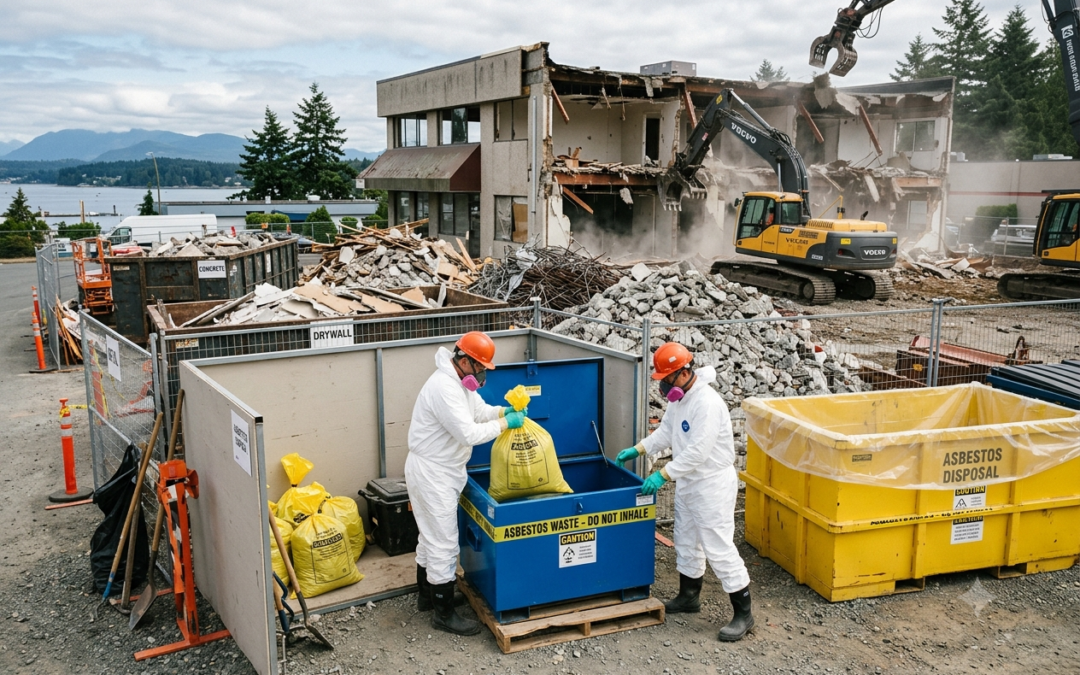
Commercial demolition projects in Nanaimo can generate far more than ordinary construction debris. When a building contains asbestos-containing materials, the waste stream requires a different level of planning, handling, transportation, and disposal. For contractors, property managers, and business owners, identifying potential asbestos before demolition can help prevent unexpected delays, additional cleanup requirements, and improper waste handling.
Understanding when demolition waste becomes asbestos waste is an important part of responsible commercial project planning. It also helps businesses distinguish specialized hazardous material handling from standard Commercial Waste Disposal Nanaimo services.
Why Asbestos Matters During Commercial Demolition
Asbestos was widely used in many older buildings because of its durability and resistance to heat and fire. It may be present in materials such as insulation, pipe coverings, flooring products, ceiling materials, drywall compounds, roofing materials, cement products, and other building components.
The challenge is that asbestos is not always visible. A material that appears to be ordinary construction debris may require specialized assessment before it can be disturbed or removed.
During demolition, materials can be broken, cut, drilled, or otherwise disturbed. If asbestos-containing materials are present, this can create a serious exposure concern and can also affect how the resulting waste must be managed.
For this reason, commercial demolition planning in Nanaimo should account for the possibility of asbestos, particularly when working on older structures.
When Does Demolition Waste Require Asbestos Disposal?
Not every piece of demolition debris is asbestos waste. The key factor is whether the material contains asbestos and has been identified for removal and disposal under the applicable requirements.
Asbestos may become a concern when:
- An older commercial building is scheduled for renovation or demolition.
- Building materials are suspected of containing asbestos.
- An assessment identifies asbestos-containing materials.
- Existing asbestos-containing materials will be disturbed during the project.
- Demolition debris becomes contaminated with asbestos-containing materials.
- Contractors encounter unexpected suspect materials during site work.
When asbestos is confirmed or reasonably suspected, businesses should not treat the material like ordinary garbage or mixed construction debris. The project should instead follow appropriate assessment, removal, containment, transportation, and disposal procedures.
Why Pre-Demolition Assessment Is Important
One of the biggest planning mistakes on commercial projects is discovering asbestos after demolition has already started.
A pre-demolition assessment can help identify materials that may require additional precautions before work begins. Knowing what is present allows contractors and property owners to plan the project more accurately and determine which materials need specialized handling.
This can be particularly important for older commercial properties in Nanaimo where multiple renovations may have taken place over the building’s lifetime.
Early identification can help businesses:
- Plan the demolition schedule more effectively.
- Separate asbestos-related work from regular demolition activities.
- Reduce the risk of mixing regulated materials with ordinary debris.
- Arrange appropriate waste handling in advance.
- Avoid unnecessary disruption once demolition begins.
- Budget more accurately for specialized waste management.
The earlier asbestos-containing materials are identified, the easier it is to incorporate their removal and disposal into the overall project plan.
Asbestos Waste Is Different From Regular Construction Debris
A commercial demolition site may contain wood, concrete, metal, drywall, packaging, fixtures, and other materials that can enter conventional waste or recycling streams. Asbestos-containing materials require a different approach.
Mixing asbestos waste with general construction debris can create additional handling and disposal complications. Instead, asbestos-related materials should be managed according to the applicable requirements and kept appropriately separated from regular waste streams.
This distinction is important when arranging Asbestos Waste Disposal Nanaimo for a commercial project. Businesses should communicate clearly about the type and condition of the material being handled so that the appropriate disposal process can be arranged.
What Types of Commercial Projects May Encounter Asbestos?
Asbestos-related waste can arise from many types of commercial work, including:
Commercial Building Demolition
Full or partial demolition of older buildings can disturb multiple building components at once. Before demolition begins, potentially asbestos-containing materials should be addressed as part of the project’s waste-management planning.
Office Renovations
Renovating older offices may involve removing flooring, ceilings, walls, insulation, or other materials that could contain asbestos.
Retail and Industrial Properties
Commercial and industrial structures can contain a variety of older construction materials. Renovation, structural modifications, and demolition can expose materials that were previously undisturbed.
Building Repairs and Upgrades
Even a smaller project can become an asbestos-management issue if workers need to disturb suspect materials. The size of the project does not automatically determine whether asbestos precautions are necessary.
What Should Businesses Do If Asbestos Is Discovered?
If suspected asbestos is discovered during commercial demolition or renovation, the material should not simply be placed into a regular construction waste bin.
A safer approach is to stop work in the affected area and obtain appropriate professional assessment and guidance. Once asbestos-containing material has been confirmed, qualified professionals should manage its removal and preparation for disposal according to applicable requirements.
The waste should then be directed to an appropriate disposal facility rather than being mixed with conventional commercial waste.
This is where planning becomes valuable. Businesses that arrange Commercial Waste Disposal Nanaimo should make sure asbestos-related materials are identified separately so the waste can enter the correct management stream.
How Proper Waste Planning Can Prevent Project Delays
Demolition schedules are often tightly coordinated. Delays can affect contractors, subcontractors, property owners, equipment rentals, and subsequent construction work.
Unexpected asbestos discovery can change the waste-management requirements of a project and may require additional steps before demolition can continue.
Including asbestos considerations in the initial waste plan can therefore help businesses avoid treating the issue as an afterthought.
A well-organized plan should consider:
- The age and history of the commercial property.
- Whether an asbestos assessment is required.
- Which materials may need specialized removal.
- How asbestos-containing materials will be separated from other debris.
- Where the material will be transported and disposed of.
- How regular commercial waste and recyclable materials will be managed separately.
This approach supports better coordination between demolition work and waste management.
Asbestos Disposal and Commercial Waste Should Be Planned Separately
A commercial project may generate several different waste streams at the same time. Metals, concrete, cardboard, wood, general debris, and recyclable materials may have different recycling or disposal options, while asbestos-containing materials require specialized handling.
Keeping these streams organized can improve overall waste management and reduce the possibility of inappropriate materials being placed together.
For Nanaimo businesses, this is especially relevant when a demolition project involves both conventional construction debris and asbestos-containing materials. Separating the waste streams from the beginning makes it easier to determine which materials belong in standard commercial waste services and which require specialized disposal.
Why Local Waste Planning Matters in Nanaimo
Local project conditions, disposal requirements, transportation arrangements, and facility acceptance criteria can all affect how commercial demolition waste is managed.
Businesses operating in Nanaimo should therefore avoid assuming that asbestos waste can be handled in exactly the same way as ordinary construction debris. Confirming the appropriate requirements before material is transported can help prevent rejected loads and unnecessary project interruptions.
Working with an experienced waste-management provider can also make it easier for contractors and property managers to coordinate asbestos-related waste with their broader commercial cleanup requirements.
Commercial demolition waste does not automatically become asbestos waste, but when asbestos-containing materials are identified or disturbed, they need to be managed separately from ordinary construction debris. Planning, identifying suspect materials before demolition, and arranging the appropriate disposal process can help Nanaimo businesses maintain a safer and more organized project.
If your commercial renovation or demolition project involves asbestos-containing materials, Canadian Empire Recycling & Disposal can help businesses plan appropriate waste-management solutions. Contact Canadian Empire Recycling & Disposal to discuss Asbestos Waste Disposal and commercial waste requirements for your project.