
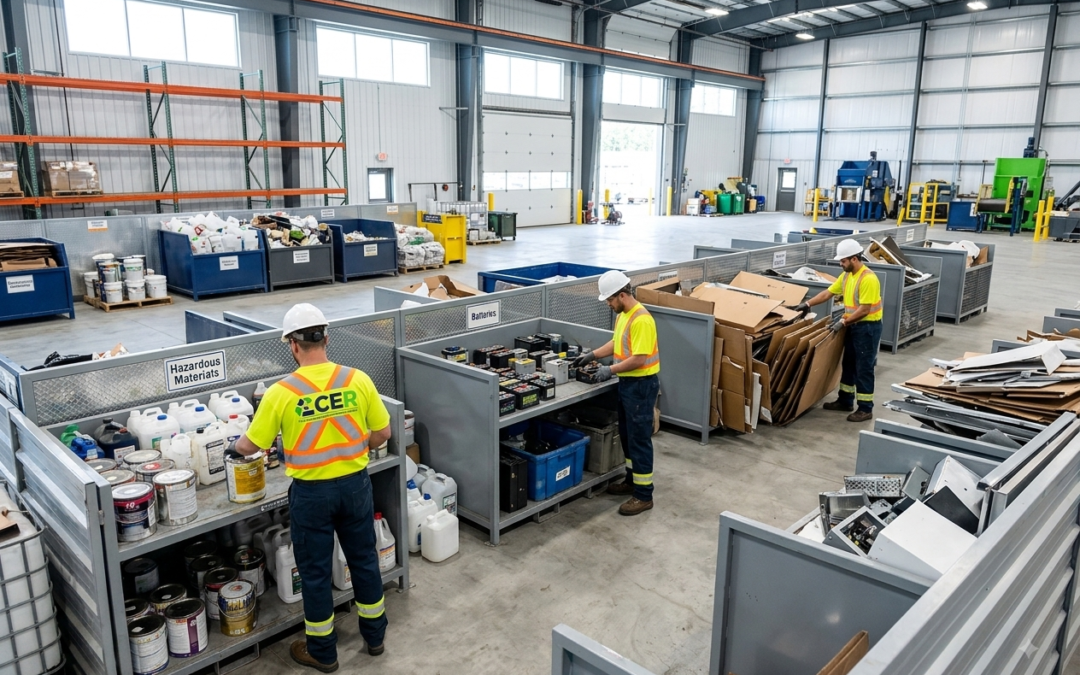
Businesses in Nanaimo can generate many different types of waste during normal operations. Cardboard, packaging, scrap metal, office furniture, electronics, chemicals, batteries, oils, and other materials may all accumulate in the same workplace.
The challenge begins when employees treat every unwanted item as ordinary garbage.
Some commercial materials can create risks for workers, waste handlers, recycling facilities, and the environment if they are placed in the wrong waste stream. This is especially important for businesses that store chemicals, operate workshops, maintain equipment, perform renovations, or regularly handle products that contain hazardous ingredients.
Understanding what should never go into regular garbage is an important part of responsible waste management. It also helps businesses identify materials that may require specialized handling while keeping recyclable resources separate.
For businesses researching Commercial Hazardous Waste Disposal Nanaimo, the first step is recognizing potentially hazardous materials before they become mixed with ordinary commercial waste.
What Makes Commercial Waste Hazardous?
Commercial waste may be considered hazardous when its physical or chemical properties can create a significant risk to people or the environment.
Potential characteristics include:
- Flammability
- Corrosiveness
- Toxicity
- Reactivity
- Environmental hazards
- Potential to release harmful substances
The material’s original purpose does not always determine how it should be handled once it becomes waste.
For example, a chemical product that was safe to use according to its instructions can require specialized management after it becomes unwanted, expired, contaminated, or unusable.
Businesses should therefore assess waste based on what the material actually is rather than simply assuming that a small quantity is harmless.
Chemicals Should Never Be Treated Like Ordinary Garbage
One of the clearest examples is unwanted commercial chemicals.
Businesses may have chemicals left over from cleaning, manufacturing, maintenance, landscaping, construction, or other operations.
These materials can include:
- Solvents
- Chemical cleaners
- Degreasers
- Paint-related products
- Adhesives
- Pesticides
- Industrial chemicals
- Laboratory-related materials
- Chemical mixtures
If a business no longer needs a chemical, it should not simply be placed in a garbage bin because the container is small.
Labels and Safety Data Sheets can help identify the material and its handling requirements.
Unknown containers require particular caution. Employees should not open them merely to determine what is inside.
Batteries Need Separate Attention
Commercial properties can accumulate many types of batteries.
These may come from:
- Equipment
- Vehicles
- Emergency systems
- Electronics
- Tools
- Backup power systems
- Portable devices
Batteries can contain materials that require specific recycling or handling processes. Damaged batteries can also create additional safety concerns.
Businesses should keep batteries separate from general garbage and avoid placing damaged or leaking batteries into ordinary waste containers.
Oils and Automotive Fluids
Businesses that operate vehicles or equipment can accumulate used oils, coolants, fuels, lubricants, and other automotive fluids.
These materials should not be poured into drains, onto the ground, or into regular garbage.
Even a small amount of improperly handled fluid can contaminate other materials and create environmental concerns.
Workshops, fleet operations, property-maintenance businesses, and similar commercial facilities should establish dedicated procedures for collecting and managing used fluids.
Paints, Solvents, and Coatings
Commercial renovation and maintenance projects can leave behind partially used paints, thinners, coatings, and solvents.
A common mistake is to assume that an old paint can is simply another piece of garbage.
Instead, businesses should determine what the product contains and identify the appropriate handling route.
Containers should also be inspected for leaks or deterioration before they are moved.
Where possible, retaining the original label and product information can make identification easier.
Pressurized Containers Require Careful Handling
Businesses may also encounter pressurized containers during cleanouts.
These can include certain gas cylinders, aerosol containers, and other pressurized products.
They should not automatically be compacted, punctured, or placed into a standard garbage stream.
A pressurized container that appears empty may still require appropriate handling.
Employees should avoid experimenting with unfamiliar containers and should seek suitable guidance before disposal.
Electronics Should Not Automatically Go Into General Waste
Electronic equipment is another category that businesses often overlook.
Old computers, monitors, printers, networking equipment, chargers, cables, control systems, and other electronics may contain recoverable materials and components requiring specialized recycling.
Before clearing out an office or commercial facility, businesses should separate electronic equipment from general garbage.
This can also provide an opportunity to address data security. Computers, storage devices, and other equipment may contain confidential business information that should be securely removed before recycling or disposal.
Contaminated Materials Can Create Additional Risks
A material does not necessarily have to be a chemical itself to create a waste-management problem.
Cardboard, absorbent materials, rags, containers, soil, or other items can become contaminated through contact with hazardous substances.
Once contaminated, the material may no longer be suitable for the same recycling or disposal route.
This is why businesses should avoid placing potentially contaminated materials together with clean recyclables.
Keeping waste streams separated from the beginning can prevent unnecessary contamination.
Commercial Recycling Should Happen Alongside Hazardous Waste Management
Responsible waste management is not simply about identifying what cannot be recycled.
Businesses should also identify what can be recovered.
Materials such as clean cardboard, scrap metal, certain plastics, wood, and other commercial recyclables may be suitable for recovery depending on their condition and the available recycling process.
This makes Commercial Waste an important part of an overall commercial waste strategy.
For example, a warehouse cleanout may produce both recyclable materials and hazardous products. Instead of putting everything into one container, the business can separate:
- Cardboard
- Scrap metal
- Wood
- General waste
- Electronics
- Batteries
- Chemicals
- Other materials requiring special handling
This reduces cross-contamination and creates a more organized waste stream.
Why Mixing Hazardous Waste With Recyclables Is a Problem
Businesses sometimes assume that materials can simply be sorted after collection.
That is not always the case.
A leaking chemical container can contaminate cardboard, wood, plastic, or other recyclable materials. Once contaminated, materials that could otherwise have been recovered may require a different handling route.
Sorting at the source is therefore one of the simplest ways to improve waste management.
It also helps employees understand what belongs in each waste stream.
What Businesses Should Do During a Commercial Cleanout
A warehouse, workshop, office, or retail cleanout should begin with an inspection.
Create an inventory of materials and identify anything that appears unusual or potentially hazardous.
Then separate materials into appropriate categories.
Step 1: Identify
Determine what materials are being removed and check product labels where available.
Step 2: Separate
Keep chemicals, batteries, electronics, recyclables, and general waste from one another.
Step 3: Inspect
Look for damaged, leaking, corroded, or deteriorating containers.
Step 4: Document
Keep available product information, labels, and Safety Data Sheets for materials that require identification.
Step 5: Arrange Appropriate Management
Use the appropriate waste or recycling service based on the type of material and its condition.
This process is especially useful when a business is clearing a property that has accumulated waste over many years.
What About Old or Unknown Containers?
An unidentified container is one of the situations where businesses should be especially cautious.
Do not assume that an old container is empty simply because it has been stored for a long time.
Do not mix its contents with other chemicals.
Do not open it unnecessarily.
Instead, keep employees away from the material and gather any available information from labels, inventory records, or storage documentation.
If the container is leaking or appears damaged, additional safety precautions may be necessary.
How Businesses Can Prevent Hazardous Waste Problems
The best waste-management strategy starts before materials become waste.
Businesses can reduce future problems by:
- Keeping chemical inventories up to date
- Storing products according to their requirements
- Clearly labeling containers
- Maintaining Safety Data Sheets
- Avoiding unnecessary chemical purchases
- Separating waste streams
- Training employees on waste procedures
- Reviewing storage areas regularly
- Removing expired or unwanted materials through appropriate channels
These practices can make future cleanouts considerably easier.
When Should a Business Seek Professional Waste Support?
Professional waste support may be appropriate when a business has accumulated significant quantities of chemicals, unknown containers, contaminated materials, batteries, oils, or other difficult-to-manage waste.
It can also be valuable during:
- Warehouse cleanouts
- Business closures
- Commercial renovations
- Property transitions
- Equipment replacement
- Facility relocations
- Long-term storage cleanouts
The earlier potentially hazardous materials are identified, the easier it can be to keep them separate from general waste and recyclable materials.
A Safer Commercial Waste Strategy for Nanaimo Businesses
Commercial waste management works best when businesses do not treat every unwanted material the same way.
Chemicals, batteries, oils, solvents, pressurized containers, electronics, and contaminated materials may require different handling from ordinary garbage. At the same time, recyclable materials should be kept clean and separate whenever practical.
By identifying hazardous materials early and incorporating Commercial Waste Recycling Nanaimo into the overall waste strategy, businesses can reduce unnecessary contamination and improve how their materials are managed.
If your Nanaimo business has accumulated chemicals, batteries, commercial recyclables, old equipment, or other difficult-to-manage materials, Canadian Empire Recycling & Disposal can help you determine an appropriate waste-management approach. Contact Canadian Empire Recycling & Disposal to discuss your commercial waste, recycling, and hazardous-material handling needs.