
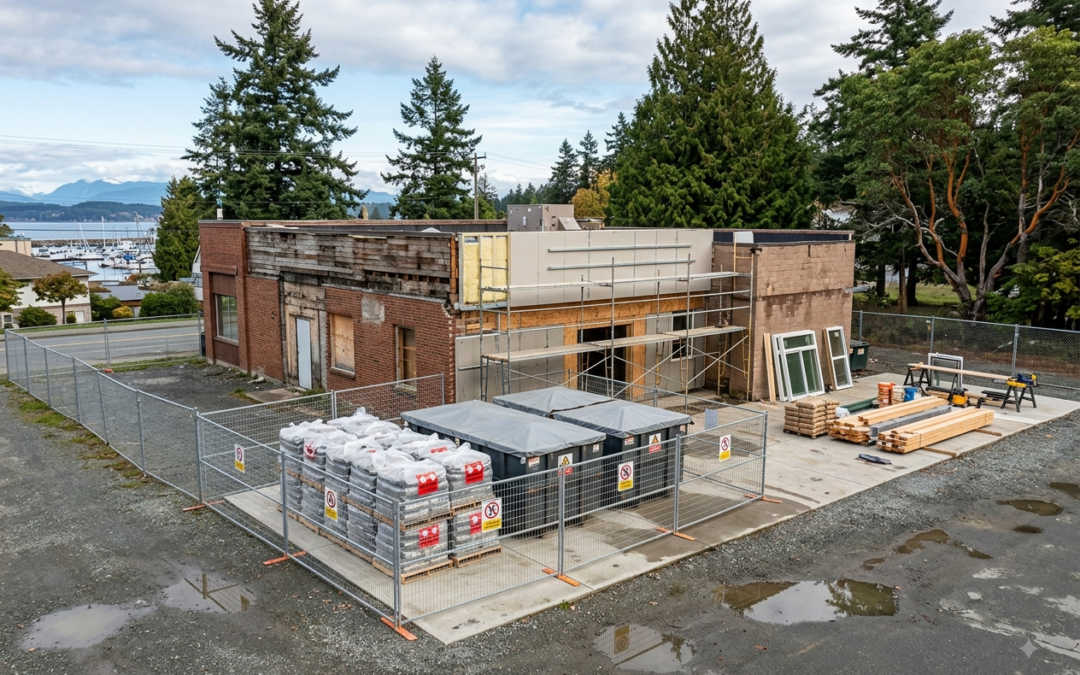
Commercial renovation and redevelopment projects in Nanaimo often run on tight schedules. A delay involving hazardous building materials can quickly affect contractors, inspections, site access, and project timelines. Asbestos waste is one issue that commercial property owners should plan for before demolition, renovation, or removal work begins.
Older commercial buildings may contain asbestos-containing materials in areas that are not immediately obvious. When these materials are identified during a project, simply moving them into a regular waste stream is not an appropriate solution. The material needs to be handled, contained, transported, and managed through suitable waste procedures.
For Nanaimo commercial property owners, planning can help prevent asbestos-related waste from becoming an unexpected source of project delays.
Why Asbestos Waste Can Affect Commercial Project Timelines
A renovation schedule is usually built around several connected stages. Demolition needs to happen before construction, waste removal needs to happen as materials are generated, and contractors need access to work areas.
When asbestos-containing material is discovered unexpectedly, work in the affected area may need to pause while the situation is assessed and the material is handled appropriately.
This can create a chain reaction.
A contractor may have to stop work. Demolition debris may remain on-site. Other trades may be unable to access a particular area. Equipment and labour may remain scheduled while the project waits for the waste issue to be resolved.
The longer the issue remains unresolved, the greater the potential disruption to the overall project.
Where Commercial Properties May Encounter Asbestos
Asbestos was historically incorporated into numerous construction products. Depending on the age and construction history of a commercial property, asbestos-containing materials may be present in different parts of a building.
Potential areas can include:
- Insulation and insulation-related materials
- Certain flooring products
- Ceiling materials
- Wall and joint compounds
- Roofing materials
- Pipe insulation
- Cement-based products
- Older building materials around mechanical systems
The presence of asbestos cannot always be confirmed simply by looking at a material. If asbestos is suspected, businesses should not disturb it just to determine what it is.
Professional assessment and appropriate procedures should be followed before potentially asbestos-containing materials are removed or disturbed.
Why Renovation Planning Matters in Nanaimo
A commercial renovation project should account for potential hazardous materials before demolition begins.
This is particularly important when working on older buildings. A pre-project review can help identify potential materials that could affect the demolition and waste-management stages.
Planning also allows property owners and project managers to understand how materials will be handled if asbestos is identified.
Without a plan, asbestos-related waste can become a last-minute problem.
With a plan, the project team can establish responsibilities, coordinate appropriate removal, and schedule waste collection around the construction timeline.
Signs Your Project May Need Better Waste Planning
Asbestos is not the only consideration when preparing a commercial renovation for waste removal. Project managers should also look at how different waste streams will be separated and stored.
Warning signs of poor planning can include:
Waste Areas Are Already Overcrowded
If construction waste is accumulating before the main demolition phase begins, there may not be enough space to safely manage additional materials.
Contractors Are Unsure Where Materials Should Go
Workers should have clear instructions regarding materials that require separate handling. Confusion can increase the possibility of unsuitable materials being placed together.
No Collection Schedule Has Been Established
Leaving waste removal until the end of a renovation can create unnecessary storage and logistical problems. A planned schedule can keep the site more manageable.
Hazardous Materials Are Discovered Unexpectedly
Unexpected discoveries can disrupt the sequence of work. Identifying potential risks before renovation begins gives the project team more time to respond appropriately.
Asbestos Waste Disposal Nanaimo: Why Proper Planning Matters
When asbestos-containing materials are identified, they should not be treated like ordinary construction debris.
Asbestos Waste Disposal Nanaimo requires appropriate planning around containment, handling, transportation, and disposal. Commercial property owners should work with qualified professionals and follow applicable requirements rather than attempting to place asbestos-containing materials into regular construction waste.
Proper planning can also help prevent cross-contamination between asbestos materials and other waste streams.
For a commercial renovation, this matters because construction debris can be generated quickly. Separating materials that require specialized handling helps maintain a more controlled worksite and reduces confusion for contractors and waste-management teams.
Commercial Waste Recycling Nanaimo During Renovation
Commercial renovation projects often produce a combination of materials, including drywall, wood, metal, packaging, fixtures, equipment, and other debris.
This makes Commercial Waste Recycling Nanaimo an important part of project planning.
The key is to avoid treating every material as the same type of waste. Materials should be identified and separated according to their characteristics and applicable handling requirements.
A commercial waste plan can help determine:
- Which materials can enter regular commercial waste streams
- Which materials may be recyclable
- Which materials require separate handling
- Where temporary waste should be stored
- When collection should take place
- How waste removal fits into the construction schedule
This approach can make the site easier to manage while helping prevent unsuitable materials from being mixed together.
How to Prevent Asbestos Waste From Delaying Your Project
The most effective strategy is to address potential asbestos concerns before major work begins.
1. Review the Building’s History
Older buildings deserve particular attention. Existing documentation, previous renovations, and construction records may provide useful information about materials that could be present.
2. Identify Potential Hazardous Materials
Do not assume that visible construction materials are safe simply because they look ordinary. Suspected asbestos-containing materials should be assessed appropriately before disturbance.
3. Coordinate With Contractors
Everyone involved in the project should understand the waste-management process. Clear communication can reduce mistakes when demolition and material removal begin.
4. Separate Waste Streams
Keep materials that require specialized handling away from ordinary construction debris.
5. Plan Collection Before Waste Accumulates
Waste removal should be coordinated with the project schedule rather than handled only when storage space becomes limited.
6. Keep Documentation Organized
Maintaining relevant project and waste-management records can make it easier to track what has been identified, removed, and collected.
The Cost of Waiting Until the Last Minute
Delaying asbestos waste planning may create more than a waste-storage problem.
A project could face additional coordination requirements, interrupted work, temporary storage challenges, or changes to contractor scheduling. In a commercial environment, even a short interruption can affect multiple trades working according to a fixed sequence.
Early planning does not guarantee that every project will avoid delays, but it can reduce the likelihood that asbestos-related waste becomes an unexpected obstacle.
A Better Approach for Nanaimo Commercial Property Owners
For commercial property owners and project managers, asbestos waste should be considered part of the project from the planning stage rather than an issue to solve after demolition begins.
Understanding the building, identifying potential hazardous materials, coordinating contractors, separating waste streams, and arranging appropriate collection can create a more predictable process.
This is particularly valuable for renovations involving older commercial properties, where previously hidden building materials may be encountered once walls, ceilings, flooring, or mechanical areas are opened.
Asbestos waste can quickly become a project-management issue when it is discovered without a clear plan for handling and removal. Nanaimo commercial property owners can reduce avoidable disruption by considering hazardous materials before renovation begins and coordinating waste management with the overall construction schedule.
If your commercial property requires assistance with asbestos-related materials or other renovation waste, Canadian Empire Recycling & Disposal can help you plan the appropriate waste-handling solution. Contact Canadian Empire Recycling & Disposal to discuss your project and arrange commercial waste services in Nanaimo.