
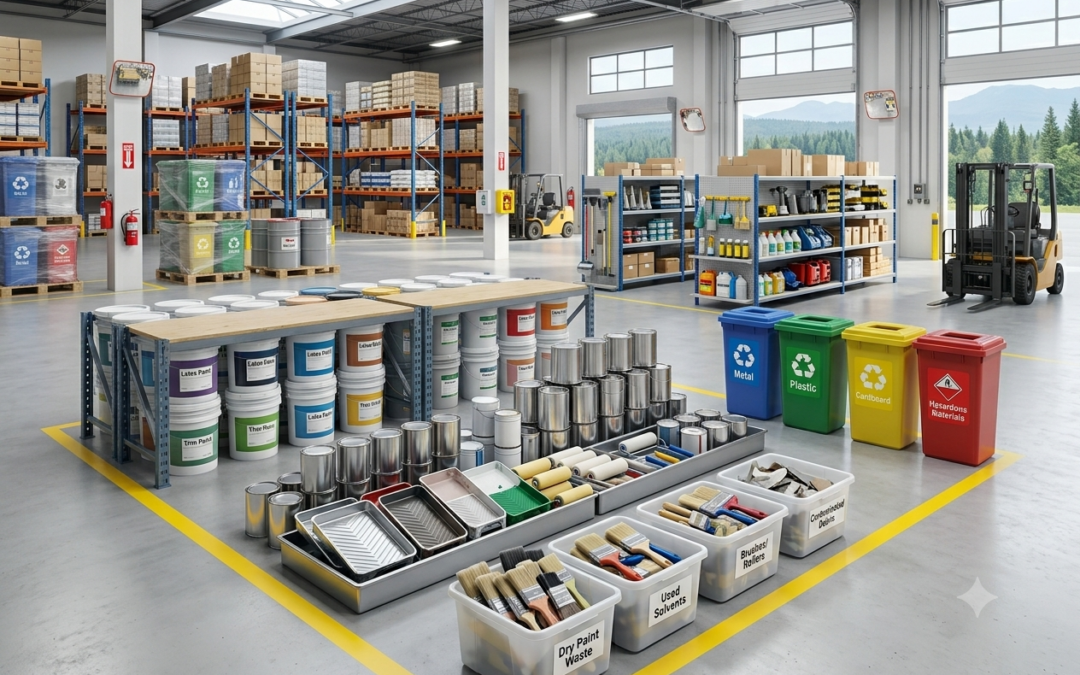
Paint waste is generated by many industries, including construction companies, property managers, manufacturers, warehouses, retail stores, and commercial maintenance contractors. While many businesses focus on reducing general waste, paint-related materials are often overlooked or handled incorrectly. These mistakes can increase disposal costs, contaminate recyclable materials, and create unnecessary environmental risks.
Implementing effective Paint Recycling Maple Ridge practices starts with understanding the most common mistakes businesses make and how to avoid them. With a structured recycling process, organizations can improve operational efficiency while supporting sustainable waste management.
Why Commercial Paint Recycling Matters
Commercial paint products often contain chemicals and materials that require proper handling. By separating recyclable paint materials from general waste, businesses can recover valuable resources, reduce landfill use, and improve overall recycling performance.
A strong recycling program also complements broader Commercial Waste Recycling Maple Ridge initiatives by reducing contamination and increasing material recovery.
Mistake #1: Mixing Paint Waste with General Garbage
One of the most common mistakes is placing leftover paint, paint containers, and painting supplies into general waste bins.
This can:
- Contaminate recyclable materials
- Increase disposal costs
- Reduce recycling efficiency
- Create handling risks for waste workers
Paint waste should always be separated before collection.
Mistake #2: Failing to Identify Hazardous Paint Products
Not all paint products can be recycled in the same way.
Businesses should pay special attention to:
- Oil-based paints
- Industrial coatings
- Paint thinners
- Solvents
- Chemical cleaners
These products may require Hazardous Waste Disposal in Maple Ridge rather than standard recycling because they may contain hazardous substances that require specialized handling.
Mistake #3: Poor Storage Before Collection
Improper storage increases the risk of spills, leaks, and contamination.
Businesses should:
- Keep lids tightly sealed.
- Store paint in a dry, covered area.
- Label containers clearly.
- Separate liquid paint from dried paint.
- Inspect containers regularly for damage.
Good storage practices help maintain workplace safety while protecting recyclable materials.
Mistake #4: Allowing Recyclable Materials to Become Contaminated
Paint containers mixed with food waste, oils, chemicals, or other debris may no longer be suitable for recycling.
Simple waste separation procedures help keep recyclable materials clean and improve recovery rates.
Mistake #5: Not Training Employees
Employees play an important role in every recycling program.
Staff should understand:
- Which paint products can be recycled
- Which materials require special handling
- Where paint waste should be stored
- How to prevent contamination
- Who to contact if disposal questions arise
Regular training reduces mistakes and improves consistency across the workplace.
Mistake #6: Skipping Regular Waste Audits
Many businesses never evaluate how much paint waste they generate.
A simple waste audit helps identify:
- Frequently discarded materials
- Recycling opportunities
- Sources of contamination
- Ways to reduce disposal costs
Regular reviews also make recycling programs more effective over time.
Best Practices for Commercial Paint Recycling
Businesses can strengthen their recycling program by following a few simple practices:
- Separate paint waste at the source.
- Use clearly labelled collection containers.
- Store paint safely until collection.
- Keep recyclable materials free from contamination.
- Schedule routine recycling pickups.
- Review recycling procedures with employees regularly.
These steps improve recycling efficiency while supporting responsible environmental practices.
Benefits of Proper Paint Recycling
An organized recycling program offers several long-term advantages.
Businesses can:
- Reduce landfill waste
- Improve workplace safety
- Lower waste management costs
- Support sustainability initiatives
- Improve recycling performance
- Strengthen environmental responsibility
Small improvements in waste handling often produce significant long-term operational benefits.
Partner with Canadian Empire Recycling & Disposal
Choosing an experienced recycling partner makes commercial paint waste easier to manage. Contact Canadian Empire Recycling & Disposal for reliable Paint Recycling services that help businesses recycle paint materials responsibly while reducing landfill waste. Their knowledgeable team works with commercial customers to develop practical recycling solutions that support cleaner, safer, and more sustainable operations.