
Quick Answer
A major business cleanout can generate much more than ordinary garbage. Old equipment, damaged materials, outdated products, containers, batteries, chemicals, and maintenance supplies may all require different handling methods. Maple Ridge businesses can reduce complications by identifying potentially hazardous materials before the cleanout begins, separating them from recyclable and general waste, and arranging appropriate collection in advance.
Using Commercial Waste Recycling services can help businesses recover suitable recyclable materials while keeping regulated or potentially hazardous items separate. When hazardous materials are identified, proper Hazardous Waste Disposal Maple Ridge planning becomes an important part of the overall cleanout process.
Why Can Business Cleanouts Create Hazardous Waste?
Commercial properties accumulate many different materials over time. During normal operations, these items may remain stored in maintenance rooms, warehouses, offices, workshops, or storage areas without creating an immediate disposal issue.
A large cleanout changes that situation. Businesses may suddenly need to remove years of accumulated materials at once.
Common examples can include:
- Used batteries and electronic components
- Chemical containers and maintenance products
- Oil- or solvent-contaminated materials
- Old fluorescent lamps and certain lighting components
- Paints, coatings, and related products
- Contaminated absorbents or cleanup materials
- Outdated equipment containing potentially hazardous components
The important point is that not everything removed from a commercial property should automatically go into the same waste stream.
How Should Businesses Start a Cleanout?
The first step is to create a basic inventory of everything that needs to leave the property.
Walk through storage rooms, workshops, offices, warehouses, utility areas, and other locations where materials have accumulated. Identify items that are recyclable, reusable, general waste, or potentially hazardous.
Businesses should pay particular attention to containers with warning labels, unknown liquids, old chemicals, batteries, contaminated materials, and products that may have special handling requirements.
If an item is unfamiliar or its contents are uncertain, it is better to identify it before disposal rather than placing it into a general waste container.
Why Is Waste Separation Important?
Separating waste at the beginning of a cleanout makes the entire process easier to manage.
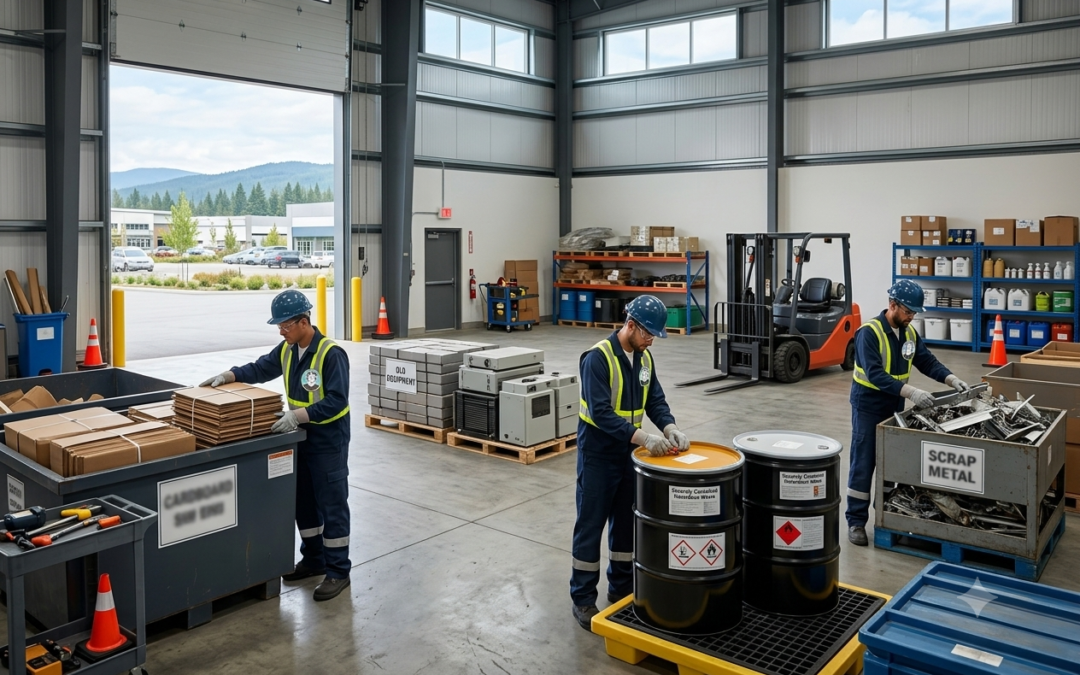
A practical sorting system can include separate areas for:
Recyclable materials:
Clean cardboard, metals, certain plastics, electronics, and other materials that may be suitable for recycling.
General commercial waste:
Non-regulated materials that cannot reasonably be recycled or reused.
Potentially hazardous materials:
Chemicals, contaminated materials, batteries, and other items that may require specialized handling.
This separation can improve recycling opportunities while reducing the chance that hazardous materials will accidentally enter a general waste stream.
How Can Commercial Waste Recycling Help Maple Ridge Businesses?
Large cleanouts often contain valuable recyclable materials. Metal shelving, office equipment, cardboard, electronics, and other materials may have recycling potential depending on their condition and composition.
Commercial Waste Recycling Maple Ridge services can help businesses identify recyclable materials and keep them separate from waste that requires different handling.
Recycling as much suitable material as possible can also reduce the amount of waste sent for final disposal. For businesses completing a warehouse clearout, office relocation, renovation, or equipment replacement, this can make the overall waste management process more organized.
However, recycling should never come at the expense of proper hazardous waste identification. Materials that may be contaminated or regulated should be assessed and handled through the appropriate waste stream.
What Should Businesses Do With Unexpected Hazardous Materials?
Unexpected materials are common during large cleanouts. A business may discover old chemical containers, unknown liquids, damaged batteries, contaminated equipment, or other materials that were not included in the original cleanout plan.
Do not automatically place these items into a general commercial waste container.
Instead, set them aside in a controlled area and determine what they are and whether special handling is required. Businesses can then coordinate the appropriate collection and disposal process before continuing with the cleanout.
This approach can prevent one unexpected discovery from disrupting the entire project.
When Should Hazardous Waste Disposal Be Arranged?
Hazardous waste planning should happen before the cleanout starts whenever possible.
Businesses should consider:
- What types of potentially hazardous materials are present
- Approximately how much material needs to be removed
- Where the materials are currently stored
- How the materials will be kept separated during the cleanout
- When collection should take place
- Whether additional containers or specialized services are required
Scheduling the waste service early can help businesses avoid having hazardous materials sitting around after the main cleanout has finished.
How Can Businesses Avoid Mixing Hazardous and Recyclable Waste?
One of the easiest ways to prevent mistakes is to establish clearly separated collection areas before workers begin.
For example, recyclable metals can have their own designated area, while general waste and potentially hazardous materials remain separate.
Employees and contractors involved in the cleanout should also understand the basic sorting plan. If everyone knows where each category belongs, there is less chance of unsuitable materials being placed together.
Clear separation is especially important when several contractors are working on the same property.
What If a Business Is Replacing Old Equipment?
Equipment replacement can create a combination of recyclable, general, and potentially hazardous waste.
Old machinery may contain oils, batteries, electrical components, or contaminated parts. At the same time, the project may generate large amounts of scrap metal, packaging, cardboard, and other recyclable materials.
Before removing equipment, businesses should identify these different waste streams and plan for them separately. This allows recyclable materials to be recovered while potentially hazardous components receive the appropriate handling.
How Can Better Planning Reduce Cleanout Delays?
A poorly planned cleanout can quickly become inefficient when workers discover unexpected waste.
Without a designated area for hazardous materials, a plan for recyclables, or a collection arrangement, workers may have to stop while the situation is resolved.
Planning provides a clearer workflow:
- Inventory the property before the cleanout.
- Identify potentially hazardous materials.
- Separate recyclable and general waste.
- Arrange appropriate waste containers or collection.
- Coordinate pickup with the cleanout schedule.
- Keep documentation and records organized.
This approach allows the cleanout team to focus on completing the project instead of dealing with waste problems at the last minute.
Why Is Professional Waste Planning Valuable?
Commercial cleanouts can involve many different types of materials, and not every item can be managed through the same disposal route.
Professional waste planning can help businesses understand which materials should be recycled, which belong in the general commercial waste stream, and which require specialized handling.
For Maple Ridge businesses, this is particularly useful during large facility cleanouts, renovations, warehouse reorganizations, office relocations, and equipment upgrades.
The goal is not simply to remove everything from the property. It is to create a controlled process that prioritizes proper separation, recycling, safe handling, and appropriate disposal.
Preparing for hazardous waste before a major commercial cleanout can help Maple Ridge businesses avoid unnecessary delays and keep different waste streams properly separated. Identifying potentially hazardous materials early, maximizing suitable recycling, and arranging collection before the cleanout begins can make the entire process more efficient.
For businesses that need support with commercial recycling and hazardous waste management, contact Canadian Empire Recycling & Disposal to help coordinate practical waste solutions for commercial cleanouts and ongoing business needs.