Finding an unmarked chemical container in a commercial facility can create an immediate waste-management question: What is inside it, and how should it be handled?
For businesses in Chilliwack, unknown chemicals can appear during warehouse cleanouts, facility relocations, property renovations, equipment maintenance, business closures, or routine inventory checks. A container may have a faded label, missing product information, an unreadable identification number, or no label at all.
The biggest mistake is assuming that an unknown chemical is simply another item that can be poured out, thrown into general garbage, or combined with other chemical products.
When the contents cannot be confidently identified, businesses should take a cautious approach. The priority should be preventing unnecessary exposure, avoiding incompatible mixtures, preserving available information, and arranging an appropriate professional assessment and waste-management process.
What Makes an Unknown Chemical Different?
Known chemical waste can often be evaluated using product labels, Safety Data Sheets (SDS), manufacturer information, and other documentation.
Unknown chemical containers do not provide the same level of certainty.
A business may not know:
- The chemical name
- Concentration
- Age of the product
- Original purpose
- Physical properties
- Whether it is flammable
- Whether it is corrosive
- Whether it is reactive
- Whether it contains hazardous substances
- Whether the container has deteriorated
This uncertainty changes how the material should be approached.
Rather than trying to identify the substance by opening the container, smelling it, mixing it with another material, or testing it without appropriate procedures, businesses should treat the unknown material cautiously and seek professional guidance.
Where Do Businesses Usually Find Unknown Chemicals?
Unknown chemicals are not limited to chemical manufacturing facilities.
They can be discovered in many commercial environments, including:
- Automotive repair shops
- Warehouses
- Manufacturing facilities
- Maintenance departments
- Construction businesses
- Agricultural operations
- Cleaning companies
- Laboratories
- Property-management facilities
- Industrial workshops
- Retail storage areas
Older facilities can be particularly challenging because products may have been stored for years.
During a commercial cleanout, employees may find containers that belonged to previous tenants, former operations, discontinued processes, or outdated maintenance programs.
Why Businesses Should Not Guess What a Chemical Is
A container that looks like a familiar product may contain something completely different.
Even if the business recognizes the manufacturer or packaging style, the contents may have changed because of age, contamination, degradation, or previous handling.
Guessing creates unnecessary risk.
Businesses should avoid:
- Opening unknown containers unnecessarily
- Smelling the contents
- Pouring the material into another container
- Combining unknown chemicals
- Mixing unknown liquids with known waste
- Putting unknown chemicals into drains
- Placing unknown chemicals into general garbage
- Attempting unqualified testing
The safest approach is to preserve the container and whatever identification information remains available while determining the appropriate next step.
What Should a Business Do First?
If an unknown chemical is discovered, businesses should start by controlling unnecessary handling.
Keep the material in its existing container where possible and prevent unauthorized employees from moving or opening it.
The business should then document what is known about the material.
Useful information may include:
- Where the container was found
- Approximate container size
- Existing label information
- Manufacturer information
- Product or batch numbers
- Container condition
- Whether the container is leaking
- How long it may have been stored
- Any available SDS documentation
- Previous use of the storage area
Even incomplete information can help a professional waste-management provider determine how to approach the material.
What If the Container Is Damaged or Leaking?
A damaged or leaking container requires additional caution.
Warning signs may include:
- Corrosion
- Bulging
- Cracks
- Damaged caps
- Liquid around the container
- Strong or unusual odours
- Visible residue
- Deteriorating packaging
Businesses should not attempt to repair, transfer, or repackage a damaged chemical container without appropriate knowledge and equipment.
Instead, communicate the condition of the container when arranging professional assistance.
The more accurate information a business can provide, the better prepared the waste-management provider can be for the collection process.
Why Unknown Chemicals Should Be Kept Separate
One of the most important principles of chemical waste management is avoiding unnecessary mixing.
Different chemicals can have very different properties.
A business may have several containers that all appear to contain liquid, but that does not mean they belong in the same waste stream.
Unknown chemicals should therefore remain separate from:
- Known chemical products
- Used oils
- Solvents
- Cleaning chemicals
- Paint products
- General waste
- Recyclable materials
Keeping materials separated preserves information about the waste and reduces the possibility of incompatible substances coming into contact with one another.
How Unknown Chemicals Affect Commercial Cleanouts
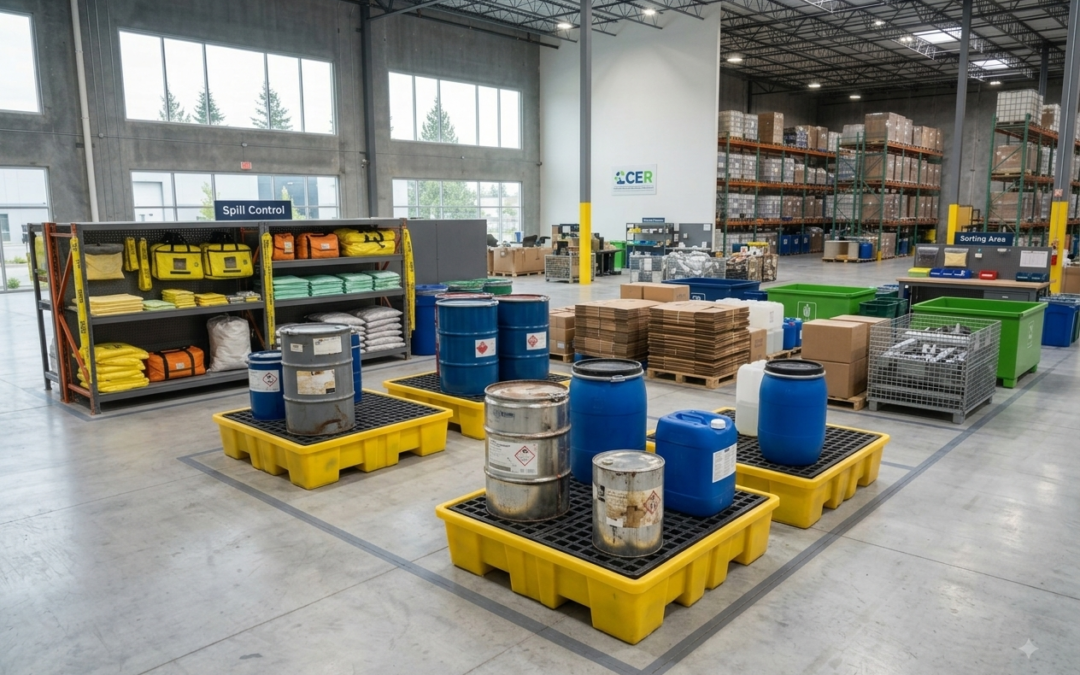
Commercial cleanouts often create the greatest risk of accidentally mixing unknown materials with ordinary waste.
Imagine a Chilliwack warehouse being cleared for renovation.
The cleanup may involve:
- Shelving
- Cardboard
- Scrap metal
- Old equipment
- Packaging
- Furniture
- Chemical containers
- Batteries
- General garbage
If workers treat everything as one waste stream, unidentified chemical containers can accidentally end up inside ordinary commercial waste.
A better approach is to identify potentially hazardous waste materials before the general cleanup begins.
Create separate areas for recyclable materials, general waste, chemical products, unknown containers, and other specialized waste streams.
This makes the cleanup more organized and gives each material a better chance of being managed appropriately.
The Connection Between Hazardous Waste and Commercial Recycling
Commercial recycling is not limited to paper, cardboard, and metal.
Businesses often generate multiple waste streams at the same time.
A facility cleanup could involve:
- Cardboard
- Paper
- Scrap metal
- Plastics
- Electronics
- Packaging
- Chemical waste
- Batteries
- General commercial waste
The objective is to identify these materials before disposal and prevent incompatible streams from being combined.
This is where Commercial Waste Recycling Chilliwack can form part of a broader waste-management strategy.
Recyclable materials can be separated from specialized waste so that businesses are not treating everything as general garbage.
What Is Chemical Waste?
Chemical waste includes unwanted chemical products, residues, mixtures, or materials contaminated with chemicals that a business no longer intends to use.
Examples may include:
- Solvents
- Degreasers
- Cleaning chemicals
- Paint-related products
- Oils
- Laboratory chemicals
- Industrial chemical products
- Chemical residues
- Contaminated absorbents
- Expired chemical products
Not every chemical waste stream is identical.
Its properties, quantity, condition, and intended handling route can affect how it should be managed.
This is particularly important when the original product information is unavailable.
When Should a Business Arrange Professional Hazardous Waste Management?
Professional assistance may be appropriate when a business has:
- Unidentified chemical containers
- Large quantities of chemical waste
- Damaged or deteriorating containers
- Potentially reactive materials
- Chemical-contaminated materials
- Expired industrial chemicals
- Multiple chemical waste streams
- A commercial facility undergoing a major cleanout
Businesses should provide as much information as possible before arranging collection.
For example, explain whether containers are labelled, whether any are leaking, how many containers are involved, and whether the materials were found during a renovation, relocation, or facility closure.
How Businesses Can Prepare for a Professional Pickup
Preparation does not mean opening or transferring unknown chemicals.
Instead, businesses can focus on documentation and organization.
Identify the Location
Record where the unknown containers are stored.
Photograph Existing Identification
If safe to do so, photographs of labels or container markings may help document the material without opening it.
Check Existing Records
Look for old SDS documents, purchasing records, inventory lists, or facility records that may identify the product.
Record Approximate Quantities
Estimate the number and size of containers.
Note Container Condition
Inform the provider if containers appear damaged, corroded, swollen, or leaking.
Keep Unknown Materials Separate
Do not combine unknown chemicals with other waste while waiting for professional guidance.
These steps can make communication and collection planning much easier.
Why Businesses Should Plan Ahead
Unknown chemical waste can become particularly difficult when discovered at the last minute.
A business may be preparing to hand over a leased property, complete a renovation, relocate a warehouse, or close a facility.
If unknown chemical containers are discovered during the final stage of the project, the business may suddenly need additional time to identify, assess, and arrange appropriate removal.
Including chemical waste identification in the early stages of a commercial cleanup can prevent unnecessary delays.
A Better Approach to Commercial Waste Management in Chilliwack
Businesses do not need to wait until a chemical problem becomes urgent before improving their waste-management process.
A practical commercial system can include:
- Regular inventory checks
- Proper product labelling
- Accessible SDS documentation
- Designated chemical storage areas
- Separation of incompatible materials
- Periodic removal of expired products
- Staff awareness
- Planned recycling and waste collection
These measures can reduce the chance of unknown materials accumulating for years.
They can also make future facility cleanouts significantly easier.
Unknown chemical containers should never be treated as ordinary commercial garbage simply because their contents are unclear.
The safest strategy is to avoid unnecessary handling, preserve the original container and available identification, keep the material separate from other waste, document what is known, and seek appropriate professional guidance.
For Chilliwack businesses, this approach is particularly valuable during warehouse cleanouts, renovations, relocations, closures, and inventory changes where old chemical products may suddenly be discovered.
If your business has unidentified containers, accumulated chemical waste, or other specialized materials that need to be removed, Canadian Empire Recycling & Disposal can help you plan the appropriate next step. Contact Canadian Empire Recycling & Disposal to discuss your Hazardous Waste Disposal requirements and broader commercial recycling needs.