Quick answer: Leftover paint should not automatically be treated as ordinary garbage just because a renovation or painting project is finished. The type of paint, its condition, quantity, and how it is being stored can determine what should happen next. For Chilliwack businesses, identifying paint waste early can help keep potentially hazardous materials separate from regular commercial waste.
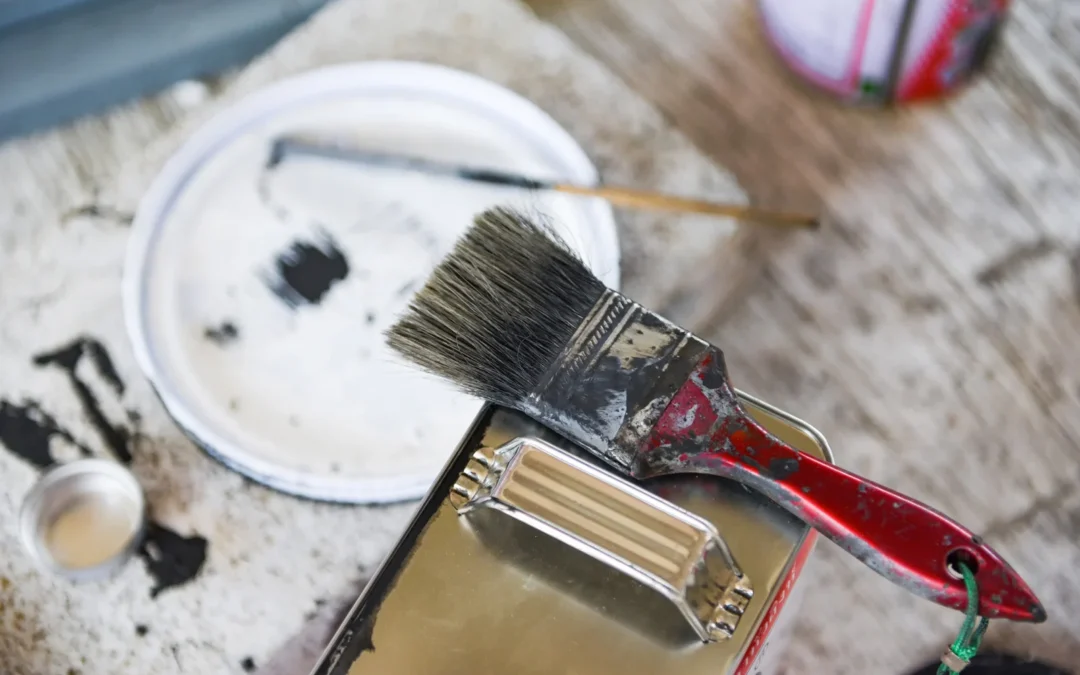
A few partly used paint cans may not seem like a major waste problem.
Then a business cleans out a storage room and discovers shelves filled with old coatings, half-used containers, dried-out cans, stains, solvents, and paint products left behind from years of maintenance work.
That is when a simple cleanup can turn into a waste-management issue.
When Does Leftover Paint Become a Waste Problem?
Paint does not become a waste concern only when a container is completely empty.
A business may have paint that is:
- Left over from a renovation
- Too old to use
- Partially used
- No longer suitable for the intended project
- Stored in damaged or deteriorating containers
- Being removed during a facility cleanout
The first step is to identify what the product actually is and whether it can still be used.
Simply putting an unknown container into a general garbage stream is not a good waste-planning strategy.
Not All Paint Products Are the Same
The word “paint” covers a wide range of products.
A commercial property may have interior and exterior coatings, primers, stains, specialty coatings, industrial products, or other related materials.
Some products may have different handling requirements than others.
That is why businesses should avoid assuming that every old can of paint can be handled in exactly the same way.
Reading the original product label, identifying the material, and keeping containers intact can make the next disposal decision much easier.
Why Businesses Should Check Paint Before a Cleanout
Commercial cleanouts often happen quickly.
A business may be moving locations, renovating an office, preparing a property for a new tenant, or clearing out an old maintenance room.
During these projects, employees or contractors may come across paint containers that have been sitting untouched for years.
Instead of placing everything into one dumpster, separate potentially hazardous products first.
This gives the project team a chance to determine which materials belong in regular waste, which may be recyclable or reusable, and which require specialized handling.
Paint Can Become Part of a Larger Hazardous Waste Stream
Old paint rarely appears completely by itself during a commercial cleanout.
A maintenance room might also contain adhesives, cleaners, coatings, automotive products, chemicals, or other materials that require careful handling.
Once several types of potentially hazardous products are discovered, the business needs a broader plan.
This is where Hazardous Waste Disposal Chilliwack becomes relevant. Rather than treating every item as ordinary garbage, businesses can identify the materials first and arrange appropriate handling for products that require specialized disposal.
Don’t Mix Paint With General Commercial Waste
One of the easiest mistakes during a workplace cleanup is putting every unwanted item into the same container.
That may be convenient for a few minutes, but it can create problems later.
Paint containers should be assessed before they are added to a general commercial waste load. If other hazardous materials are present, mixing them together can make sorting and disposal more complicated.
A better approach is to establish separate waste streams at the beginning of the cleanout.
For example:
General waste → ordinary non-hazardous materials
Recyclables → materials suitable for recycling
Paint and specialty products → materials requiring separate assessment and handling
The exact disposal route depends on the material and applicable requirements.
What About Empty Paint Cans?
An empty-looking container is not automatically the same as a container that never held paint.
Businesses should consider what remains inside the container, whether there is dried or liquid residue, and what product was originally stored in it.
Rather than making assumptions based only on whether a can looks empty, identify the product and determine the appropriate disposal route.
This is particularly important when a commercial cleanout involves a large number of containers.
Paint From Renovation Projects Needs Planning Too
Renovation projects can generate paint waste in several forms.
There may be leftover product after the final coat, containers that are no longer required, or older paint discovered when existing materials are removed.
The mistake is waiting until the final cleanup day to figure out what happens to all of it.
Paint waste should be considered when the renovation waste plan is created.
That allows the contractor or property manager to distinguish paint and other specialty materials from ordinary demolition debris before containers start filling up.
How Commercial Waste Planning Can Prevent Problems
A commercial property may generate much more waste than expected during a renovation or cleanout.
Furniture, cardboard, packaging, drywall, wood, metal, and general debris may all need to leave the site.
At the same time, specialty materials such as old paint may require separate attention.
A properly organized Commercial Waste Disposal Chilliwack plan helps the project team think about these waste streams individually instead of treating the entire site as one disposal load.
This can make the cleanup more organized and reduce the chance of potentially problematic materials being mixed into general waste.
Storage Matters Before Disposal
What happens between discovery and collection is also important.
If old paint is found during a business cleanout, containers should not simply be left wherever there happens to be space.
Keep materials organized and follow appropriate handling and storage requirements for the products involved.
The condition of the container also matters. A damaged or leaking container should be treated as a more urgent waste-management concern than a sealed, intact container.
If employees are unsure what a product is, avoid opening or experimenting with it simply to determine its contents.
A Simple Paint-Waste Planning Process
For a Chilliwack business dealing with leftover paint, a practical starting point is:
1. Gather the Paint
Bring the relevant containers together without unnecessarily disturbing their contents.
2. Identify the Products
Check labels and available product information.
3. Separate Different Materials
Do not automatically combine paint with general renovation debris or other unknown chemicals.
4. Assess the Condition
Look for damaged, leaking, or deteriorating containers that may require additional attention.
5. Estimate the Quantity
Knowing whether you have two cans or several shelves of products makes disposal planning more accurate.
6. Arrange the Appropriate Disposal Route
Once the materials are identified, determine how they should be handled and where they need to go.
This approach is much more useful than discovering the disposal issue after the cleanup truck has already been scheduled.
When Should a Business Get Help?
A business may want professional waste-handling guidance when it has a large quantity of old paint, unidentified containers, damaged packaging, or multiple types of potentially hazardous products.
This is especially relevant during:
- Commercial renovations
- Property cleanouts
- Business relocations
- Warehouse clearances
- Maintenance-room cleanouts
- Facility closures
The more varied the waste stream becomes, the more important proper sorting and planning become.
Don’t Let Old Paint Become an Afterthought
Leftover paint can sit unnoticed for years because it does not appear urgent.
The problem usually becomes visible when a business needs to clear the storage area, renovate the building, relocate, or prepare the property for someone else.
That is the point when old paint needs to be identified rather than simply thrown into the nearest waste container.
For Chilliwack businesses, planning ahead can help keep paint and other potentially hazardous materials separate from ordinary commercial waste and ensure each material is handled through the appropriate disposal route.
Plan Your Paint Waste Before the Cleanup Starts
Old paint may be only one part of a larger commercial cleanup, but it deserves attention before everything is loaded into a general waste container. Identifying the products, separating waste streams, and arranging the appropriate disposal route can make the cleanup much easier to manage.
If your business has leftover paint or other unwanted materials that need proper handling, contact Canadian Empire Recycling & Disposal can help you plan the appropriate waste-management solution for your Chilliwack property.