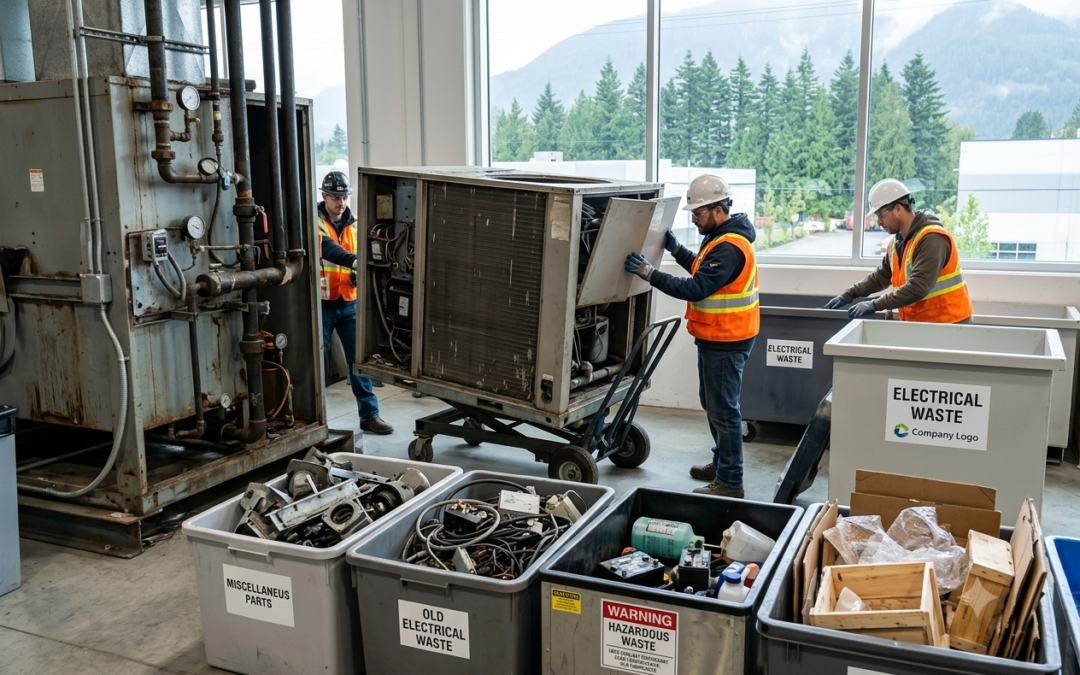
Equipment upgrades can improve productivity, safety, and efficiency, but they can also create an unexpected waste-management challenge for businesses in Chilliwack. Replacing machinery, commercial appliances, electrical equipment, maintenance systems, or industrial components can leave businesses with materials that cannot simply be placed into regular garbage.
Old equipment may contain oils, batteries, chemicals, electronic components, contaminated parts, or other materials that require specialized handling. Even when the equipment itself appears ordinary, components inside it may need to be separated before the remaining materials are recycled or disposed of.
For Chilliwack businesses planning an equipment replacement, understanding the waste generated during the process can help prevent unnecessary storage issues, project disruptions, and improper disposal.
Why Equipment Upgrades Generate More Waste Than Expected
An equipment replacement project rarely involves only one old machine. Businesses may also need to remove packaging, protective materials, electrical components, cables, damaged parts, lubricants, filters, and other associated materials.
For example, replacing commercial machinery could involve:
- Old mechanical components
- Used oils and lubricants
- Batteries
- Electrical wiring
- Filters and contaminated parts
- Metal components
- Plastic housings
- Packaging materials
- Cleaning chemicals
- Damaged or obsolete accessories
The exact waste generated depends on the type of equipment and the business’s operations. Planning for these materials before the upgrade begins can make the removal process considerably more organized.
When Old Equipment Becomes a Waste-Management Concern
Not every piece of old equipment is hazardous. However, certain components or residues may require additional consideration.
A machine that has been used with chemicals, oils, solvents, or other substances may contain residues that should not be handled in the same way as clean scrap metal. Similarly, equipment containing batteries or electronic components may require separate recycling or disposal pathways.
Businesses should therefore assess the equipment and its components rather than treating the entire item as one waste category.
This distinction is important when planning Hazardous Waste Disposal Chilliwack, particularly for businesses replacing equipment that has been exposed to chemicals, petroleum products, or other potentially hazardous substances.
Equipment Upgrades Can Create Multiple Waste Streams
One of the biggest challenges during an equipment upgrade is that several types of waste can appear at the same time.
A business might remove an old machine while also receiving its replacement, creating metal scrap, packaging, electrical materials, and potentially hazardous components within a single work area.
Separating these materials early can make the project easier to manage.
A practical waste plan may include separate categories for:
- Recyclable metal
- Electronic components
- General commercial waste
- Packaging and cardboard
- Batteries
- Used oils or fluids
- Chemical products
- Contaminated materials
The correct handling process depends on the material involved, so businesses should confirm appropriate requirements before disposal.
Why Businesses Should Not Treat All Equipment as Scrap
Metal recycling can be a useful option for suitable equipment, but businesses should not assume that every component can immediately go into a scrap-metal stream.
Equipment may contain fluids, batteries, electrical components, or contamination that needs to be removed or managed separately.
For example, a metal machine that has been drained and properly prepared may have a different waste-management pathway from equipment that still contains oils or chemical residues.
Understanding the difference can help prevent recyclable materials from becoming unnecessarily complicated waste streams.
Plan Waste Before the New Equipment Arrives
Equipment upgrades are often scheduled around business operations. The replacement may arrive on a specific date, technicians may be booked for installation, and employees may need access to the facility throughout the process.
Waste removal should be planned alongside these activities.
Before the upgrade begins, businesses can determine:
- Which equipment is being removed.
- What materials are likely to be generated.
- Which components may require specialized handling.
- Which materials can be recycled.
- Where waste will be temporarily stored.
- When waste will be collected.
- How the waste plan fits around installation and business operations.
This can prevent old equipment and related waste from occupying valuable working space after the new equipment has already been installed.
How Commercial Waste Planning Helps Chilliwack Businesses
Equipment upgrades can also generate significant amounts of ordinary commercial waste. Packaging, cardboard, plastic wrap, pallets, protective materials, and other installation waste may accumulate alongside the old equipment.
Keeping these materials separate from specialized waste can make the overall project more efficient.
For businesses arranging Commercial Waste Disposal Chilliwack, identifying general waste separately from hazardous or potentially contaminated materials can help create a clearer waste-management process.
It can also make it easier to identify materials that may be suitable for recycling instead of sending everything through the same disposal stream.
What Businesses Should Do With Potentially Hazardous Components
If an old piece of equipment contains chemicals, oils, batteries, or contaminated components, businesses should not assume that these materials can be handled as ordinary garbage.
Instead, the material should be identified and managed according to its characteristics and applicable requirements.
Businesses should pay particular attention to equipment used in:
- Automotive and mechanical operations
- Manufacturing
- Industrial maintenance
- Food-processing facilities
- Laboratories
- Commercial cleaning operations
- Construction-related businesses
- Facilities using chemical products
The waste-management requirements can vary considerably between industries, so proper identification is an important part of the planning process.
How to Avoid Equipment Upgrade Waste Problems
A few simple planning steps can make a major difference.
Create an Equipment Waste Inventory
Before removing old equipment, list the machinery, components, fluids, batteries, packaging, and other materials expected to become waste.
Separate Materials at the Source
Keep recyclable materials, general commercial waste, and potentially hazardous materials separated as they are generated.
Schedule Removal Around the Upgrade
Coordinate waste collection with equipment removal and installation so that old materials do not remain on site unnecessarily.
Identify Special Handling Requirements Early
If equipment has been exposed to chemicals, oils, or other substances, determine the appropriate handling process before removal begins.
Communicate With Employees and Contractors
Everyone involved in the upgrade should understand where different waste materials need to go and which materials require special attention.
The Benefits of Proactive Waste Planning
A well-planned equipment upgrade should account for both the old equipment leaving the facility and the new equipment entering it.
Without a waste plan, businesses may end up storing bulky machinery, accumulating packaging, or discovering hazardous components after the upgrade is already underway.
Proactive planning gives businesses more control over their workspace and allows waste collection to be coordinated with the project rather than treated as an afterthought.
It can also help businesses identify recyclable materials and reduce the amount of waste entering general disposal streams.
Equipment upgrades can create more waste-management challenges than businesses initially expect. Old machinery may contain oils, batteries, chemicals, electronic components, or contaminated parts, while installing replacement equipment can generate additional packaging and commercial waste.
The key is to identify these materials before the upgrade, separate waste streams, and arrange appropriate collection and disposal based on the material involved.
If your business is replacing commercial or industrial equipment, Canadian Empire Recycling & Disposal can help you plan an appropriate waste-management solution. Contact Canadian Empire Recycling & Disposal to discuss your Commercial Hazardous Waste Disposal requirements and arrange the right service for your project.