When a Burnaby business replaces office furniture, relocates to a new space, downsizes, or closes a commercial location, the resulting pile of desks, chairs, cabinets, shelving, and fixtures can be much larger than expected.
But what happens after that furniture leaves the office?
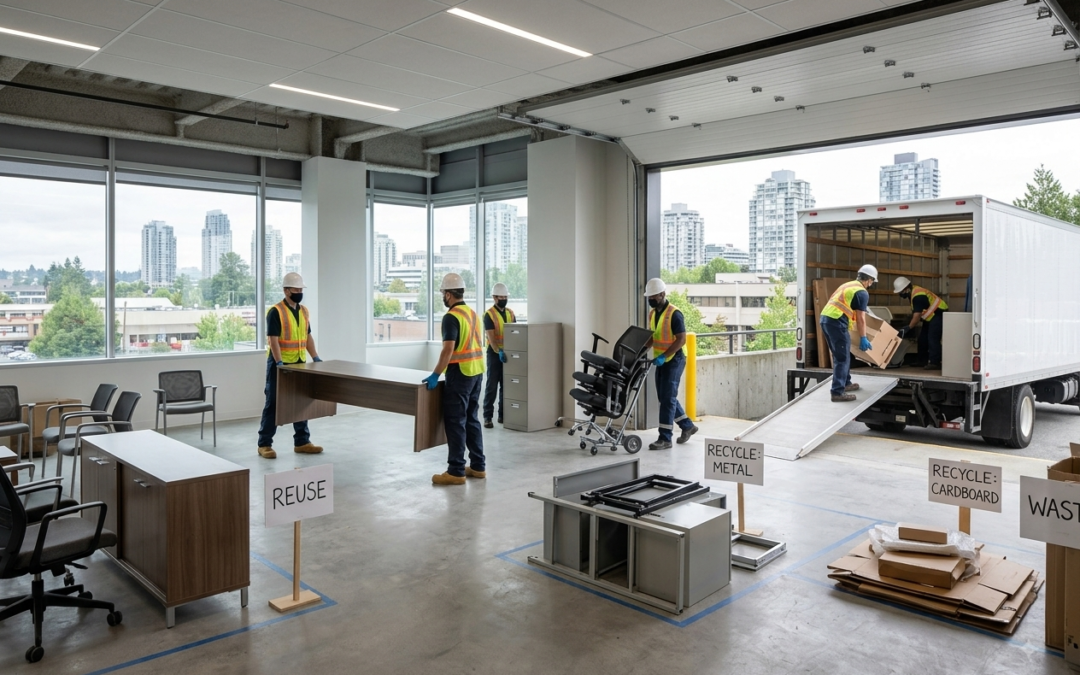
Commercial junk removal is not necessarily the same as sending everything directly to a landfill. Depending on the condition and material of each item, old office furniture may be reused, donated, dismantled for material recovery, recycled, or sent for appropriate disposal.
For businesses researching Junk Removal Burnaby, understanding what happens after pickup can help with planning, budgeting, sustainability, and responsible waste management.
Quick Answer: Where Does Old Office Furniture Go?
Old office furniture can follow several different waste-management routes depending on its condition, construction, and whether individual materials can be recovered.
A typical process may involve:
- Furniture being collected from the commercial property.
- Items being sorted according to condition and material.
- Reusable furniture being separated from damaged items.
- Recyclable materials being identified.
- Furniture that cannot be reused or recycled being directed to an appropriate disposal stream.
- Remaining materials being managed according to applicable requirements.
This means an old office desk does not automatically become landfill waste simply because a business no longer needs it.
Why Office Furniture Creates a Commercial Waste Challenge
Office furniture is often made from multiple materials.
A single workstation may contain:
- Wood or engineered wood
- Metal frames
- Plastic components
- Glass
- Foam
- Fabric
- Hardware
- Electrical components
This makes furniture different from simple single-material waste.
If an entire office is cleared at once, hundreds of individual items can enter the waste stream. Without proper sorting, materials that could potentially be recovered may end up mixed together.
That is why businesses should consider their furniture removal strategy before scheduling a large cleanout.
What Happens During Commercial Junk Removal in Burnaby?
A professional removal process generally starts with an assessment of what needs to leave the property.
The removal team may identify:
- Office desks
- Reception counters
- Filing cabinets
- Conference tables
- Office chairs
- Shelving
- Cubicles
- Storage units
- Tables
- Retail fixtures
- Miscellaneous commercial furnishings
The items can then be organized according to their condition and material.
The key objective is to avoid treating every item as identical waste.
A broken metal filing cabinet, for example, has different recovery potential from a heavily damaged upholstered chair.
1. Reusable Furniture May Be Given a Second Life
The first question should often be:
Can this furniture still be used?
Furniture that remains structurally sound may have value beyond the original business.
Examples include:
- Office desks in good condition
- Shelving units
- Conference tables
- Filing cabinets
- Reception furniture
- Office chairs
- Storage systems
Depending on condition and local acceptance programs, reusable items may be suitable for resale, donation, reuse, or redistribution.
This approach extends the useful life of the furniture and can reduce the volume entering disposal streams.
2. Metal Office Furniture Can Have Recycling Potential
Metal is common in commercial furniture.
Filing cabinets, desk frames, shelving, chair components, and workstation structures may contain steel or aluminum.
When practical, metal components can be separated from mixed furniture and directed toward appropriate recycling channels.
This is one reason businesses should avoid assuming that every unwanted piece of furniture belongs in general garbage.
Proper sorting can help recover materials while reducing unnecessary disposal.
3. Wood Components May Need Separate Handling
Desks, tables, shelving, and cabinets often contain wood or engineered wood.
The recovery options depend on:
- Type of wood
- Condition
- Paint or coating
- Adhesives
- Contamination
- Presence of other materials
Clean, suitable wood may have different management options from laminated or composite furniture that contains multiple bonded materials.
A professional commercial cleanout can help separate these materials before they enter the final waste stream.
4. Glass and Plastic Components Can Be Separated
Office furniture can also contain glass and plastic.
Examples include:
- Glass desk partitions
- Tabletops
- Acrylic dividers
- Plastic chair components
- Plastic storage parts
The ability to recycle these materials depends on their type, condition, contamination, and the receiving facility’s requirements.
This is another reason why furniture should ideally be assessed before everything is loaded together.
5. Upholstered Furniture Requires Different Consideration
Office chairs and sofas can be more difficult to process because they may contain several materials at once.
A typical office chair can contain:
- Fabric
- Foam
- Plastic
- Metal
- Wheels
- Hydraulic components
Once these materials are combined, separating them can require additional labour.
If the furniture is still usable, reuse may be preferable to dismantling it. If it is damaged or contaminated, appropriate disposal may be necessary.
Commercial Waste Disposal Burnaby: Why Sorting Matters
Businesses often use the phrase Commercial Waste Recycling Burnaby when looking for ways to remove unwanted materials from a commercial property.
However, commercial waste disposal is not simply about moving everything from Point A to Point B.
A more effective waste strategy considers:
Reuse → Recovery → Recycling → Disposal
The more materials that can be appropriately recovered before disposal, the less unnecessary waste may be sent to landfill.
This is particularly relevant during large office cleanouts where a significant percentage of the material consists of furniture and fixtures.
What About Cubicles and Modular Workstations?
Cubicles can present a unique challenge because they are typically made from multiple components.
A modular workstation may contain:
- Metal frames
- Fabric panels
- Laminated boards
- Plastic trim
- Glass dividers
- Electrical components
- Fasteners
Some systems can be dismantled and reused in another office configuration.
Others may be too damaged, outdated, or incomplete to justify reuse.
For businesses replacing an entire office layout, deciding whether cubicles should be dismantled for reuse or removed as mixed commercial waste can make a significant difference to the cleanout process.
Can Businesses Recycle Old Office Furniture?
Sometimes, but not every piece of furniture is recyclable in its original form.
Furniture recycling often depends on whether the item can be economically separated into recoverable materials.
For example:
Metal desk frame → Potential metal recycling
Clean cardboard packaging → Potential recycling
Mixed-material damaged chair → More complicated recovery
Reusable desk → Potential reuse
This distinction is important because “recyclable” does not necessarily mean that every recycling facility accepts the item as-is.
Businesses should confirm acceptance requirements before assuming that a particular furniture item can enter a recycling stream.
What Should Businesses Do Before Scheduling Junk Removal?
Preparation can make commercial furniture removal significantly more efficient.
Create a Furniture Inventory
List major items that need to be removed.
For example:
- 40 desks
- 60 office chairs
- 12 filing cabinets
- 5 conference tables
- 8 shelving units
An inventory helps the removal provider understand the approximate volume.
Separate Reusable Items
Identify furniture that is still in good condition.
These items may be candidates for reuse, donation, or redistribution.
Remove Sensitive Information
Businesses should check desks, filing cabinets, storage units, and other furniture for confidential documents or sensitive materials before removal.
Disconnect Equipment
If furniture contains electrical equipment or integrated systems, determine what needs to be disconnected before removal.
Identify Restricted Materials
Do not assume every item in an office cleanout can be handled as ordinary junk. Chemicals, batteries, electronics, hazardous materials, and other regulated items may require separate management.
How Office Furniture Removal Can Support a Larger Waste Strategy
A commercial cleanout is an opportunity to improve overall waste management.
Instead of looking at the project as simply “getting rid of old furniture,” businesses can divide materials into categories.
Reuse
Furniture that remains functional.
Recycling
Materials such as suitable metal, cardboard, and other accepted recyclables.
Recovery
Components that can be separated and recovered for material value.
Disposal
Items that cannot reasonably be reused or recycled and require an appropriate disposal route.
This approach helps businesses understand exactly what is leaving the property and why.
When Is Junk Removal Better Than Keeping Old Furniture?
Keeping unwanted furniture onsite may appear cheaper than arranging removal, but unused furniture occupies valuable commercial space.
It can create:
- Clutter
- Reduced usable workspace
- Storage problems
- Safety concerns
- Difficult access
- Poor appearance
- Additional handling later
For businesses preparing for relocation, renovation, downsizing, or lease turnover, removing unnecessary furniture earlier can simplify the entire transition.
Office Relocation Is a Good Time for Furniture Assessment
A business moving to a new Burnaby location should not automatically move every piece of furniture.
Before packing, ask:
- Does this item fit the new space?
- Is it still functional?
- Does it match the new office layout?
- Is replacement cheaper than transportation and storage?
- Can another department use it?
- Can it be reused or recycled?
Moving unwanted furniture simply means paying to transport something the business may eventually discard anyway.
A planned Junk Removal service can therefore become part of the relocation strategy.
Renovation Projects Create Another Furniture Removal Opportunity
Commercial renovations frequently require furniture to be removed before construction begins.
This can include:
- Desks
- Chairs
- Cabinets
- Shelving
- Reception furniture
- Workstations
- Display fixtures
Removing these items before renovation allows contractors to access the workspace more efficiently and reduces the risk of furniture being damaged during construction.
Businesses can also use the opportunity to separate reusable and recyclable materials before the renovation waste begins accumulating.
What Happens to Furniture That Cannot Be Reused?
Not every item has a practical second life.
Furniture may be too:
- Damaged
- Contaminated
- Worn out
- Broken
- Outdated
- Incomplete
In these cases, the furniture needs to enter an appropriate waste-management route.
Where possible, components may still be separated for material recovery. Remaining material may require disposal according to its composition and applicable requirements.
The important point is that responsible removal does not mean promising to recycle every piece of furniture. The appropriate route depends on the actual material and condition.
How Businesses Can Reduce Commercial Furniture Waste
Businesses can reduce future disposal needs by making furniture decisions more strategically.
Buy Durable Furniture
Longer-lasting furniture generally means fewer replacement cycles.
Choose Modular Systems
Modular workstations can be easier to reconfigure when office requirements change.
Maintain Furniture
Simple repairs can extend useful life.
Plan Before Replacing
Evaluate whether furniture actually needs replacement or needs refurbishment.
Create an Internal Reuse Program
Furniture no longer needed by one department may still be useful elsewhere.
These practices can reduce the volume of furniture entering the commercial waste stream over time.
The Difference Between Junk Removal and Waste Disposal
These terms are related but not identical.
Junk removal in Burnaby focuses on collecting and removing unwanted items from the property.
Waste disposal focuses on what happens to those materials after removal and which disposal or recovery route is appropriate.
For a commercial cleanout, both stages matter.
A business may need furniture removed quickly, but it can also benefit from understanding how different materials are managed afterward.
Old office furniture does not necessarily have one destination after commercial junk removal in Burnaby.
Depending on its condition and composition, furniture may be reused, donated, dismantled for material recovery, recycled, or sent through an appropriate disposal stream. The most effective approach is to assess the furniture before removal and separate reusable, recyclable, and disposal-bound materials wherever practical.
For businesses planning an office relocation, renovation, closure, downsizing, or large commercial cleanout, professional removal can make the process faster and more organized.
If your business needs reliable junk removal or is planning a larger Commercial Waste project, Canadian Empire Recycling & Disposal can help coordinate the removal and appropriate management of unwanted commercial materials. Contact Canadian Empire Recycling & Disposal to discuss your commercial cleanout requirements and plan a practical waste-management solution.