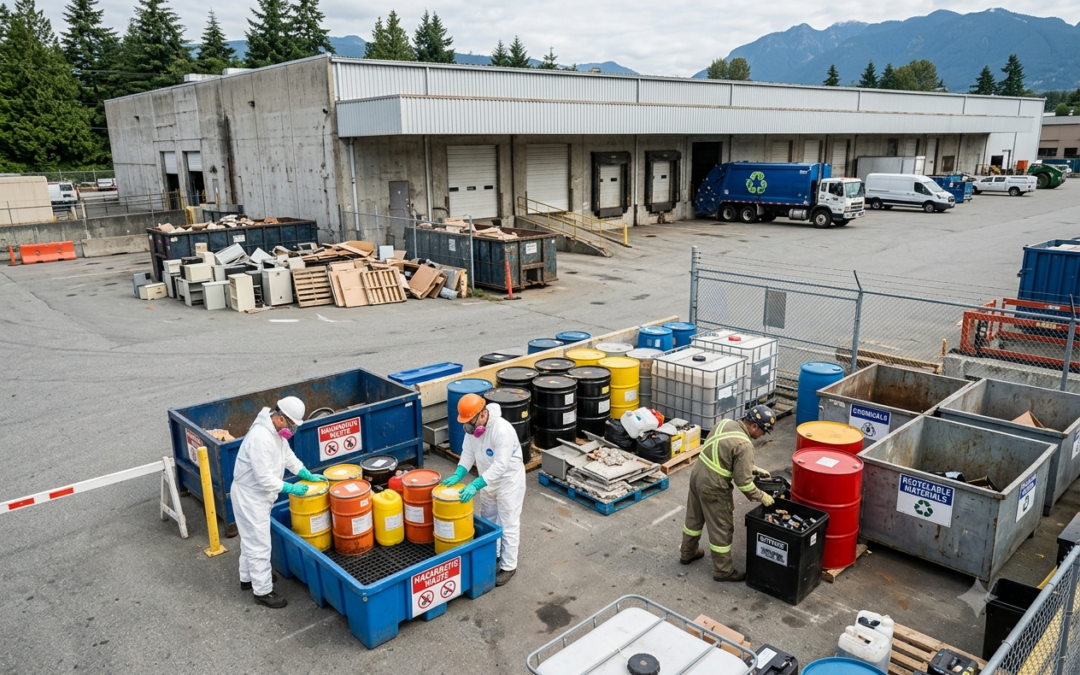
Commercial cleanouts in Burnaby can involve much more than unwanted furniture, packaging, and general debris. When a business closes, relocates, renovates, or clears an older property, workers may uncover paints, chemicals, contaminated materials, batteries, oils, or other substances that cannot be managed through ordinary commercial waste streams.
Knowing when a cleanout requires specialized hazardous waste handling is important for Burnaby businesses because mixing potentially hazardous materials with general waste can create safety, transportation, and disposal complications.
The key question is not simply how much waste a business has. It is what the waste contains, how it is classified, and whether it requires specialized handling before it can leave the property.
What Makes Commercial Cleanout Waste Hazardous?
A commercial cleanout may produce several different waste streams at the same time. Some materials can be recycled or handled as ordinary commercial waste disposal Burnaby, while others may require specialized management.
Waste may need additional attention when it contains substances that are flammable, corrosive, reactive, toxic, contaminated, or otherwise regulated.
Examples can include:
- Solvents and chemical products
- Certain paints and coatings
- Used oils and petroleum-based materials
- Batteries
- Chemical containers with residual contents
- Contaminated absorbents or cleanup materials
- Certain cleaning chemicals
- Fluorescent lamps and related materials
- Pesticides or chemical products
- Materials contaminated by hazardous substances
Not every product in these categories automatically requires the same disposal method. The condition, contents, quantity, and applicable requirements can affect how the material should be managed.
When Does a Burnaby Commercial Cleanout Require Hazardous Waste Disposal?
There are several situations where businesses should consider hazardous waste management before beginning a major cleanout.
1. When Old Chemicals Are Found in Storage Areas
Commercial properties often have storage rooms, maintenance areas, workshops, utility spaces, and back rooms that may contain products accumulated over many years.
A business relocating from an older property may discover containers that have been forgotten or are no longer needed.
Instead of placing unknown chemical containers into general waste, businesses should identify the materials and determine the appropriate management route.
This is particularly important when containers are damaged, leaking, unlabelled, or visibly deteriorated.
2. When a Business Is Closing or Relocating
Business closures can generate an unusually large volume of waste in a short period.
A commercial property may contain old cleaning supplies, maintenance chemicals, paints, batteries, oils, equipment-related materials, and other products that were used during normal operations.
A rushed cleanout can increase the chance of these materials being mixed with general debris.
Planning Hazardous Waste Disposal Burnaby requirements before the cleanout begins allows businesses to identify specialized waste separately and organize the project more efficiently.
3. During Commercial Renovations
Renovation projects can uncover materials that were hidden, stored behind equipment, or left behind by previous occupants.
A contractor may initially expect a straightforward property clearance but discover chemical products, contaminated materials, or other waste requiring additional handling.
Separating these materials from ordinary renovation debris helps prevent unsuitable waste from entering the wrong disposal stream.
4. When Industrial or Workshop Areas Are Being Cleared
Workshops, warehouses, automotive-related businesses, manufacturing spaces, and maintenance facilities can produce waste that requires more careful classification.
Used oils, solvents, chemical products, batteries, and contaminated materials may be present alongside metal, cardboard, plastics, and other recyclable materials.
A commercial cleanout should therefore begin with identifying the different waste streams rather than treating everything as one load.
Why Businesses Should Not Mix Hazardous and General Waste
One of the most important principles of commercial waste management is keeping incompatible or specialized materials separate from ordinary waste.
When hazardous materials are mixed into general debris, several problems can arise.
Safety Risks
Leaking containers, reactive substances, flammable products, or contaminated materials can create risks for workers handling the waste.
Sorting Problems
Once specialized materials are mixed with a large volume of ordinary debris, identifying and separating them can become more difficult.
Transportation Issues
Different waste types may have different transportation and containment requirements. A load containing improperly prepared hazardous materials may create complications during transport.
Increased Project Delays
A cleanout that was expected to take one day can become more complicated if hazardous materials are discovered at the last minute.
For Burnaby businesses, identifying these materials before collection can make the overall project more organized.
What Should Businesses Do With Unknown Containers?
Unknown containers are one of the most challenging discoveries during commercial cleanouts.
A container without a readable label may not be safe to treat as ordinary garbage simply because it looks like a common household or commercial product.
Businesses should avoid opening, mixing, or unnecessarily disturbing unknown substances. Instead, the material should be assessed so its contents and appropriate handling requirements can be determined.
If a container is leaking or damaged, the situation requires additional caution. Workers should not attempt improvised cleanup without appropriate guidance and equipment.
How Can Businesses Prepare for a Hazardous Waste Cleanout?
Preparation can significantly reduce confusion on the day of collection.
Before starting a large commercial cleanout, businesses can:
- Inspect storage areas first.
Look through maintenance rooms, workshops, cabinets, utility areas, and other spaces where chemicals or older products may have accumulated. - Separate known waste streams.
Keep recyclable materials, general debris, and potentially hazardous materials from being mixed together. - Check product labels.
Record the names and contents of chemical products wherever labels are available. - Identify damaged containers.
Leaks, corrosion, bulging, or deterioration should receive immediate attention. - Avoid mixing chemicals.
Different products should not be combined simply to reduce the number of containers. - Arrange appropriate waste services before the cleanout.
This is particularly important when the property contains specialized waste that cannot enter a conventional disposal stream.
This preparation gives contractors and waste-management providers a clearer picture of what needs to be collected.
Which Commercial Businesses May Encounter Hazardous Waste?
Hazardous waste is not limited to one type of business.
It can potentially appear during cleanouts involving:
- Offices with maintenance and cleaning supplies
- Retail stores
- Restaurants and food-service properties
- Warehouses
- Workshops
- Industrial facilities
- Property management buildings
- Construction and renovation sites
- Automotive-related businesses
- Manufacturing facilities
The quantity and type of waste will vary considerably between businesses. That is why commercial cleanout planning should be based on the actual materials present rather than simply the size of the property.
Hazardous Waste vs. Recyclable Commercial Waste
A commercial cleanout may contain valuable recyclable materials alongside waste that requires specialized disposal.
For example, businesses may have cardboard, scrap metal, electronics, wood, plastics, and other recyclable materials. Separately, they may have chemicals, oils, batteries, or contaminated products requiring a different management process.
Keeping these streams separate can improve recycling opportunities while reducing the chance of hazardous materials entering ordinary waste.
This is an important part of effective Commercial Waste Disposal, particularly during large-scale property cleanouts where multiple material types are generated simultaneously.
Why Commercial Cleanout Planning Matters in Burnaby
Burnaby has a wide range of commercial, industrial, retail, and mixed-use properties. As businesses renovate, relocate, expand, or close, their waste requirements can change significantly.
A property cleanout that appears straightforward from the outside may reveal years of accumulated materials inside storage rooms and work areas.
Planning ahead allows businesses to determine:
- What materials are present
- Which materials can be recycled
- Which materials require specialized handling
- How different waste streams should be separated
- What collection arrangements are needed
- How the cleanout timeline should be organized
This approach is more efficient than discovering specialized waste only after the main cleanup has already started.
What Are the Most Common Mistakes During Commercial Cleanouts?
Businesses can avoid several common problems by planning their waste streams.
Treating Every Material as General Garbage
Not every discarded product belongs in a regular waste stream. Chemical products and contaminated materials may require separate management.
Leaving Waste Identification Until Collection Day
Waiting until the truck arrives to determine what is being removed can cause unnecessary delays.
Mixing Different Chemicals
Combining products can create dangerous reactions and makes proper waste classification more difficult.
Ignoring Old or Unlabelled Containers
A forgotten container may contain a substance that requires specialized handling even if the product is no longer used.
Failing to Separate Recyclables
A commercial cleanout can contain significant recyclable material. Mixing everything can reduce opportunities for recovery and recycling.
When Should a Business Arrange Hazardous Waste Services?
The best time is before the commercial cleanout begins.
If a business knows that its property contains chemicals, oils, batteries, contaminated materials, or other potentially hazardous products, those materials should be identified during the planning stage.
Early coordination can help establish the appropriate collection and disposal process while allowing the business to keep regular commercial waste separate.
For larger cleanouts, businesses should also communicate the expected waste types and quantities in advance so that the service provider can determine the appropriate approach.
Plan Your Burnaby Commercial Cleanout Properly
A commercial cleanout is easier to manage when businesses know what they are removing before the work begins. Identifying chemicals, oils, batteries, contaminated materials, and other potentially hazardous waste early can help prevent unsafe mixing and unnecessary project delays.
Proper separation also allows recyclable and ordinary commercial materials to be managed through their appropriate waste streams. For businesses planning a property closure, renovation, relocation, or major cleanup, advance waste planning can make the entire process more efficient.
If your business needs help managing specialized waste during a commercial cleanout, Canadian Empire Recycling & Disposal can help you plan the appropriate waste-management solution. Contact Canadian Empire Recycling & Disposal to discuss hazardous waste disposal and commercial cleanout requirements for your property.