
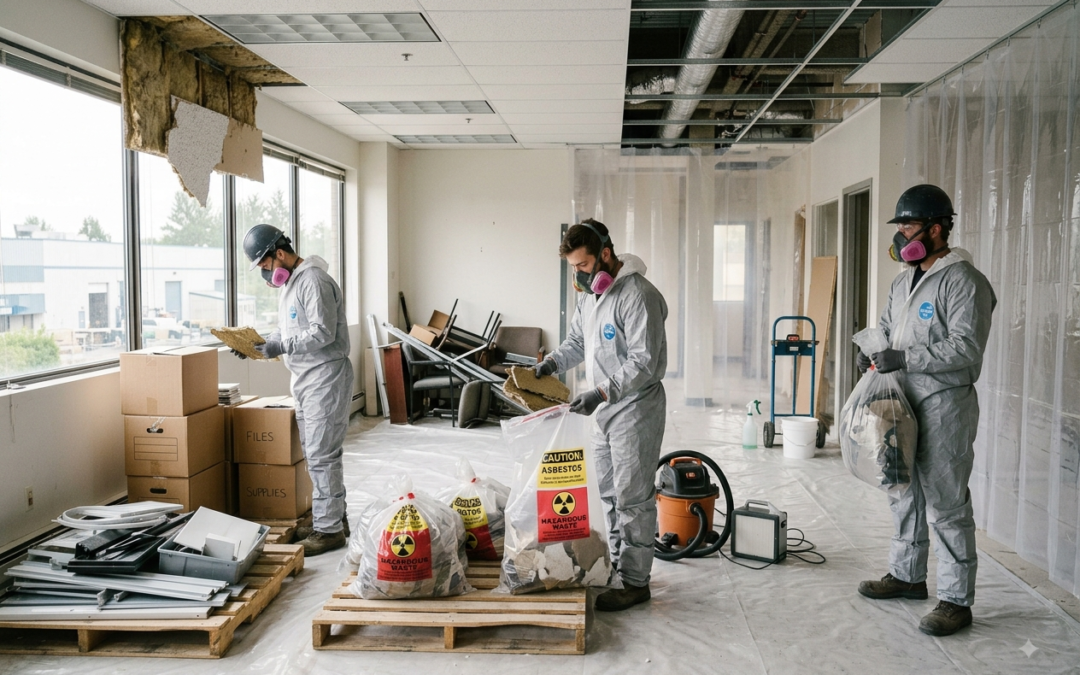
Commercial renovations and demolition projects rarely go exactly according to plan. A building may look ready for construction, only for workers to discover an unexpected material behind walls, beneath flooring, around old mechanical systems, or inside other building components.
When that material may contain asbestos, the project needs to change course immediately. Continuing normal demolition can spread hazardous fibres and create additional cleanup requirements. For Burnaby businesses, knowing what to do when asbestos is discovered mid-project can help protect workers, occupants, contractors, and the surrounding property.
This is also where proper Asbestos Waste Disposal Burnaby becomes an important part of the project—not simply an afterthought once removal is finished.
What Should You Do If Asbestos Is Discovered During a Commercial Project?
The first step is to stop disturbing the suspected material.
Workers should not cut, break, drill, sweep, or otherwise manipulate material simply to determine what it is. Suspected asbestos-containing materials need to be assessed through the appropriate professional process before work continues.
A practical response generally involves:
- Stopping work in the affected area
- Restricting access to the location
- Not disturbing or moving the suspected material
- Arranging appropriate assessment and testing
- Following required asbestos-control procedures
- Using qualified professionals for removal where required
- Keeping asbestos-containing waste separate from ordinary construction debris
The exact requirements depend on the material, building conditions, scope of work, and applicable regulations.
Why Can an Unexpected Discovery Delay a Burnaby Renovation?
A renovation schedule is usually built around a sequence of demolition, construction, inspections, deliveries, and contractor availability.
An unexpected asbestos discovery can interrupt that sequence.
For example, a contractor may begin removing old flooring and discover suspect material underneath. Another project might uncover insulation around older piping or materials hidden behind walls. Once suspected asbestos is identified, normal work in the affected area may need to stop until the material is properly assessed and managed.
This can affect:
- Demolition schedules
- Contractor availability
- Material deliveries
- Occupancy plans
- Project budgets
- Waste management arrangements
- Final cleanup
The earlier businesses account for the possibility of unexpected hazardous materials, the easier it can be to manage an interruption.
Why Should Asbestos Waste Never Be Mixed With Regular Commercial Waste?
One of the biggest concerns is treating asbestos-containing material like ordinary renovation debris.
Commercial projects can generate large volumes of drywall, wood, metal, packaging, flooring, fixtures, and other materials. If asbestos-containing waste becomes mixed into that stream, identifying and managing the affected material becomes considerably more complicated.
Businesses should keep potentially contaminated material separate and follow the appropriate handling, containment, transportation, and disposal requirements.
This distinction also matters when arranging Commercial Waste Recycling Burnaby. General commercial waste and asbestos-containing waste should not automatically be treated as the same waste stream.
What Types of Commercial Materials May Contain Asbestos?
Asbestos was used in a wide range of building products, particularly in older structures. Depending on the age and construction history of a commercial property, asbestos may potentially be present in materials such as:
- Insulation
- Pipe and mechanical insulation
- Vinyl flooring and flooring materials
- Ceiling materials
- Cement products
- Roofing materials
- Certain wall and building materials
- Fireproofing materials
- Some older adhesives and coatings
The presence of an older material does not automatically mean it contains asbestos. Visual inspection alone generally cannot reliably confirm asbestos content.
That is why suspected materials should be assessed appropriately before being disturbed.
What Happens to Asbestos Waste After Removal?
Removing the material is only one part of the process.
Once asbestos-containing materials are removed, the resulting waste needs to be contained, handled, transported, and disposed of according to applicable requirements. It should not simply be placed into a regular construction-waste bin.
The waste-management plan should account for the type and condition of the material and ensure that the material remains controlled throughout the process.
For a commercial property manager, this means asking an important question early:
Who will manage the asbestos waste after the removal work is completed?
Having that answer before demolition begins can prevent confusion when containers of regulated waste are generated unexpectedly.
How Can Businesses Prepare for Unexpected Asbestos?
Businesses cannot always know what is hidden inside an older commercial building, but they can reduce project disruption through better planning.
Review the Building’s History
Before major demolition or renovation, review available building records, previous renovation information, and known material assessments.
Identify High-Risk Areas
Older flooring, insulation, mechanical systems, ceilings, walls, and other building components may warrant additional attention before work begins.
Coordinate With Contractors
Everyone involved in the project should understand what to do if suspicious material is discovered. A clear escalation process can prevent workers from continuing work in an affected area.
Keep Waste Streams Separate
Do not allow suspected asbestos-containing materials to become mixed with regular construction or business waste.
Plan for Disposal Before Work Starts
Businesses should know how different waste streams will be managed before demolition begins. This is particularly important for projects involving older commercial properties.
What About Businesses Already Producing Commercial Waste?
Not every material generated during a renovation is hazardous.
Commercial properties may produce cardboard, metal, furniture, fixtures, appliances, packaging, equipment, and other unwanted materials alongside renovation debris. These materials should be evaluated and separated according to their appropriate recycling, reuse, or disposal options.
A structured waste plan can help prevent recyclable or recoverable materials from being unnecessarily mixed with general waste.
For larger projects, businesses can also benefit from coordinating waste removal with the renovation schedule rather than waiting until the property becomes overcrowded with debris.
Why Professional Waste Planning Matters in Burnaby
An unexpected asbestos discovery can turn a straightforward commercial renovation into a more complicated project. The key is not to treat the discovery as ordinary junk or construction debris.
Businesses should stop work in the affected area, obtain the appropriate assessment, follow required controls, and ensure that asbestos-containing materials are managed through the correct waste process.
At the same time, ordinary commercial materials should remain within their appropriate waste or recycling streams. Keeping these categories separate can make the overall project safer and easier to manage.
Finding suspected asbestos in the middle of a commercial renovation does not necessarily mean the entire project has to stop, but it does mean the affected work area needs immediate attention. Proper identification, controlled removal, and compliant waste management are essential before regular demolition or renovation continues.
For businesses dealing with asbestos-related materials alongside other commercial debris, Canadian Empire Recycling & Disposal can help you plan an appropriate waste-management solution. Contact Canadian Empire Recycling & Disposal to discuss your commercial waste and asbestos waste requirements in Burnaby before your next renovation or cleanup project.