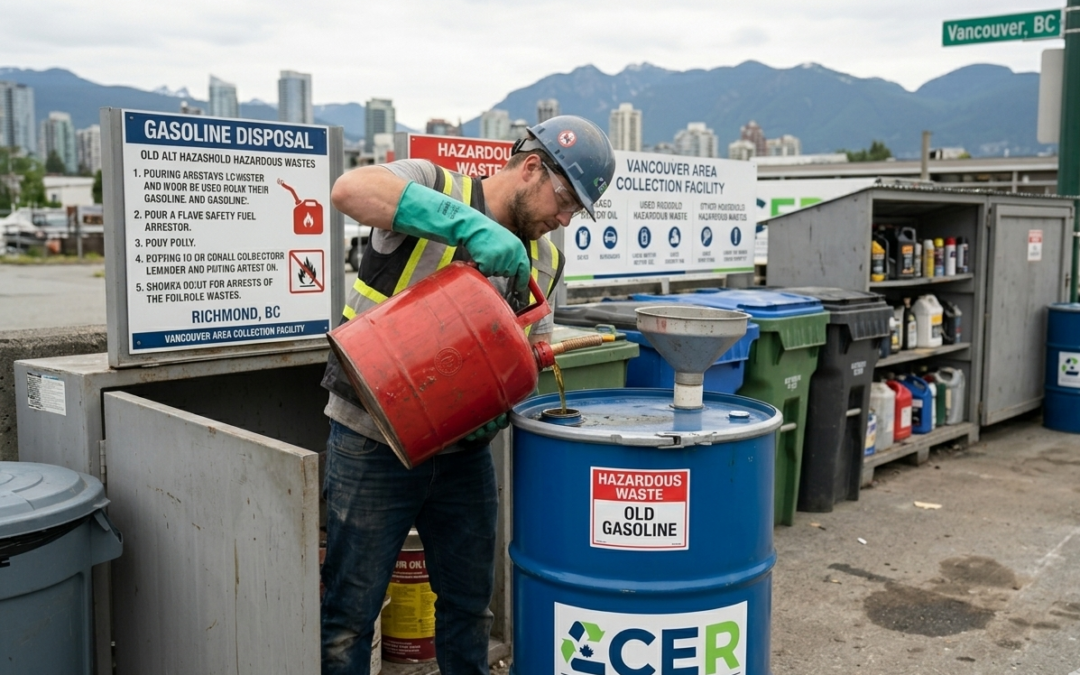
Gasoline is a common household and commercial fuel used for vehicles, lawn equipment, generators, and more. However, when it becomes old, contaminated, or no longer needed, disposing of it improperly can pose serious risks to both people and the environment. In a city like Vancouver, where environmental responsibility is a priority, knowing how to safely dispose of gasoline is essential.
Why Gasoline Is Considered Hazardous Waste
Gasoline is highly flammable and contains toxic chemicals such as benzene, toluene, and xylene. These substances can:
- Contaminate soil and groundwater
- Release harmful fumes into the air
- Pose fire and explosion risks
- Causes health issues when inhaled or absorbed
Because of these dangers, fuel is classified as hazardous waste and must be handled with care.
The Risks of Improper Gasoline Disposal
Improper disposal can lead to severe consequences. Pouring down the drain, onto the ground, or into the regular trash can:
1. Pollute Water Sources
Gasoline can seep into groundwater and contaminate drinking water supplies.
2. Harm the Environment
Toxic chemicals can damage ecosystems, affecting plants, animals, and aquatic life.
3. Create Fire Hazards
Gasoline vapors are highly flammable and can ignite easily, leading to dangerous fires.
4. Violate Local Regulations
Improper disposal may result in fines or legal penalties in Vancouver.
Signs Your Gasoline Needs Disposal
Not all fuels need to be thrown away immediately. However, you should consider disposal if:
- It has been stored for more than 3–6 months
- It smells sour or looks darker than usual
- Your equipment is not running properly due to the fuel quality
- It has been contaminated with water or debris
Old gasoline loses its effectiveness and becomes unsafe to use.
Safe Methods for Gasoline Disposal
1. Use Approved Collection Facilities
The safest way to dispose of gasoline is by taking it to designated hazardous waste facilities. These centers are equipped to handle flammable and toxic substances safely.
Using professional services for Gasoline Disposal Vancouver ensures that the fuel is managed in compliance with environmental regulations.
2. Store Gasoline Properly Before Disposal
If you cannot dispose of fuel immediately, store it safely:
- Use approved, sealed containers
- Keep it in a cool, well-ventilated area
- Avoid direct sunlight and heat sources
- Label the container clearly
Proper storage reduces the risk of spills and accidents.
3. Never Pour Gasoline Down Drains or on Soil
This is one of the most dangerous mistakes people make. It can:
- Damage plumbing systems
- Contaminate soil and groundwater
- Release toxic fumes into enclosed spaces
Always avoid this method at all costs.
4. Avoid Burning Gasoline
Burning gasoline in open areas or containers is extremely dangerous and illegal in many places. It can cause uncontrolled fires and release toxic pollutants into the air.
5. Use Certified Hazardous Waste Services
Professional waste disposal companies specialize in handling dangerous materials. Choosing Hazardous Waste Disposal Vancouver services ensures that gasoline is transported, treated, and disposed of safely.
Environmental Responsibility in Vancouver
Vancouver is known for its commitment to sustainability and environmental protection. Proper fuel disposal plays a key role in maintaining:
- Clean air and water
- Healthy ecosystems
- Safe communities
- Reduced environmental footprint
By following proper disposal practices, residents contribute to a greener and safer city.
Tips to Reduce Gasoline Waste
Preventing fuel waste is just as important as disposing of it properly. Here are some simple tips:
- Buy only the amount you need
- Use fuel stabilizers for longer storage
- Store fuel in proper containers
- Regularly check stored fuel for quality
These steps can help you minimize waste and avoid disposal issues altogether.
When to Call Professionals
Handling fuel can be risky, especially in large quantities or contaminated conditions. You should consider professional help if:
- You have a large amount of old fuel
- The fuel is mixed with other chemicals
- You are unsure about safe handling procedures
- You want a hassle-free and compliant solution
Professionals have the expertise and equipment to manage hazardous materials safely.
Fuel may be a common household fuel, but it is also a hazardous substance that requires careful handling and disposal. Improper disposal can lead to environmental damage, health risks, and legal consequences. By understanding the risks and following safe disposal methods, you can protect yourself, your community, and the environment.
For safe and reliable service, Canadian Empire Recycling & Disposal offers professional solutions for handling hazardous materials, including fuel. Their experienced team ensures proper disposal in compliance with environmental standards, giving you peace of mind. Contact Canadian Empire Recycling & Disposal for responsible and hassle-free disposal in Vancouver.
Frequently Asked Questions
How long can gasoline be stored safely?
Gasoline can typically be stored for 3–6 months before it starts to degrade.
What should I do with small amounts of old gasoline?
Take it to a local hazardous waste facility or use professional disposal services.
Is it safe to burn old gasoline?
No, burning gasoline is dangerous and can cause fires and toxic emissions.
Why should I use professional disposal services?
They ensure safe handling, proper disposal, and compliance with environmental regulations.