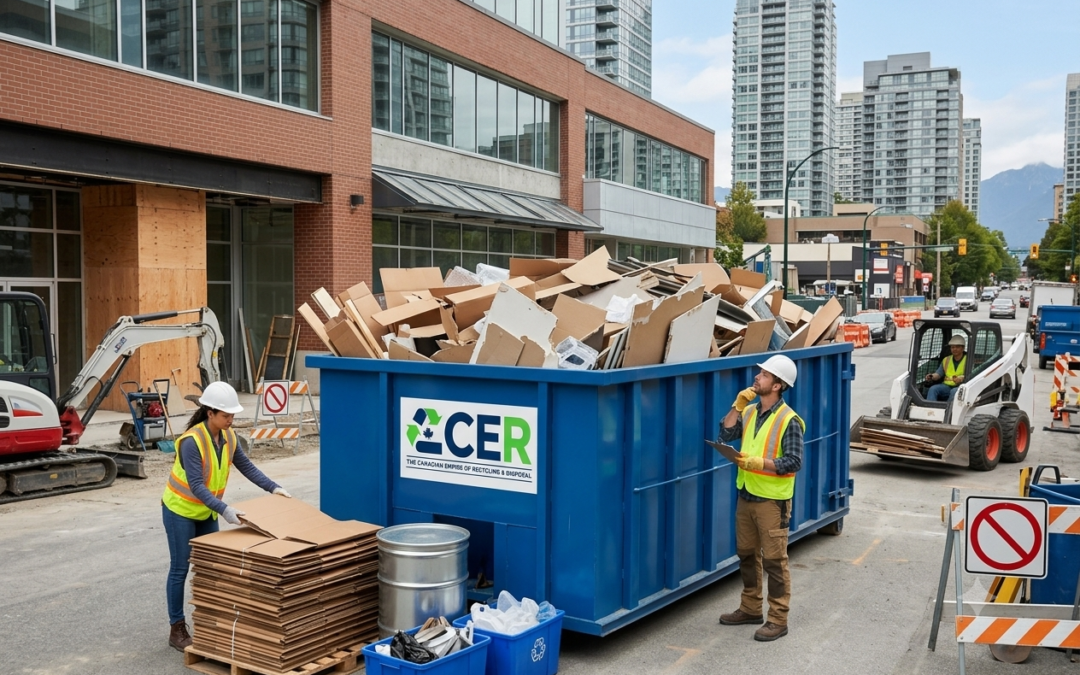
A commercial waste bin can look large when it is delivered to a Vancouver business or construction site, yet it can fill much sooner than expected. Renovation debris, bulky materials, packaging, demolition waste, and poor waste separation can quickly use available space.
For businesses, an unexpectedly full bin can create more than a minor inconvenience. Limited waste capacity can interfere with site organization, restrict available working space, and require an additional collection or replacement sooner than originally planned.
Understanding why commercial waste bins fill faster than expected allows Vancouver businesses and contractors to estimate waste volumes more accurately, separate materials properly, and plan collection schedules around their projects.
1. Bulky Materials Take Up More Space Than Expected
One of the most common reasons a commercial bin fills quickly is the amount of space occupied by bulky materials.
Construction and renovation projects can generate large pieces of drywall, cabinetry, flooring, fixtures, insulation, wood, and packaging. Even when these materials are not particularly heavy, their size can consume substantial bin capacity.
For example, a business renovating an office may remove partitions, desks, flooring, ceiling materials, and other fixtures. These items can take up significantly more room than the business anticipated.
Breaking down appropriate materials where safe and practical can sometimes improve space utilization, but businesses should never compact or disturb materials that require specialized handling.
2. Demolition Waste Is Difficult to Estimate
Demolition projects are particularly challenging when it comes to predicting waste volumes. Once walls, ceilings, flooring, fixtures, and other building components are removed, the actual quantity of debris may be considerably greater than the original estimate.
A small commercial renovation can therefore produce more waste than expected, especially when multiple areas of a property are being renovated simultaneously.
This is one reason contractors should consider the project’s demolition scope when planning waste-container capacity rather than estimating requirements based only on the property’s visible waste before work begins.
3. Different Waste Materials Occupy Different Amounts of Space
Not all waste has the same volume-to-weight ratio.
A bin containing mostly cardboard and lightweight packaging may reach its capacity differently from one containing dense construction debris. Wood, drywall, furniture, metal, and other materials can each affect available space in different ways.
Businesses should therefore consider what type of material the project will generate, not simply how many bags or loads of waste are expected.
This becomes especially important when a project generates a combination of bulky materials and dense debris.
4. Poor Waste Separation Can Reduce Available Capacity
Mixing different waste streams can make commercial waste management less efficient.
A business may generate cardboard, metal, wood, packaging, construction debris, and recyclable materials during the same project. If recyclable materials are placed into the same general waste bin, valuable capacity can be used for materials that may have another recovery option.
Planning Commercial Waste Recycling Vancouver as part of the overall project can help businesses identify recyclable materials before they are mixed with general waste.
Proper separation can also make the waste stream easier to manage and may support better recovery of materials such as cardboard, scrap metal, and other suitable recyclables.
5. Packaging Waste Can Build Up Quickly
Commercial businesses often underestimate how much waste can come from packaging.
Equipment deliveries, furniture installations, office upgrades, retail stock, and construction supplies can generate cardboard, plastic wrapping, pallets, protective materials, and other packaging.
A project may therefore fill a bin even without significant demolition work.
Businesses receiving frequent deliveries should consider packaging waste when estimating their required container capacity and collection frequency.
6. Commercial Cleanouts Can Produce More Waste Than Expected
Office and commercial property cleanouts can create a surprisingly large volume of waste.
Old furniture, shelving, fixtures, electronics, files, carpeting, displays, and miscellaneous materials can accumulate over years. When everything is removed at once, the volume can quickly exceed the capacity of a single bin.
Before a large cleanout begins, businesses should make an inventory of the materials being removed. This can help determine which items should be recycled, donated where appropriate, handled separately, or sent through the appropriate waste stream.
7. Construction Waste Requires Careful Planning
Construction projects often involve several trades working at the same time. Each trade can generate its own waste, including offcuts, packaging, damaged materials, drywall, wood, flooring, and other debris.
If waste generation from each phase is not considered, the container can fill much faster than expected.
Planning construction waste removal Vancouver around the construction schedule can help contractors anticipate when waste volumes are likely to increase and coordinate collection accordingly.
A project that moves from framing to drywall to flooring, for example, may experience very different waste volumes during each stage.
8. Multiple Trades Can Fill a Shared Bin Quickly
A single commercial project may have electricians, plumbers, carpenters, flooring installers, drywall contractors, and other trades working on site.
If everyone uses the same waste container, it can become difficult to estimate how quickly it will fill.
A useful approach is to discuss waste responsibilities with each trade before work begins. Contractors can establish where materials should go and which materials need to remain separate.
Clear site instructions can prevent recyclable materials, hazardous materials, and general debris from being unnecessarily mixed.
9. Waste Collection Timing Matters
Even when the original bin size is appropriate, the collection schedule can affect how quickly waste begins to accumulate.
A project may generate significantly more debris during a particular phase than during others. If collection is scheduled too far apart, the container may reach capacity before the next planned pickup.
This can interfere with site organization and leave contractors with limited space for newly generated waste.
Businesses using Bin Rental Services Vancouver should therefore consider both container capacity and expected waste generation when planning collection.
10. Hazardous Materials Need Separate Consideration
Not every material generated during a commercial project belongs in a general waste bin.
Businesses may encounter paints, solvents, oils, batteries, chemicals, contaminated materials, or other products that require specialized handling. These materials should be identified before disposal and managed according to their specific requirements.
Keeping specialized waste separate can prevent a general commercial waste bin from becoming unsuitable for its intended waste stream.
It also helps businesses maintain a more organized approach to waste management throughout the project.
How Can Vancouver Businesses Prevent Bins From Filling Too Quickly?
Businesses cannot always predict the exact amount of waste a project will generate, but several planning steps can reduce unexpected capacity problems.
Estimate Waste by Project Phase
Instead of calculating total waste only once, consider how much material each stage of the project is likely to generate.
Separate Recyclable Materials
Keep suitable recyclable materials separate from general waste. This can preserve available bin capacity and support material recovery.
Track Waste During the Project
If a bin is filling faster than expected, reviewing what is being placed inside can help identify the cause before the problem becomes more serious.
Coordinate Collection With Peak Waste Periods
A renovation or demolition project may have certain stages that generate significantly more debris. Collection can be planned around these periods.
Communicate With Contractors
Everyone using the bin should understand what belongs in it and what must be kept separate.
When Should a Business Consider Additional Bin Capacity?
A business may need additional capacity when waste is consistently accumulating faster than collection can occur, when a major demolition phase is approaching, or when multiple trades are generating waste simultaneously.
Rather than waiting until a container is full, project managers should monitor waste levels throughout the work.
If the project scope changes, the waste plan should change with it. A renovation that expands from one office area to an entire floor, for example, may require additional waste-management arrangements.
Commercial waste bins can fill faster than expected because of bulky materials, demolition debris, packaging, multiple trades, poor waste separation, and inaccurate estimates of project waste volumes. For Vancouver businesses, the solution is not always simply ordering a larger bin. Effective waste planning means understanding the materials being generated, separating recyclable and specialized waste, and coordinating collection with the pace of the project.
A well-planned approach can help businesses keep work areas organized while making better use of available waste capacity.
If your business needs reliable waste-management support for a renovation, cleanout, construction project, or commercial property, Canadian Empire Recycling & Disposal can help. Contact Canadian Empire Recycling & Disposal to discuss your Bin Rental Services, commercial recycling, construction waste, and disposal requirements.
Frequently Asked Questions
Can recycling help reduce the amount of waste going into a commercial bin?
Yes. Separating suitable recyclable materials such as cardboard, metal, and other recoverable materials can reduce the amount of general waste entering the bin and improve overall waste management.
How can contractors estimate the bin capacity needed for a project?
Contractors should consider the project's size, materials being removed, number of trades, demolition activities, expected waste volume, and project schedule. Monitoring waste during the project can also help identify whether additional capacity is needed.
Should hazardous materials go into a regular commercial waste bin?
Not necessarily. Materials such as chemicals, solvents, oils, batteries, and contaminated products may require specialized handling. Businesses should identify these materials and confirm the appropriate waste-management process before disposal.
What should a Vancouver business do if its waste bin fills before the project is finished?
The business should contact its waste-management provider to discuss the situation and determine whether an additional collection, replacement container, or revised waste-management plan is appropriate. It is better to address capacity issues before waste begins accumulating around the worksite.