Painting projects are common across Vancouver, from residential renovations to large-scale commercial developments. However, one question continues to confuse homeowners, contractors, and property managers alike: Can dried paint actually be recycled?
The answer isn’t as straightforward as many people think. Whether paint is recyclable depends on its chemical composition, how completely it has dried, the type of container it’s stored in, and British Columbia’s environmental regulations. Misunderstanding these rules can result in unnecessary landfill waste, environmental contamination, or even regulatory issues for businesses.
If you’re searching for reliable information about Paint Recycling Vancouver, this guide explains what qualifies for recycling, what should be treated as hazardous waste, and how responsible disposal supports Vancouver’s sustainability goals.
Why Paint Is More Complicated Than Ordinary Household Waste
Paint isn’t simply coloured liquid. Many products contain pigments, binders, solvents, preservatives, and heavy metals that can become environmental hazards when disposed of incorrectly.
When liquid paint enters storm drains or soil, harmful chemicals may contaminate waterways and ecosystems. Even seemingly harmless leftover paint can release volatile organic compounds (VOCs) if stored improperly.
This is why provincial environmental regulations distinguish paint from general household waste and require certain products to be managed through approved recycling and hazardous waste programs.
Does Dried Paint Count as Recyclable Material?
The biggest misconception is that all dried paint is safe to throw away.
In reality, recycling eligibility depends on the paint type.
Fully Dried Latex Paint
Latex (water-based) paint that has completely hardened is generally considered less hazardous than liquid paint. Depending on municipal requirements and container condition, some dried latex paint containers may be accepted through approved recycling or disposal programs.
However, recycling is still preferable whenever possible because recovered materials can reduce landfill waste.
Oil-Based Paint Is Different
Oil-based paints remain a concern even after drying because they often contain flammable solvents and hazardous chemicals.
Products such as:
- Oil paints
- Marine coatings
- Industrial enamels
- Wood preservatives
- Automotive coatings
- Epoxy paints
typically require specialized handling under Hazardous Waste Disposal Vancouver programs rather than conventional waste collection.
Why Vancouver Prioritizes Paint Recycling
Metro Vancouver continues to promote waste diversion by keeping reusable materials out of landfills whenever practical.
Professional recycling facilities can often:
- Recover usable paint.
- Reprocess materials into recycled paint products.
- Separate recyclable metal containers.
- Safely treat hazardous residues.
- Reduce greenhouse gas emissions associated with manufacturing new products.
Every properly recycled paint container contributes to a more sustainable circular economy.
Construction and Renovation Projects Generate More Paint Waste Than You Think
Home renovation projects frequently leave behind partially used paint, primers, stains, sealers, and specialty coatings.
Whether you’re updating a single room or completing a full home renovation Vancouver project, creating a paint management plan before work begins can reduce unnecessary waste.
Professional contractors increasingly estimate paint quantities more accurately, store unused products correctly, and recycle leftover materials once projects are complete.
Commercial Properties Face Additional Responsibilities
Paint disposal becomes more complex for businesses.
Office renovations, warehouses, retail stores, schools, apartment complexes, manufacturing facilities, and commercial construction sites often produce significant volumes of leftover coatings.
Choosing professional Commercial Waste Recycling Vancouver services helps organizations:
- Meet environmental compliance requirements.
- Reduce landfill contributions.
- Improve workplace safety.
- Simplify waste documentation.
- Support corporate sustainability initiatives.
- Demonstrate environmental responsibility to customers.
Businesses also reduce the risks associated with storing aging paint products on-site.
When Paint Becomes Hazardous Waste
Many people assume only industrial chemicals qualify as hazardous waste.
In reality, several common paint-related materials require specialized disposal, including:
- Paint thinners
- Mineral spirits
- Solvent-based primers
- Spray paint
- Lacquers
- Wood stains
- Varnishes
- Paint removers
- Cleaning solvents
- Contaminated paint containers
These products should never be poured into drains, dumped outdoors, or mixed with ordinary garbage because they can pose fire, health, and environmental hazards.
Best Practices Before Recycling Paint
Preparing paint correctly improves recycling efficiency.
Before transporting paint:
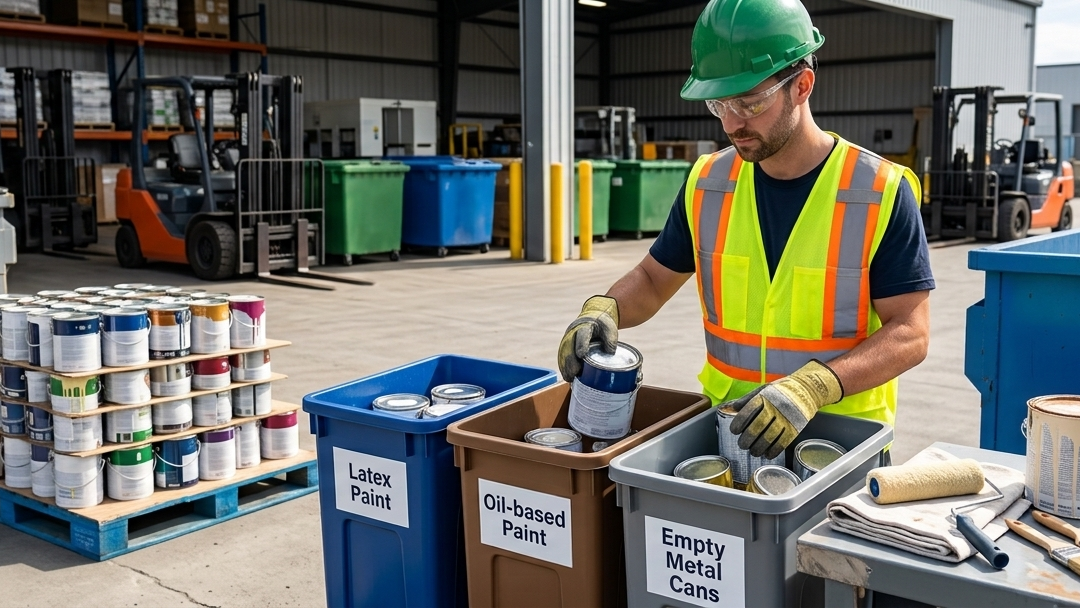
- Keep products in their original labelled containers.
- Ensure lids are tightly sealed.
- Separate oil-based and latex products.
- Never mix different paint types.
- Store containers upright to prevent leaks.
- Transport paint in a stable position.
Proper preparation protects both recycling staff and the environment.
Environmental Benefits Extend Beyond Waste Reduction
Many people think recycling paint simply keeps cans out of landfills.
The environmental benefits are much greater.
Responsible recycling helps:
- Preserve natural resources.
- Reduce demand for virgin raw materials.
- Lower manufacturing emissions.
- Prevent groundwater contamination.
- Support Vancouver’s circular economy.
- Encourage sustainable construction practices.
For property owners pursuing green building certifications, responsible paint management also supports broader environmental objectives.
Why Professional Paint Recycling Matters
Attempting to dispose of leftover paint without understanding local regulations often creates unnecessary risks.
Professional recycling providers understand:
- Product classification
- Safe transportation procedures
- Environmental regulations
- Hazardous material handling
- Material recovery opportunities
- Documentation requirements for commercial clients
Their expertise ensures paint is managed responsibly from collection through final processing.
Not every dried paint product can be recycled, and not every paint container belongs in the garbage. The safest approach is understanding the product you’re disposing of and following Vancouver’s recycling requirements.
Whether you’re completing a home improvement project or managing waste from a commercial facility, proper paint recycling protects both the environment and your community.
If you’re looking for dependable paint recycling solutions, contact Canadian Empire Recycling & Disposal. They provide environmentally responsible recycling services for residential, commercial, and industrial clients. From specialized Hazardous Waste Disposal services to efficient recycling solutions for businesses, their experienced team helps ensure paint waste is managed safely, legally, and sustainably across the Vancouver area.
Frequently Asked Questions
What industries generate the most recyclable paint waste?
Construction companies, commercial painters, property management firms, manufacturers, schools, healthcare facilities, and retail businesses commonly produce recyclable paint waste.
Why shouldn't paint be poured down household drains?
Paint can contaminate water systems, damage wastewater infrastructure, and introduce harmful chemicals into the environment.
Can recycled paint be used again?
Yes. Many recycling facilities process suitable paint into recycled paint products for residential, commercial, and industrial applications.
How does professional paint recycling support sustainable construction?
Proper recycling diverts waste from landfills, recovers valuable materials, reduces environmental impact, and helps construction projects meet sustainability and waste-reduction goals.