Rubber is one of the most durable materials used in modern manufacturing, construction, transportation, agriculture, and everyday consumer products. However, its durability also means it can remain in landfills for decades if not managed responsibly. As Abbotsford continues to prioritize sustainable waste management, understanding which rubber products can be recycled has become increasingly important for homeowners, contractors, farms, and businesses alike.
Whether you’re replacing industrial equipment, renovating a commercial property, or clearing out agricultural materials, knowing what belongs in Rubber Recycling Abbotsford programs can reduce landfill waste, recover valuable resources, and help meet environmental regulations.
This guide explains the different types of recyclable rubber, which materials require special handling, and how professional recycling services support a cleaner and more sustainable Abbotsford.
Why Rubber Recycling Matters
Unlike many common waste materials, rubber is engineered to withstand extreme temperatures, moisture, chemicals, and heavy wear. While this makes rubber highly durable, it also makes disposal a significant environmental challenge.
Improperly discarded rubber products can:
- Occupy landfill space for decades.
- Create fire hazards when stockpiled.
- Release pollutants if burned illegally.
- Waste valuable recyclable materials.
- Increase disposal costs for businesses.
Professional recycling keeps these materials in circulation by converting them into new products instead of sending them to landfill.
Which Rubber Products Can Be Recycled?
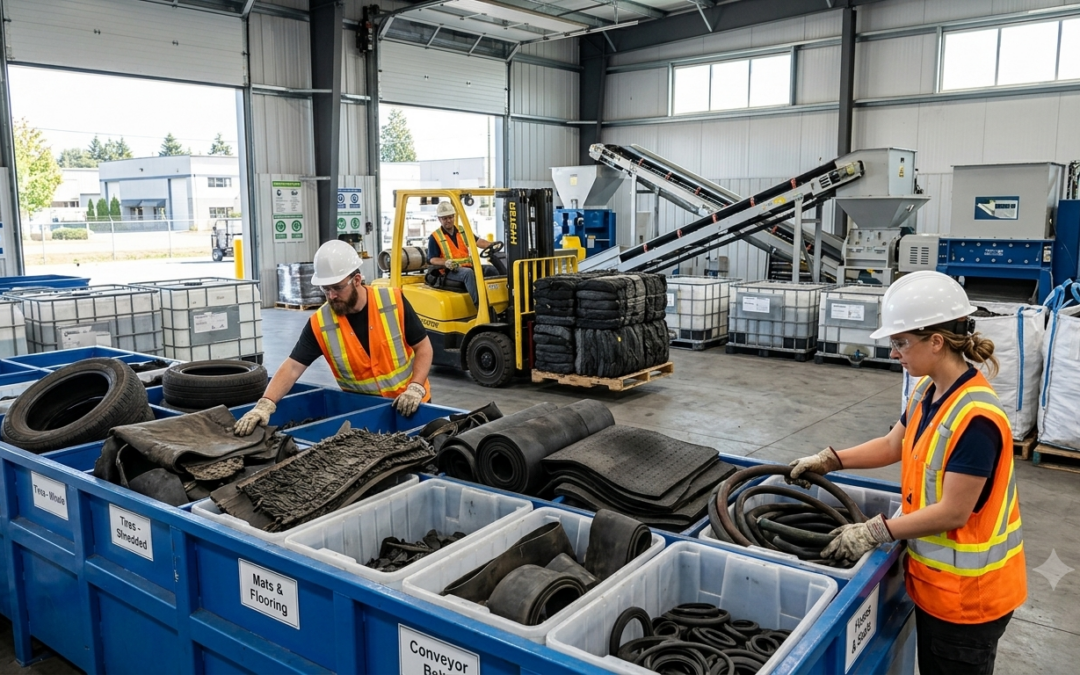
Many people think only vehicle tires are recyclable, but today’s recycling facilities can process a much wider variety of rubber materials.
1. Vehicle Tires
Passenger vehicle tires remain one of the most commonly recycled rubber products.
Recovered tire rubber can be transformed into:
- Playground safety surfaces
- Rubberized asphalt
- Athletic tracks
- Landscaping mulch
- Industrial flooring
- Molded rubber products
Proper tire recycling also allows steel belts and textile fibres to be recovered separately.
2. Industrial Rubber Products
Manufacturing facilities frequently replace heavy-duty rubber components that remain highly recyclable.
Examples include:
- Conveyor belts
- Industrial rollers
- Rubber seals
- Gaskets
- Expansion joints
- Protective mats
Many of these products are processed into crumb rubber for reuse in industrial applications.
3. Construction Rubber Waste
Construction and renovation projects generate significant quantities of rubber materials.
Examples include:
- Roofing membranes
- Rubber underlayment
- Expansion materials
- Waterproofing sheets
- Rubber insulation
- Floor protection products
During demolition and renovation, separating rubber from mixed debris improves recycling rates and reduces overall disposal costs.
4. Commercial Flooring
Businesses often replace rubber flooring during office renovations, gym upgrades, schools, healthcare facilities, and retail improvements.
Recyclable products include:
- Gym flooring
- Rubber tiles
- Entrance mats
- Safety flooring
- Anti-fatigue mats
Instead of occupying landfill space, these materials can often be processed into new flooring products.
5. Agricultural Rubber
Agriculture plays an important role throughout Abbotsford, creating unique rubber recycling opportunities.
Common recyclable materials include:
- Livestock mats
- Irrigation hoses
- Rubber belting
- Equipment seals
- Tractor rubber components
Keeping these materials out of landfill supports both environmental sustainability and responsible farm operations.
Can Rubber Hoses Be Recycled?
Many commercial and agricultural hoses contain synthetic rubber compounds that may be accepted by specialized recycling facilities.
Acceptance often depends on:
- Material composition
- Metal fittings
- Chemical contamination
- Overall condition
Sorting hoses before disposal helps maximize recovery rates.
Rubber Products That May Require Special Handling
Not every rubber product belongs in standard recycling streams.
Items contaminated with:
- Oil
- Paint
- Solvents
- Hazardous chemicals
- Asbestos-containing materials
- Petroleum products
may require evaluation before recycling. In some cases, additional handling procedures are necessary to ensure safe processing and environmental compliance.
How Recycled Rubber Is Used
Modern recycling technology allows recovered rubber to be transformed into valuable new products.
Common end uses include:
- Playground surfaces
- Running tracks
- Sports fields
- Road construction materials
- Traffic barriers
- Sound insulation
- Landscape products
- Industrial mats
- Rubber tiles
- Construction materials
This circular approach conserves natural resources while reducing demand for newly manufactured rubber.
Benefits for Businesses
Businesses that recycle rubber instead of disposing of it as mixed waste can experience several operational advantages.
Professional Commercial Waste Recycling Abbotsford services help organizations:
- Reduce landfill disposal costs.
- Improve recycling rates.
- Support environmental compliance.
- Meet corporate sustainability goals.
- Simplify waste management.
- Enhance ESG reporting.
These benefits are particularly valuable for manufacturers, construction companies, logistics providers, farms, warehouses, and property management firms.
Best Practices Before Recycling Rubber
Preparing rubber materials properly increases recycling efficiency.
Recommended practices include:
- Separate rubber from wood and metal.
- Remove excessive dirt where practical.
- Keep recyclable materials dry.
- Store products safely until collection.
- Avoid mixing hazardous waste with recyclable rubber.
Well-organized materials allow recycling facilities to recover a greater percentage of reusable resources.
Why Professional Rubber Recycling Is Worth It
Rubber recycling involves specialized equipment, sorting systems, and processing methods that most businesses cannot perform internally.
Professional recycling providers ensure:
- Safe transportation.
- Accurate material sorting.
- Maximum resource recovery.
- Regulatory compliance.
- Responsible environmental practices.
This reduces operational risk while supporting Abbotsford’s long-term sustainability initiatives.
Rubber is far too valuable to be treated as ordinary waste. From vehicle tires and gym flooring to agricultural mats and industrial conveyor belts, many rubber products can be recycled when handled correctly. Understanding which materials qualify for recycling helps homeowners and businesses reduce landfill waste, conserve resources, and support a more sustainable future for Abbotsford.
If you’re looking for dependable Rubber Recycling, contact Canadian Empire Recycling & Disposal, which provides reliable recycling solutions for residential, commercial, industrial, and agricultural clients. Their experienced team helps identify recyclable materials, manage waste responsibly, and ensure environmentally compliant recycling throughout Abbotsford.
Frequently Asked Questions
Is rubber flooring recyclable after commercial renovations?
In many cases, yes. Gym flooring, rubber tiles, entrance mats, and safety flooring can often be accepted through specialized recycling programs.
Can contaminated rubber still be recycled?
It depends on the type and level of contamination. Materials exposed to hazardous chemicals, oil, or solvents may require additional assessment before recycling.
What industries produce the most recyclable rubber waste?
Construction, manufacturing, agriculture, transportation, automotive repair, warehousing, and commercial property management generate significant quantities of recyclable rubber.
Why should businesses use professional rubber recycling services?
Professional recyclers improve material recovery, ensure environmental compliance, reduce landfill costs, and help businesses achieve their sustainability and waste-reduction objectives.