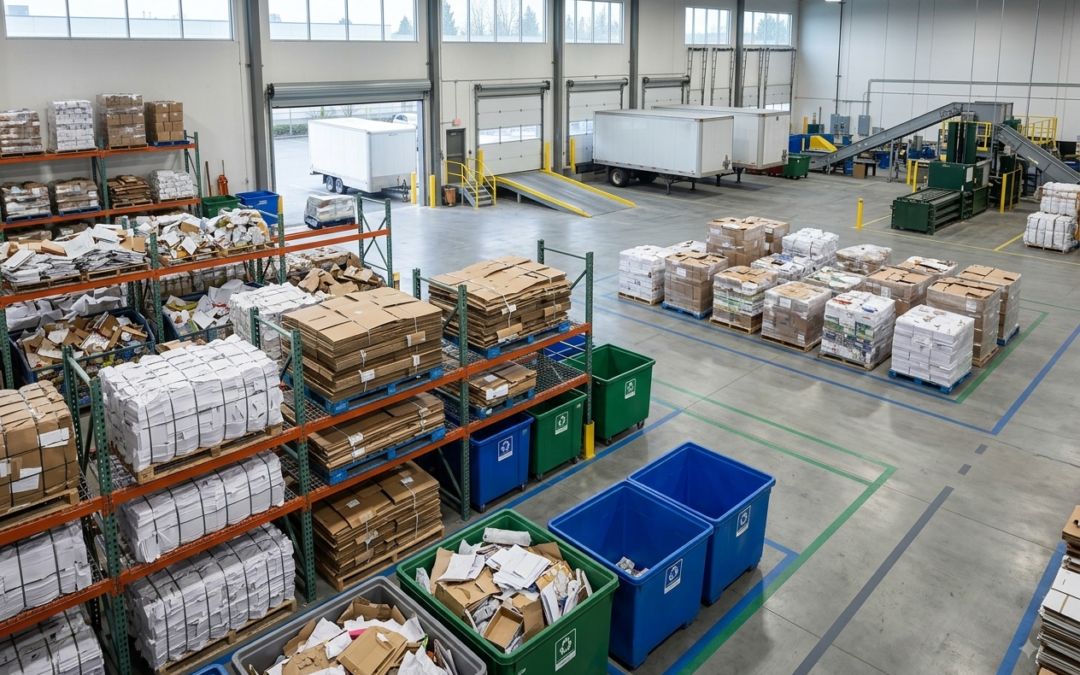
Paper waste can accumulate surprisingly quickly in a commercial environment. Offices generate documents, invoices, reports, forms, packaging, and printed materials. Warehouses may receive products in layers of cardboard and paper packaging, while retail businesses can accumulate receipts, promotional materials, shipping documents, and outdated printed stock.
For a small business, a few boxes of paper may be manageable. For a large office, warehouse, retail location, educational facility, or commercial operation, the volume can become a significant waste-management issue.
When paper begins filling storage rooms, loading areas, filing spaces, or recycling containers, businesses need more than an occasional cleanup. They need a practical strategy for collecting, sorting, storing, and recycling paper efficiently.
That is where Paper Recycling Richmond can become an important part of a commercial waste-management plan.
Why Do Businesses Generate So Much Paper Waste?
Paper remains part of many business operations even as companies move toward digital systems.
Common sources of commercial paper waste include:
- Outdated documents
- Printed reports
- Invoices and receipts
- Marketing materials
- Product catalogues
- Office files
- Shipping paperwork
- Paper packaging
- Cardboard inserts
- Printed forms
- Outdated manuals
- Warehouse labels and documentation
- Archived business records
The challenge is not always the amount generated in one day. It is the accumulation over months or years.
A business may not notice the problem until boxes begin occupying valuable space or recycling containers become overloaded.
What Should a Richmond Business Do With Large Volumes of Paper?
The first step is to understand what type of paper waste the business actually has.
Not every paper product should automatically be placed into the same recycling container.
Businesses may need to separate:
- Clean office paper
- Cardboard
- Paper packaging
- Shredded paper
- Coated or laminated materials
- Contaminated paper
- Confidential documents
- Paper mixed with other materials
Once the different streams are identified, businesses can determine which materials are suitable for their available recycling services and which may require a different management process.
The goal is to avoid sending recyclable paper into general commercial waste simply because it was not sorted properly.
Why Sorting Matters for Commercial Paper Recycling
Large-scale paper recycling becomes easier when materials are separated before collection.
For example, clean paper that has been kept separate from food waste, chemicals, oils, or other contaminants is generally easier to manage than paper mixed into a general garbage stream.
Businesses should therefore consider establishing designated collection areas for paper throughout the facility.
An office may use dedicated paper recycling bins near printers and workstations. A warehouse may create a centralized area for paper and cardboard packaging. A retail operation may separate shipping materials from general waste.
The right setup depends on the type and volume of waste the business generates.
What About Years of Archived Business Documents?
Archived paperwork can become one of the biggest paper-management challenges for established businesses.
Companies may accumulate years of:
- Financial documents
- Employee records
- Contracts
- Invoices
- Reports
- Customer paperwork
- Operational records
- Old marketing materials
- Product documentation
When storage space becomes limited, businesses may decide to clean out old records.
However, confidential documents should not simply be mixed with ordinary recyclable paper without considering the business’s privacy and document-management requirements.
Businesses should first determine which records need to be retained and which can be removed according to their internal policies and applicable requirements.
Once documents are approved for removal, they can be separated and managed through an appropriate recycling or document-destruction process.
Can Confidential Paper Still Be Recycled?
Yes, confidential business paper can potentially be recycled after it has gone through an appropriate document-management or destruction process.
The important distinction is that confidentiality and recyclability are separate considerations.
A document may be recyclable as a material but still require secure handling because of the information printed on it.
Businesses dealing with sensitive records should establish an appropriate process before placing documents into a general recycling container.
This is especially relevant for businesses handling financial, customer, employee, legal, or proprietary information.
What Happens to Contaminated Paper?
Not all paper waste is suitable for standard recycling.
Paper contaminated with food, liquids, chemicals, oils, or other substances may require different handling depending on the nature and extent of the contamination.
This is one reason businesses should avoid treating every paper-based material as recyclable simply because it is made from paper.
A basic sorting process can help separate clean recyclable material from paper that requires another waste-management route.
Paper Waste During Office Relocation or Closure
Large quantities of paper often appear during business relocations, office closures, renovations, and facility cleanouts.
A company moving to a smaller office may discover years of unused files and paperwork. A business closure may involve removing filing cabinets full of old records. A warehouse relocation may reveal large quantities of packaging and paper materials that have accumulated over time.
These projects can create more waste than a business’s regular recycling system can handle.
In such situations, businesses may need a coordinated commercial cleanup plan rather than relying only on their normal recycling bins.
When Commercial Junk Removal Becomes Part of the Solution
Paper is often only one part of a large business cleanout.
During an office or warehouse cleanup, businesses may also need to remove:
- Desks and office furniture
- Shelving
- Broken equipment
- Packaging
- Cardboard
- Plastic materials
- Old fixtures
- Unwanted inventory
- General commercial waste
This is where Commercial Junk Removal Richmond can become relevant.
Instead of treating every unwanted item as the same type of waste, businesses can separate recyclable paper and other recoverable materials from items that require removal as commercial junk.
A coordinated approach can make the cleanup more organized and reduce the amount of potentially recyclable material entering the general waste stream.
How Paper Recycling Fits Into Commercial Waste Management
Paper recycling should ideally be part of a broader commercial waste-management strategy.
A business may generate several recyclable materials at the same time, including:
- Paper
- Cardboard
- Metals
- Certain plastics
- Packaging materials
- Electronic equipment
- Other recoverable materials
Separating these materials can help businesses improve their overall waste-diversion efforts.
This broader approach to Commercial Waste Recycling Richmond allows businesses to look beyond paper alone and identify other materials that may have recycling or recovery potential.
How Can Businesses Reduce Paper Waste at the Source?
Recycling is important, but reducing unnecessary paper generation can also make a major difference.
Businesses can consider:
Digital Documentation
Moving routine documents, forms, invoices, and internal communications into digital systems can reduce unnecessary printing.
Print Management
Printer settings, centralized printing policies, and employee awareness can help reduce accidental or unnecessary printing.
Reusable Internal Processes
Where appropriate, businesses can replace single-use printed forms with digital workflows.
Better Packaging Management
Warehouses can monitor the amount of paper and cardboard packaging entering the facility and establish dedicated recycling areas.
Regular Cleanouts
Rather than allowing unwanted paperwork to accumulate for years, businesses can establish scheduled document reviews and cleanouts.
How to Prepare Large Volumes of Paper for Recycling
Before arranging a large commercial paper pickup, businesses should:
- Estimate the volume of paper.
- Separate paper from general garbage.
- Remove obvious non-paper materials where practical.
- Keep contaminated paper separate.
- Identify confidential documents.
- Separate cardboard and other recyclable materials where appropriate.
- Consolidate paper into an organized collection area.
- Communicate the approximate volume and material types to the recycling provider.
These simple steps can make collection more efficient and help prevent recyclable material from being mixed with unsuitable waste.
What If Paper Is Mixed With Other Commercial Waste?
Mixed waste is one of the biggest challenges for businesses trying to improve recycling.
Once paper is heavily mixed with general garbage, food waste, liquids, chemicals, or other contaminants, recovering it can become more difficult.
For this reason, businesses should focus on source separation.
Instead of waiting until the end of a cleanup to sort everything, separate paper as it is generated whenever possible.
This approach is particularly useful for large offices, warehouses, distribution centres, and retail operations where significant quantities of paper and packaging are generated every week.
Why Large Businesses Should Plan Paper Recycling Ahead of Time
High-volume paper waste can quickly become a logistical issue.
A business may not have enough internal storage capacity for weeks or months of accumulated paper. Overflowing bins can occupy loading areas, block access, and interfere with daily operations.
Planning regular collection or arranging a dedicated commercial recycling service can help prevent these issues.
The right frequency depends on the business’s paper volume, available storage, facility layout, and operating schedule.
Large volumes of commercial paper waste do not have to become a landfill problem.
Richmond businesses can improve their waste-management process by identifying paper at the source, separating recyclable materials, keeping contaminated paper apart, managing confidential documents appropriately, and planning collection before storage areas become overloaded.
Paper recycling can also work as part of a larger commercial cleanup strategy. When paper is generated alongside furniture, packaging, equipment, cardboard, and other unwanted materials, separating the different waste streams can improve overall material recovery.
If your Richmond business is dealing with overflowing paper, archived documents, office cleanout waste, warehouse packaging, or a large commercial cleanup, Canadian Empire Recycling & Disposal can help you plan a practical recycling and waste-management solution. Contact Canadian Empire Recycling & Disposal to discuss your paper recycling, commercial junk removal, and broader waste-management requirements in Richmond.
Frequently Asked Questions
Can old business documents be recycled?
Many business documents can be recycled, but companies should first determine which records must be retained and which can be removed. Confidential documents may also require secure handling before entering an appropriate recycling stream.
Can contaminated paper be recycled?
It depends on the type and level of contamination. Paper contaminated with food, liquids, oils, chemicals, or other materials may require different handling and should not automatically be placed with clean recyclable paper.
When should a business arrange commercial paper recycling?
Businesses should consider arranging recycling when paper volumes begin exceeding normal collection capacity or when storage becomes difficult. High-volume businesses can benefit from planning regular collection rather than allowing paper to accumulate.
Is paper recycling part of commercial waste recycling?
Yes. Paper can be one component of a broader commercial waste-recycling strategy. Businesses may also generate cardboard, metals, plastics, packaging, and other recoverable materials that can be separated and managed through appropriate recycling streams.