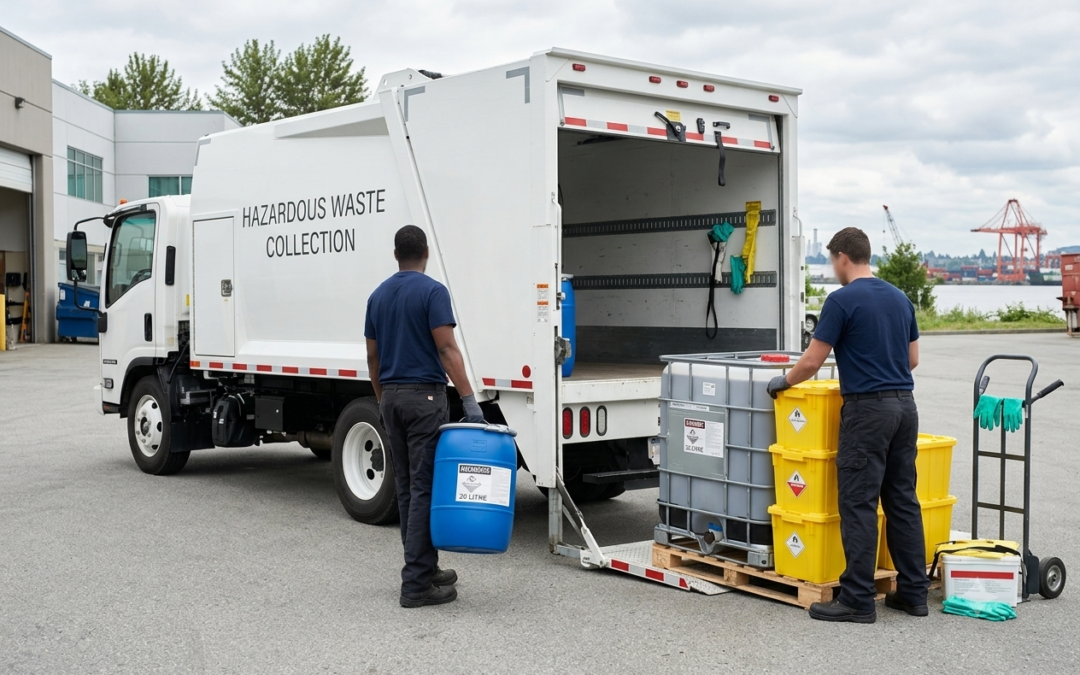
Businesses in Richmond can generate hazardous materials through maintenance, construction, manufacturing, automotive work, property management, and commercial cleanouts. When these materials accumulate, simply placing them with regular garbage is not always appropriate.
Before arranging Hazardous Waste Disposal Richmond, businesses should identify what they have, separate hazardous materials from other waste, check container conditions, and confirm the correct handling requirements. Proper preparation can make removal more efficient while helping reduce unnecessary risks to workers, waste handlers, and the environment.
If your business is preparing hazardous materials for removal or looking for a Hazardous Waste Drop-off Depot Richmond, these seven considerations can help you plan the process more responsibly.
1. Identify Exactly What You Have
The first step is knowing what is actually being removed.
Commercial properties can accumulate many different materials over time, including:
- Cleaning chemicals
- Solvents and degreasers
- Used oils
- Batteries
- Paints and coatings
- Pesticide products
- Chemical containers
- Contaminated absorbent materials
- Automotive fluids
- Other potentially hazardous substances
Do not assume that every chemical or maintenance product can be handled through the same waste stream. The material’s composition, condition, quantity, and source can affect its handling requirements.
If product labels or original containers are available, keep that information accessible. It can help a waste professional determine the appropriate next step.
2. Keep Hazardous Materials Separate
One of the most important preparation steps is preventing hazardous materials from becoming mixed with ordinary commercial waste.
A commercial cleanout might contain cardboard, scrap metal, wood, general garbage, and chemical products. Combining all of these materials into one pile makes proper sorting more difficult and can increase handling concerns.
Instead, establish separate areas for:
- General waste
- Recyclable materials
- Scrap metal
- Construction debris
- Hazardous materials
- Materials requiring further identification
Keeping these streams separate from the beginning can make the eventual removal process much more organized.
3. Check Containers Before Moving Them
Container condition matters.
A properly sealed and clearly identified container is generally easier to handle than one that is leaking, damaged, badly corroded, or missing its label.
Before moving any container, look for visible signs of deterioration. Do not open unknown containers simply to determine what is inside.
If a container is leaking or appears unstable, avoid unnecessary handling and seek appropriate professional guidance.
Businesses should also avoid transferring chemicals into random containers simply because the original packaging is inconvenient. Different substances can react with incompatible container materials or with one another.
4. Never Mix Unknown Chemicals
Commercial properties sometimes discover old containers with incomplete labels or substances that have been stored for years.
It may be tempting to combine similar-looking liquids to reduce the number of containers. This should be avoided.
Unknown substances can have different chemical properties, and mixing them can create dangerous reactions, fumes, heat, pressure, or other hazards.
Instead, keep questionable materials separate and seek professional advice about identification and appropriate handling.
This is particularly important during warehouse cleanouts, business closures, renovations, and property transfers, when old materials may be discovered unexpectedly.
5. Determine Whether the Material Requires Special Handling
Not every unwanted chemical product is automatically managed in the same way.
Some materials may qualify as regulated hazardous waste, while others may have specific recycling, recovery, or disposal pathways.
The appropriate route can depend on factors such as:
- Material type
- Chemical properties
- Quantity
- Concentration
- Physical state
- Source
- Container type
- Applicable regulations
- Requirements of the receiving facility
For this reason, businesses should confirm the requirements before transporting hazardous materials to a drop-off location.
The phrase Hazardous Waste Drop-off Depot should not be interpreted as meaning that every hazardous material can be taken to every drop-off facility. Acceptance rules can differ.
6. Consider Transportation Before Scheduling Removal
Transportation is another factor businesses should think about before moving hazardous materials.
A container that seems manageable inside a storage area may require additional precautions when it is being transported. Businesses should not assume that their normal waste-hauling arrangements are automatically suitable for hazardous materials.
Before arranging transportation, confirm:
- What material is being moved
- How much is being moved
- How it is packaged
- Whether the receiving facility accepts it
- Whether special transportation requirements apply
- Whether a qualified waste professional should handle the material
Planning this information ahead of time can prevent an unnecessary trip or an improperly prepared load.
7. Confirm the Disposal or Drop-Off Requirements First
One of the easiest ways to avoid mistakes is to confirm acceptance requirements before loading a vehicle.
Businesses should contact the intended receiving facility or waste service provider and provide accurate information about the material. If possible, have the product name, container information, approximate quantity, and condition available.
This is particularly important for commercial quantities.
A facility may accept certain materials from one type of customer but have different requirements for businesses, institutions, contractors, or industrial operations.
Getting confirmation in advance helps ensure that the material is sent through an appropriate waste stream.
Common Commercial Sources of Hazardous Waste in Richmond
Hazardous materials can appear in many types of businesses, not just industrial facilities.
Automotive Businesses
Repair shops and automotive facilities may generate used oils, fluids, batteries, solvents, and contaminated materials.
These materials should be separated from ordinary commercial garbage and managed according to their specific requirements.
Construction and Renovation Companies
Renovation projects can produce leftover paints, coatings, adhesives, solvents, treated materials, and other products.
A project that begins as a standard renovation cleanup can therefore develop a specialized waste component.
Property Management
Commercial property managers may discover old maintenance chemicals, cleaning products, paints, pesticides, or other materials while preparing buildings for new occupants or carrying out maintenance.
Keeping an inventory of stored chemicals can make future cleanouts much easier.
Warehouses and Manufacturing Facilities
Warehouses and industrial properties may accumulate larger quantities of chemical products and maintenance materials.
When a business relocates, closes, or restructures its operations, identifying hazardous materials should be part of the cleanup planning process.
What Should You Do With Other Commercial Waste?
Hazardous materials are only one part of a commercial cleanup.
Businesses may also have cardboard, metal, wood, packaging, furniture, construction debris, and other materials that can potentially enter recycling or recovery streams.
Separating these materials from hazardous waste can make the overall cleanup more efficient.
For example, a warehouse cleanout could be divided into:
Recyclables: cardboard, suitable metals, and other recoverable materials.
General waste: materials that cannot be recycled and do not require special handling.
Hazardous waste: chemicals, oils, batteries, and other materials requiring specialized management.
This approach reduces the chance that recyclable materials and hazardous materials will be unnecessarily mixed together.
Why Businesses Should Plan Hazardous Waste Removal Early
Hazardous waste should not be treated as an afterthought during a commercial cleanout.
If materials are discovered immediately before a property needs to be vacated, the business may have limited time to identify, sort, package, and arrange appropriate removal.
Planning early gives businesses time to:
- Inventory stored materials
- Identify unknown products
- Separate waste streams
- Confirm facility requirements
- Arrange suitable transportation
- Address damaged containers
- Schedule professional removal where needed
Early planning can also help prevent hazardous materials from delaying a larger renovation, relocation, or property cleanup.
What Not to Do With Hazardous Materials
When dealing with potentially hazardous waste, avoiding incorrect shortcuts is just as important as knowing what to do.
Businesses should not:
- Pour chemicals into drains
- Put unknown liquids into general garbage
- Mix different chemicals together
- Burn chemical products
- Leave containers outdoors where they can deteriorate
- Transfer substances into unsuitable containers
- Transport materials without confirming the requirements
- Assume every drop-off location accepts every hazardous material
If you are uncertain about a material, seek professional guidance rather than guessing.
How Professional Waste Services Can Simplify Commercial Cleanouts
Managing hazardous materials can become complicated when a business is also dealing with large quantities of ordinary waste.
A professional waste service can help businesses plan the cleanup according to the types of materials involved. This can be especially useful during warehouse cleanouts, renovations, business relocations, property maintenance, and commercial closures.
Professional assistance can help businesses identify different waste streams and determine which materials may be suitable for recycling, recovery, or specialized handling.
It also allows business owners and employees to focus on their normal responsibilities rather than attempting to manage every waste category themselves.
Preparing hazardous waste for removal in Richmond starts with proper identification, separation, safe storage, and advance planning. Businesses should never assume that hazardous materials can be placed with ordinary garbage or taken to any general drop-off facility.
For businesses dealing with hazardous materials as part of a commercial cleanup, Canadian Empire Recycling & Disposal can help you plan an appropriate waste management solution. Contact Canadian Empire Recycling & Disposal to discuss your hazardous waste removal and commercial cleanup requirements in Richmond.
Frequently Asked Questions
Can businesses take all hazardous waste to the same drop-off depot?
No. Acceptance requirements can vary based on the material, quantity, source, and facility. Businesses should confirm requirements before transporting hazardous waste.
Should unknown chemical containers be opened?
No. Unknown containers should not be opened, mixed, or handled unnecessarily. Seek professional guidance to determine the safest appropriate handling process.
Can hazardous waste be mixed with recyclable commercial waste?
It should be kept separate. Cardboard, metal, wood, and other recyclable materials can have different processing requirements, while hazardous materials may require specialized handling.
When should a business arrange hazardous waste removal?
Ideally, hazardous waste should be identified and planned for early in a commercial cleanout, renovation, relocation, or property closure. Early planning provides more time to confirm requirements and arrange appropriate removal.