
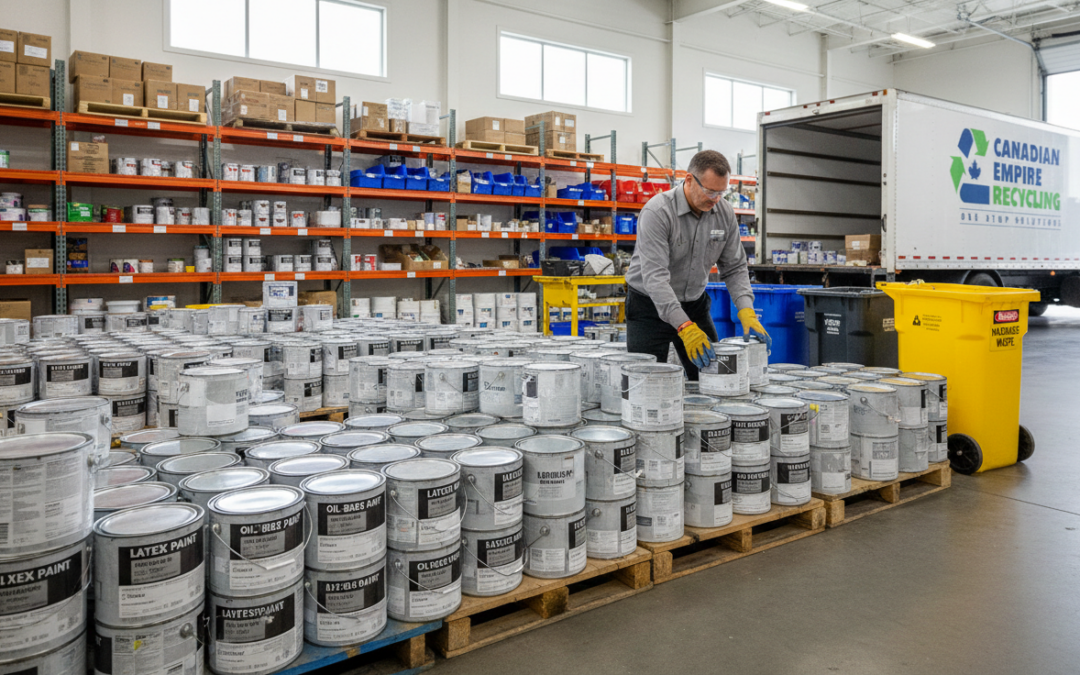
Paint is a common byproduct of commercial renovations, construction projects, property maintenance, and industrial operations. However, disposing of leftover paint improperly can harm the environment and violate local waste regulations. That’s why many businesses are turning to Paint Recycling services to handle excess materials responsibly.
But what types of paint actually qualify for recycling? Understanding which products are accepted—and which require special hazardous waste handling—can help your business stay compliant and environmentally responsible.
Why Commercial Paint Recycling Matters
Paint contains chemicals that may be flammable, toxic, or harmful to soil and water if disposed of incorrectly. Pouring leftover paint down drains or tossing it in regular garbage can:
- Contaminate groundwater
- Harm wildlife
- Create fire hazards
- Lead to fines or penalties
- Damage your company’s environmental reputation
Commercial recycling programs help recover usable materials, reduce landfill waste, and ensure safe processing.
Businesses in Maple Ridge involved in construction, property management, manufacturing, and retail often generate significant volumes of leftover paint, making recycling an essential part of responsible waste management.
Types of Paint That Typically Qualify for Recycling
1. Latex (Water-Based) Paint
Latex paint is one of the most commonly recycled paints. It is widely used for:
- Interior walls
- Ceilings
- Offices and retail spaces
- Residential and commercial renovations
Latex paint is easier to process because it is water-based and contains fewer hazardous solvents compared to oil-based paint. Many commercial paint recycling programs in Maple Ridge accept:
- Partially full cans
- Unused paint
- Excess inventory
- Returned retail stock
Recycled latex paint may be reprocessed into new paint products or used in other industrial applications.
2. Oil-Based Paint
Oil-based paints are also commonly accepted under Commercial Paint Recycling Maple Ridge programs, but they require more careful handling.
These paints are typically used for:
- Metal surfaces
- Industrial coatings
- Exterior applications
- High-durability finishes
Because oil-based paints contain solvents and flammable compounds, they are often classified as hazardous waste. Licensed recycling providers ensure proper containment and safe processing.
3. Stains and Varnishes
Wood stains, varnishes, and clear finishes may qualify for recycling depending on their composition.
Common commercial uses include:
- Deck and fence staining
- Commercial furniture finishing
- Cabinet refinishing
- Industrial wood treatment
These products often contain solvents and may fall under hazardous waste guidelines. Professional recycling services can determine proper handling procedures.
4. Primers and Sealers
Primers and sealers used in commercial construction and renovation projects are often recyclable. This includes:
- Wall primers
- Concrete sealers
- Specialty bonding primers
- Surface preparation coatings
Like other paints, acceptance depends on whether the product is water-based or solvent-based.
5. Aerosol Paint Cans
Spray paint cans from commercial or industrial projects may also qualify for recycling if handled properly.
These include:
- Marking paints
- Industrial spray coatings
- Maintenance touch-up paints
However, aerosol cans must be empty or processed under hazardous waste regulations if still pressurized or partially full.
Paint Products That May Not Qualify for Standard Recycling
Not all paint-related materials can be processed through regular recycling streams. Items that may require special hazardous disposal include:
- Paint thinners
- Solvents
- Epoxy resins
- Automotive paints
- Marine coatings
- Industrial chemical coatings
- Products mixed with other substances
These materials often require separate hazardous waste disposal services rather than general paint recycling.
Container Requirements for Recycling
For paint to qualify for recycling in Maple Ridge, containers typically must:
- Be sealed and labeled
- Remain in original packaging
- Not be contaminated with debris
- Not be mixed with other chemicals
Leaking or damaged containers may require repackaging before transport.
Commercial vs. Residential Paint Recycling
It’s important to understand that commercial quantities of paint often exceed residential depot limits.
Businesses such as:
- Painting contractors
- Construction companies
- Property managers
- Retail hardware stores
- Manufacturing facilities
Generate paint waste in bulk, which requires scheduled pickup and licensed transport. Standard household recycling depots may not accept commercial volumes.
This is where professional Commercial waste Maple Ridge providers play a crucial role.
Environmental Benefits of Commercial Paint Recycling
Recycling paint offers several environmental advantages:
Reduces landfill waste
Conserves raw materials
Prevents soil and water contamination
Lowers greenhouse gas emissions
Supports sustainable business practices
For businesses focused on sustainability goals or ESG initiatives, proper paint recycling demonstrates environmental responsibility.
When Should Your Business Arrange Paint Recycling?
Consider scheduling commercial paint recycling if:
- You’ve completed a renovation or construction project.
- You have expired or surplus inventory.
- Your storage area contains unused paint.
- You are closing or relocating a business location.
- You need to comply with waste management regulations.
Proactive disposal reduces storage risks and liability concerns.
Choosing the Right Commercial Paint Recycling Service
When selecting a provider in Maple Ridge, look for:
- Experience with commercial waste volumes
- Compliance with BC environmental regulations
- Licensed hazardous waste handling
- Transparent pricing
- Safe transportation practices
Professional services ensure that both recyclable and hazardous paint materials are handled appropriately.
So, what types of paint qualify for Commercial Paint Recycling Maple Ridge? Latex paints, oil-based paints, primers, stains, varnishes, and even certain aerosol cans may be eligible for recycling, while solvents and specialty coatings often require hazardous waste handling. Proper identification and professional processing are key to staying compliant and environmentally responsible.
If your business needs reliable paint recycling services, Canadian Empire Recycling offers professional commercial paint recycling and hazardous waste disposal Maple Ridge. Their experienced team ensures safe handling, compliant transport, and environmentally responsible processing for businesses in Maple Ridge. Contact Canadian Empire Recycling today to schedule your commercial paint recycling service and keep your operations clean, compliant, and sustainable.