
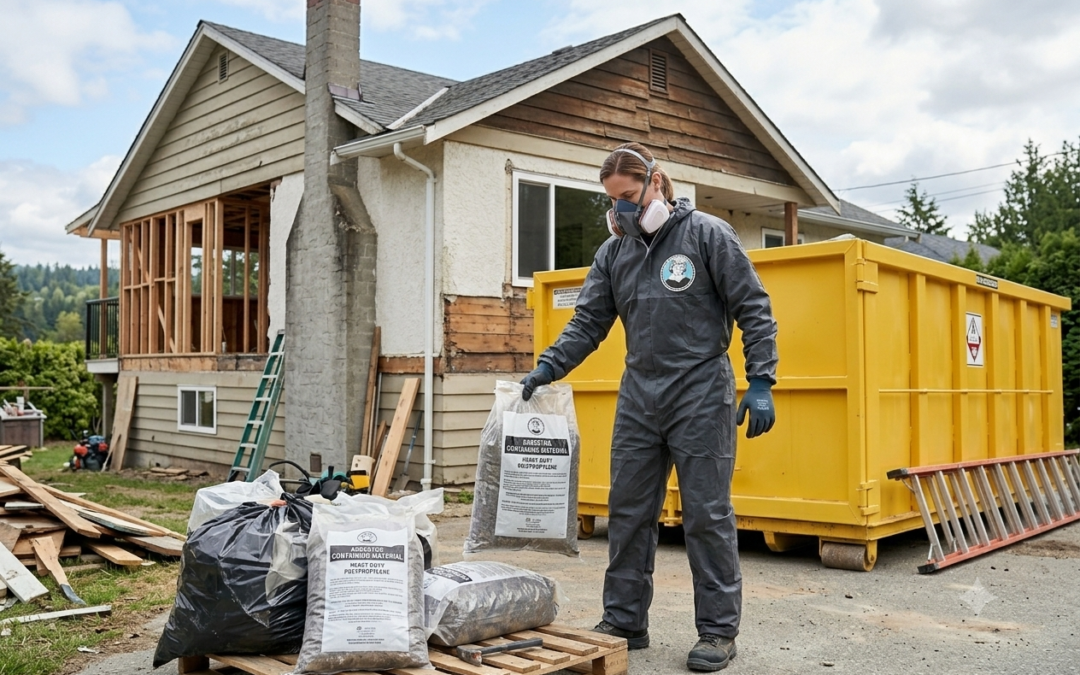
Renovation and demolition projects in Maple Ridge can generate a wide range of materials, from wood and drywall to concrete, insulation, flooring, and roofing debris. But when asbestos-containing materials are involved, the waste cannot simply be treated like ordinary construction debris.
This distinction matters particularly in older homes and commercial properties, where asbestos may be present in building products installed decades ago. Once those materials are disturbed, the project requires a more careful approach to identification, handling, containment, transportation, and disposal.
So, when is a standard construction bin not enough? The answer depends less on the size of the project and more on what materials are being removed and how they need to be managed.
Why Asbestos Waste Requires a Different Approach
Asbestos was widely used in construction because of its durability, insulation properties, and resistance to heat. It can be found in various building materials, including some insulation, flooring products, roofing materials, drywall compounds, cement products, and other components.
The concern arises when asbestos-containing materials are damaged or disturbed.
Activities such as cutting, sanding, drilling, breaking, or demolition can release microscopic fibres. These fibres can become airborne, which is why asbestos work requires specific precautions.
For this reason, Asbestos Waste Disposal Maple Ridge projects should not be planned in the same way as ordinary junk or construction debris removal.
The critical question is not simply:
“What size bin do I need?”
It is:
“What type of waste am I generating, and what disposal requirements apply to it?”
When Is a Standard Construction Bin Not Enough?
A conventional construction bin may be appropriate for permitted materials such as clean wood, concrete, or certain renovation debris. However, asbestos-containing materials may require specialized handling and disposal arrangements.
A standard approach may not be appropriate when:
- A material has been confirmed to contain asbestos
- Suspect materials are going to be disturbed
- Demolition will affect older building components
- Asbestos-contaminated debris has been generated
- Waste needs to remain separated from general construction materials
- Special packaging or transportation requirements apply
The container itself is only one part of the waste-management process. The material must also be appropriately handled before it enters the disposal stream.
Do You Need to Test Materials Before Disturbing Them?
If a material is suspected of containing asbestos, it should not be treated as harmless simply because it looks like ordinary building material.
The appropriate assessment process depends on the project and the material involved. In many renovation and demolition situations, identifying potential asbestos-containing materials before work begins is an important part of planning.
This is particularly relevant when working on older buildings.
Rather than discovering asbestos after demolition has started, contractors can incorporate material assessment into their pre-construction planning. This provides an opportunity to determine whether specialized professionals, procedures, containment, or disposal arrangements will be necessary.
Why Mixing Asbestos Waste With General Debris Is a Problem
Construction sites often have multiple waste streams operating at the same time.
A single renovation might produce:
- Wood
- Metal
- Concrete
- Cardboard
- Drywall
- Flooring
- Roofing materials
- Insulation
- General household or commercial debris
- Potential asbestos-containing materials
These materials should not automatically be placed into the same container.
When asbestos-containing waste is mixed with ordinary debris, the entire waste stream can become more complicated to manage. It can also make it difficult to determine which materials require specialized handling.
Separating waste at the source is therefore an important part of effective construction waste planning.
Does Bin Rental Automatically Include Asbestos Disposal?
No.
This is one of the most important considerations when searching for bin rental services Maple Ridge.
A rental bin is a container, not a blanket authorization for every type of waste.
Different containers and waste services may have specific restrictions regarding what can be placed inside. Before ordering a bin, contractors should identify the materials expected from the project and communicate any potentially hazardous or regulated materials to the waste provider.
This can help prevent unsuitable material from being placed in a container intended for ordinary construction debris.
What Should Contractors Ask Before Renting a Bin?
Before arranging a bin for a renovation or demolition project, contractors should have a clear picture of the expected waste stream.
Important questions include:
- What materials will the project generate?
- Are any materials suspected of containing asbestos?
- Has the property been assessed for asbestos where appropriate?
- Does the disposal provider accept the particular waste stream?
- Are special containers required?
- Are there packaging or containment requirements?
- Can different materials be placed together?
- Where will the waste be transported?
- What disposal facility is appropriate for the material?
Clarifying these details before the container arrives can prevent costly mistakes and avoid unnecessary project delays.
Why the Age of a Building Matters
The age of a property can influence the likelihood that older construction materials are present.
This does not mean every older building contains asbestos, nor does it mean newer buildings are automatically free from every potential hazardous material. Instead, property age is one factor contractors may consider when assessing renovation risks.
A project involving an older home in Maple Ridge can therefore benefit from a more thorough pre-renovation assessment, particularly when walls, ceilings, flooring, insulation, roofing, or other original components are being disturbed.
Small Renovation Does Not Mean Small Asbestos Risk
A common misconception is that asbestos is only a concern during large-scale demolition.
That is not necessarily the case.
A relatively small renovation can disturb asbestos-containing materials if the work involves drilling, removing flooring, opening walls, modifying ceilings, or disturbing older insulation or other building components.
The quantity of material does not eliminate the need for proper handling.
Even if only a small amount of suspect material is present, contractors should avoid treating it as ordinary renovation waste until its status and disposal requirements have been appropriately determined.
What Happens When Asbestos Is Discovered During Demolition?
Unexpected discoveries can disrupt a construction schedule.
If suspect material is uncovered after demolition has already begun, workers should avoid continuing to disturb it until the situation has been appropriately assessed.
The next steps may involve determining:
- What the material is
- Whether asbestos is present
- What work procedures are required
- How the material needs to be contained
- What disposal arrangements apply
This is one reason asbestos planning should happen before demolition whenever reasonably possible.
Early identification can help contractors plan labour, scheduling, containment, transportation, and waste management more effectively.
Why Disposal Planning Should Happen Before the Bin Arrives
Many contractors think about waste disposal only after demolition begins.
That approach can work for straightforward materials, but it becomes problematic when a project involves materials requiring specialized handling.
A better process is to consider waste management during the planning stage.
Before work begins, contractors can establish:
Material identification → Appropriate assessment → Safe removal procedures → Waste segregation → Suitable containment → Transportation → Approved disposal
This approach creates a clearer chain of responsibility and reduces the likelihood that incompatible waste streams will be mixed.
How the Right Waste Strategy Supports Construction Efficiency
Proper waste planning is not only about compliance and safety. It can also make a project easier to manage.
When waste streams are clearly identified, workers know where different materials should go. Containers can be selected based on the actual materials and expected volume, while specialized waste can be kept separate.
This can help reduce:
- Unplanned pickups
- Contaminated waste streams
- Construction-site clutter
- Disposal delays
- Confusion among workers
- Unexpected waste-management costs
The earlier these decisions are made, the easier they are to incorporate into the project schedule.
Choosing the Right Bin for General Renovation Waste
Not every renovation project involving an older property requires a specialized asbestos container.
If materials have been appropriately assessed and the remaining debris consists of permitted conventional construction materials, standard bin rental services Maple Ridge may be suitable for that particular waste stream.
The important point is to distinguish between the waste that can be handled through a conventional bin and materials that require specialized disposal.
For example, clean wood, certain metals, concrete, or other permitted materials may have completely different disposal requirements from asbestos-containing debris.
What Homeowners Should Know Before Hiring a Contractor
Homeowners planning renovations can also play an important role in waste planning.
Before work begins, ask the contractor:
- Whether the property requires asbestos assessment
- How suspect materials will be handled
- How different waste streams will be separated
- What type of disposal service will be used
- Whether the contractor has a plan for unexpected hazardous materials
This is particularly useful when renovating older homes where original building materials may be disturbed.
A clear waste plan can help homeowners avoid unpleasant surprises once demolition begins.
Why Proper Asbestos Waste Disposal Matters in Maple Ridge
Asbestos waste management is not simply about finding a container large enough to hold construction debris.
It involves understanding the material, preventing unnecessary disturbance, maintaining appropriate separation, and ensuring the waste is handled and transported according to applicable requirements.
For contractors and property owners, this means asbestos planning should be treated as part of the renovation or demolition strategy from the beginning.
A well-organized approach can help protect workers, reduce avoidable delays, and keep specialized waste from entering an inappropriate disposal stream.
Plan Your Maple Ridge Waste Disposal Before Work Begins
When asbestos may be involved, choosing the right disposal strategy before demolition starts is far more effective than trying to solve the problem after materials have already been mixed with general debris.
Whether a project involves an older residential property, commercial renovation, or demolition work, understanding the waste stream early can help determine which disposal services and containers are appropriate.
If you are planning a renovation or demolition project in Maple Ridge, Canadian Empire Recycling & Disposal can help you discuss your waste-management requirements and determine the appropriate disposal solution for your project. Contact Canadian Empire Recycling & Disposal today to plan your waste disposal before work begins.