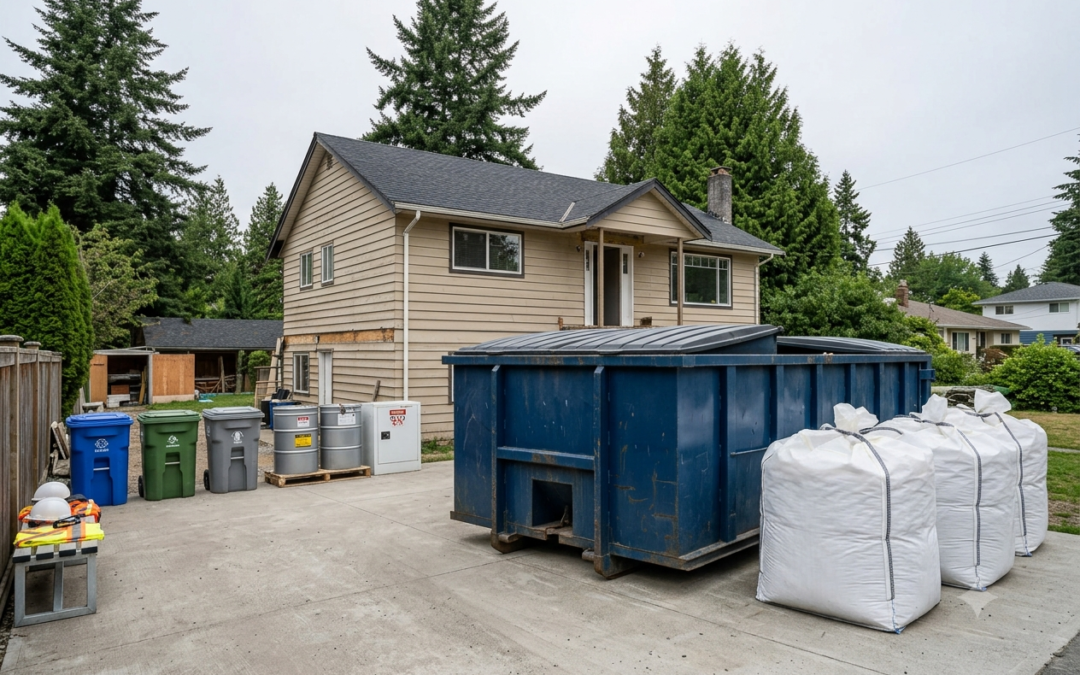
Businesses in Langley generate many different types of waste every day, from packaging and general office rubbish to construction debris, chemicals, batteries, contaminated materials, and other regulated waste. While ordinary business waste can often follow standard disposal routes, hazardous materials require additional care.
Improper handling can create safety risks, environmental concerns, transportation issues, and potential compliance problems. For this reason, businesses should understand what qualifies as hazardous waste, how it should be separated, and where it can be taken for appropriate handling.
Whether you operate a construction company, manufacturing facility, automotive shop, warehouse, retail business, or commercial property, having a clear waste-management plan can make cleanup safer and more efficient.
What Is Hazardous Waste?
Hazardous waste refers to materials that may pose risks to people, property, or the environment because of their physical or chemical characteristics.
Common examples can include:
- Used oils and petroleum-based products
- Solvents and certain cleaning chemicals
- Paints and coatings
- Batteries
- Chemical products
- Contaminated materials
- Certain electronic components
- Asbestos-containing materials
- Flammable or reactive substances
Not every material that looks dangerous is necessarily regulated in the same way. Requirements can depend on the material, quantity, concentration, and how it is being stored or transported.
Businesses should therefore identify their waste streams before choosing a disposal method rather than assuming everything can go into a standard dumpster.
Why Is Hazardous Waste Different From Regular Commercial Waste?
Regular commercial waste generally consists of materials that can be handled through conventional garbage or recycling systems. Hazardous materials may require specialized containment, transportation, documentation, or disposal.
Mixing the two can create several problems.
For example, a container filled with ordinary renovation debris may become problematic if chemicals, contaminated materials, or other regulated substances are added to it. Certain materials can also react with each other, creating additional hazards.
This is why Commercial Waste Disposal Langley should involve separating general business waste from materials that require specialized handling.
A good waste-management process starts with identifying what your business generates and determining which disposal stream is appropriate for each material.
How Should Langley Businesses Separate Hazardous Materials?
The first step is to establish designated areas for different waste categories.
Businesses can improve waste handling by:
Keep Hazardous Materials Separate
Do not mix chemicals, batteries, oils, or contaminated materials with general garbage or recyclable materials.
Use Appropriate Containers
Waste should be stored in containers suitable for the specific material. Containers should remain secure and protected from damage, leaks, and accidental access.
Label Waste Clearly
Clear identification can help employees and waste handlers understand what a container contains and how it needs to be handled.
Train Employees
Employees who handle waste should understand which materials are hazardous and what procedures apply to them.
Schedule Removal Regularly
Avoid allowing hazardous materials to accumulate unnecessarily. A planned collection schedule can make storage areas easier to manage and reduce potential risks.
What Happens at a Hazardous Waste Drop-Off Facility?
A Hazardous Waste Drop Off Depot Langley can provide a designated location for certain materials that cannot be handled through ordinary waste collection.
However, businesses should confirm acceptance requirements before transporting materials to a facility. Not every drop-off location accepts every type of hazardous waste, and some materials may have specific packaging, quantity, or documentation requirements.
Before making a trip, businesses should determine:
- What material they are bringing
- How much waste they have
- How it needs to be packaged
- Whether the facility accepts commercial quantities
- Whether an appointment or other arrangements are required
- Whether transportation requirements apply
This can prevent wasted trips and help ensure the material reaches the appropriate waste stream.
When Should Businesses Use Waste Pickup Instead?
Taking waste to a drop-off facility is not always the most practical option.
Businesses generating larger quantities or dealing with specialized materials may benefit from arranging collection and transportation instead. This can be particularly useful for commercial renovation, construction, industrial, automotive, and property-maintenance projects.
For example, a business carrying a small quantity of an accepted material may have a suitable drop-off option. A company completing a large-scale cleanup, however, may need a more comprehensive collection and disposal arrangement.
The right approach depends on the type and volume of waste involved.
Common Hazardous Waste Mistakes Businesses Should Avoid
Putting Hazardous Materials in a Regular Dumpster
One of the most common mistakes is assuming that a commercial dumpster can handle every type of business waste.
Hazardous materials may require a separate waste stream, so businesses should confirm disposal requirements before putting anything unusual into a general container.
Mixing Different Chemicals
Different substances should not automatically be combined simply because they are being discarded. Chemical compatibility can be an important safety consideration.
Leaving Containers Unsecured
Waste storage areas should prevent unauthorized access, accidental damage, and unnecessary exposure.
Ignoring Old or Unknown Materials
Businesses sometimes discover unidentified containers during renovations, property cleanouts, or equipment upgrades. Unknown materials should not simply be poured out or placed into regular garbage.
Waiting Until the Last Minute
Disposal requirements can affect project schedules. Planning gives businesses time to identify materials, arrange appropriate containment, and organize collection or disposal.
How Can Businesses Reduce Hazardous Waste?
Reducing hazardous waste starts before disposal.
Businesses can review purchasing practices and look for opportunities to reduce unnecessary chemical use, improve inventory control, and prevent expired products from accumulating.
Other useful strategies include:
- Purchasing only the quantities needed
- Storing chemicals correctly
- Maintaining equipment to prevent leaks
- Reusing suitable materials where permitted
- Keeping accurate waste records
- Separating recyclable materials
- Training staff about waste procedures
- Planning disposal before major cleanouts
These measures can reduce both the volume of waste and the amount of time employees spend dealing with it.
What Should Businesses Know About Hazardous Waste During Renovations?
Renovation and demolition projects can uncover unexpected materials, particularly in older commercial properties.
Before beginning major work, businesses should consider whether building materials, coatings, insulation, flooring products, or other components could require specialized handling.
If asbestos is suspected, for example, it should not be treated like ordinary construction debris. WorkSafeBC provides specific requirements and guidance for asbestos-related work and waste management.
Planning the waste stream before demolition starts can help prevent hazardous materials from being accidentally mixed with general construction debris.
Why Proper Disposal Matters for Langley Businesses
Effective waste management protects more than just the environment. It can also contribute to safer workplaces and smoother business operations.
A properly organized disposal system helps businesses:
- Reduce unnecessary handling risks
- Keep hazardous materials separated
- Improve worksite organization
- Avoid unsuitable disposal methods
- Make cleanup projects easier to coordinate
- Reduce the possibility of disposal delays
For businesses producing multiple waste types, professional guidance can also make it easier to determine which materials require specialized handling.
Choosing the Right Waste Disposal Approach
There is no single disposal method that works for every business.
A small retail operation, automotive facility, construction contractor, and manufacturing business can all generate very different waste streams. The best approach depends on the materials involved, their quantities, how they are stored, and the applicable disposal requirements.
Businesses should evaluate their waste before arranging service and confirm that the selected disposal method is appropriate for the material.
For local companies, choosing a waste-management provider familiar with Langley commercial requirements can also make collection and disposal easier to coordinate.
Hazardous waste disposal Langley should never be treated as ordinary business garbage. Langley businesses can reduce risks by identifying hazardous materials early, keeping them separated from regular waste, using appropriate containers, and arranging the correct disposal or collection service.
If your business needs reliable waste-management support, Canadian Empire Recycling & Disposal can help with appropriate solutions for commercial and hazardous materials. Contact Canadian Empire Recycling & Disposal to discuss your project and find the right disposal option for your business.