When a Langley business starts planning a commercial cleanout, the fastest option can seem like putting everything into one pile and arranging removal. But commercial junk is rarely made up of one type of material.
An office may have furniture, cardboard, electronics, metal shelving, and old equipment. A warehouse may have pallets, packaging, damaged inventory, fixtures, and outdated materials. A retail business may have displays, signage, shelving, boxes, and store fixtures.
Sending everything out as general junk can mean recyclable materials are mixed with items that genuinely require disposal.
A better approach is to identify recyclable materials before the junk removal process begins.
For businesses using Junk Removal Services, separating recyclable materials at the beginning can make the entire cleanup more organized and can help divert suitable materials away from landfill.
Why Should Businesses Separate Recycling Before Junk Removal?
Commercial cleanouts can generate large quantities of material in a short period.
If employees or contractors place everything into one pile, recyclable materials can quickly become mixed with:
- General garbage
- Food waste
- Contaminated materials
- Broken furniture
- Packaging
- Construction debris
- Unwanted equipment
Once different materials are mixed, sorting can become more difficult.
Source separation is therefore one of the simplest ways for a business to improve its waste-management process.
The goal is not to make the cleanup unnecessarily complicated. It is to identify materials that have a realistic recycling or recovery route before they are removed from the property.
What Commercial Materials Should Businesses Look for First?
The exact recycling options depend on the material, condition, contamination, and available recycling programs. However, businesses can begin by identifying common recoverable materials.
Cardboard
Warehouses, retailers, offices, and distribution facilities can generate significant quantities of cardboard.
Clean and dry cardboard should be kept separate from general garbage whenever practical.
During a large cleanout, businesses may discover years of accumulated shipping boxes, packaging cartons, and protective cardboard.
Flattening and organizing suitable cardboard can make it easier to handle and recycle.
Paper
Old files, office paperwork, printed materials, catalogues, and other paper products may also form part of a commercial cleanout.
Businesses should distinguish ordinary recyclable paper from confidential documents and contaminated paper.
Confidential materials may require secure document management before recycling.
Scrap Metal
Metal shelving, old fixtures, brackets, equipment components, racks, and other metal items may have recycling value.
Separating metal from general junk can make recovery more efficient.
Businesses should also be aware that some equipment contains multiple materials, so simply assuming that every metal-looking item belongs in a scrap pile is not always appropriate.
Certain Plastics
Commercial facilities can accumulate plastic packaging, containers, protective materials, and other plastic products.
Not every plastic item is accepted through every recycling program, so businesses should identify the material before placing it into a recycling stream.
Pallets and Wood Materials
Warehouses and distribution businesses may accumulate wooden pallets, crates, and other wood materials.
Depending on condition and local requirements, some may be reusable while others may be suitable for recycling or recovery.
Damaged pallets should be kept separate from general garbage when practical.
What About Electronics?
Electronics require more consideration than ordinary office junk.
During a commercial cleanout, businesses may discover:
- Computers
- Monitors
- Printers
- Networking equipment
- Phones
- Electronic components
- Small appliances
- Battery-powered equipment
These items should not automatically be placed into ordinary commercial garbage.
Electronics may contain recoverable materials and components that require specialized recycling or handling.
Businesses should identify electronic equipment separately and determine the appropriate recycling route before scheduling the main junk removal.
What Should Not Be Put Into the Recycling Pile?
Separating recyclable materials is important, but businesses should also know what not to place into a general recycling stream.
Items requiring additional assessment may include:
- Chemical products
- Batteries
- Oils
- Solvents
- Paint products
- Contaminated materials
- Unknown substances
- Certain electronic equipment
- Pressurized containers
- Materials containing hazardous substances
These items may require specialized waste management rather than conventional recycling.
This distinction becomes particularly important during warehouse and industrial cleanouts where multiple waste streams can appear at the same time.
Why Chemical Products Need a Separate Approach
A commercial cleanout may uncover old cleaning chemicals, maintenance products, solvents, paints, or other chemical materials.
These should not be mixed with cardboard, paper, metal, or ordinary junk.
Businesses should keep chemical products identified and separated while determining the appropriate management route.
A product being old or unwanted does not automatically mean it belongs in general waste.
The same principle applies to unknown containers. If a business cannot confidently identify what a container contains, it should not open or combine the material simply to make the cleanup easier.
What Happens When Junk and Recyclables Are Mixed?
Mixing everything can reduce the efficiency of a commercial cleanup.
For example, a warehouse may have a large amount of cardboard that could otherwise be recovered. If it becomes mixed with broken furniture, liquids, food waste, chemicals, and general garbage, the material may become more difficult to recycle.
The same principle applies to scrap metal and other recoverable materials.
Source separation gives recyclable materials a better opportunity to remain clean and identifiable.
How Recycling Fits Into Commercial Junk Removal
Commercial junk removal does not necessarily mean that everything removed from a business becomes landfill waste.
A well-organized cleanup can involve several different material streams.
For example:
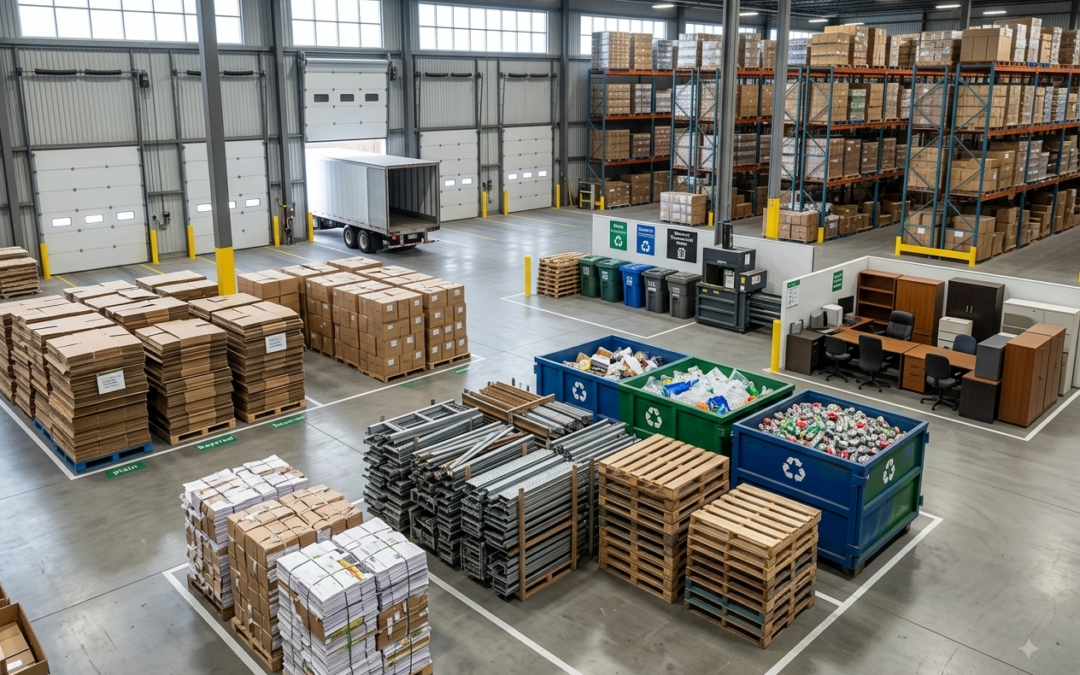
Recyclable materials → separated for appropriate recycling
Reusable items → evaluated for potential reuse
Scrap materials → directed toward suitable recovery
General junk → managed through the appropriate disposal route
Specialized waste → handled separately according to its characteristics
This approach makes junk removal more than simply clearing space. It becomes part of a broader commercial waste-management strategy.
When Should Businesses Start Sorting?
Ideally, sorting should begin before the cleanup crew arrives.
Businesses can start by walking through the facility and identifying obvious categories.
Create separate areas for:
- Cardboard and paper
- Scrap metal
- Suitable plastics
- Pallets and wood
- Electronics
- Reusable items
- General junk
- Specialized or potentially hazardous materials
The exact categories will depend on the business.
The important thing is to avoid creating one large mixed pile and trying to figure everything out afterward.
How Can Businesses Prepare for a Large Commercial Cleanout?
A little planning can make a major difference.
Create a Material Inventory
Identify the main types of junk and recyclable materials present.
Estimate the Volume
Approximate quantities can help with collection planning.
Separate Obvious Recyclables
Keep cardboard, paper, metal, and other suitable materials away from general junk.
Identify Special Materials
Flag electronics, batteries, chemicals, oils, and unknown containers before removal.
Protect Usable Items
If some furniture, equipment, or materials may be reused, keep them separate from junk intended for removal.
Communicate Clearly
Tell the waste-management provider what types of materials will be collected and whether multiple waste streams are involved.
This can help prevent unsuitable materials from being mixed during the cleanup.
Commercial Cleanouts During Business Relocation
Business relocation is one situation where recycling before junk removal becomes particularly valuable.
A company moving to a new facility may need to remove:
- Desks
- Chairs
- Shelving
- Filing cabinets
- Packaging
- Cardboard
- Old equipment
- Electronics
- Fixtures
- Damaged inventory
- General junk
Without sorting, recyclable materials can quickly become mixed with everything else.
A planned recycling and removal process allows the business to clear the old facility while keeping recoverable materials organized.
What About Office Renovations?
Renovations can create another mixture of commercial junk.
Old furniture, fixtures, packaging, flooring materials, equipment, and other unwanted items may all be removed at the same time.
Businesses should determine which materials are suitable for recycling and which belong in construction or general waste streams before the cleanup begins.
This is particularly important when contractors, employees, and waste-removal providers are all working at the same location.
Commercial Waste Disposal Should Be the Final Step
The objective of recycling before removal is not to eliminate the need for disposal.
Some materials genuinely have no practical recycling or reuse route and will require appropriate disposal.
The key is to avoid sending recyclable materials to disposal simply because they were mixed with general commercial junk.
A more effective process is:
Identify → Separate → Recycle/Recover → Dispose of Remaining Waste
This sequence gives businesses a clearer understanding of what they are actually throwing away.
Why This Approach Can Improve Business Cleanouts
Separating materials before removal can provide several practical advantages.
Better Organization
Employees know where different materials belong.
Easier Collection
Recyclable and non-recyclable materials can be managed separately.
Less Mixed Waste
Suitable recyclables are less likely to become contaminated.
Better Space Management
A structured cleanup can make it easier to clear storage rooms, warehouses, and work areas.
More Responsible Waste Management
Businesses can reduce unnecessary landfill disposal by identifying recoverable materials before they leave the facility.
When Professional Junk Removal Makes Sense
Some commercial cleanouts are too large or complex for employees to manage internally.
Professional Junk Removal Services Langley can be useful when a business is dealing with:
- Large quantities of unwanted furniture
- Warehouse cleanouts
- Office relocations
- Business closures
- Accumulated equipment
- Commercial fixtures
- Damaged inventory
- Large volumes of mixed materials
Before pickup, businesses should provide accurate information about the types and quantities of materials involved.
This helps ensure the removal plan matches the actual cleanup.
The Role of Commercial Waste Management
Recycling is only one part of a commercial waste strategy.
Businesses should also consider how general waste and specialized materials will be managed.
A large commercial cleanout may require separate handling for recyclable materials, general junk, electronics, chemicals, batteries, and other specialized waste.
A structured Commercial Waste Langley approach helps businesses avoid treating every unwanted item as one identical waste stream.
The result is a more organized process from the initial cleanup through final material management.
Before scheduling commercial junk removal Langley businesses should take a few minutes to identify what can potentially be recycled.
Cardboard, paper, scrap metal, suitable plastics, pallets, electronics, and other materials may need to be separated from general junk. Chemical products, batteries, contaminated materials, and unknown substances should also be identified and kept separate because they may require specialized handling.
The key is simple: do not make “remove everything” the first step. Make “identify and separate” the first step.
If your business is planning an office cleanout, warehouse relocation, renovation, closure, or large-scale property cleanup, Canadian Empire Recycling & Disposal can help you plan the removal of unwanted commercial materials while identifying appropriate recycling and waste-management options. Contact Canadian Empire Recycling & Disposal to discuss your Langley commercial junk removal and waste-management requirements.