Managing commercial waste efficiently is an essential part of running any business in Langley. While commercial bins make waste collection convenient, not everything can legally or safely be placed inside them. Improper disposal can lead to additional fees, environmental risks, and regulatory issues.
Whether you operate a retail store, warehouse, construction site, restaurant, or office, understanding prohibited materials helps you stay compliant while improving your overall waste management strategy. Businesses that use commercial waste recycling Langley can further reduce landfill waste by separating recyclable materials before collection.
Why Some Waste Is Restricted
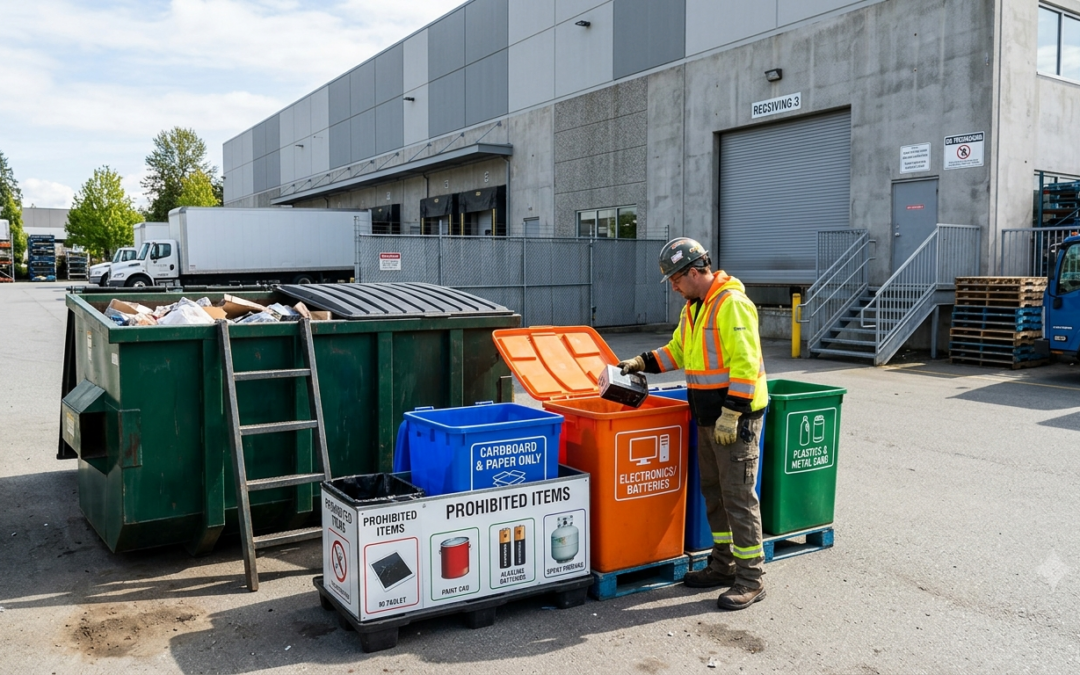
Commercial bins are designed to handle general business waste and approved recyclable materials. Certain items require specialized handling because they may:
- Contains hazardous chemicals
- Damage collection equipment
- Create fire or explosion hazards
- Contaminate recyclable materials
- Violate provincial environmental regulations
Separating these materials protects workers, reduces environmental impact, and ensures waste reaches the correct disposal facility.
Waste Items That Should Never Go Into a Commercial Bin
Hazardous Chemicals
Paints, solvents, industrial cleaners, pesticides, acids, and similar chemicals should never be mixed with regular commercial waste. These materials require specialized disposal to prevent contamination.
Asbestos-Containing Materials
Older insulation, ceiling tiles, pipe wrap, and certain building materials may contain asbestos. These materials require licensed handling and must never be placed in standard commercial bins.
Batteries
Automotive batteries, lithium-ion batteries, and rechargeable batteries contain hazardous metals that require recycling through approved collection programs.
Electronic Waste
Computers, monitors, printers, televisions, networking equipment, and other electronics contain valuable recyclable components along with hazardous substances. These items should be recycled separately rather than discarded.
Tires
Vehicle tires cannot be accepted in standard commercial bins because they require dedicated recycling processes.
Propane Tanks and Pressurized Containers
Gas cylinders, propane tanks, aerosol containers, and other pressurized items may explode during collection or processing.
Medical Waste
Businesses such as dental offices, clinics, veterinary practices, and laboratories must dispose of medical waste through approved medical waste disposal services.
Liquid Waste
Oil, fuel, antifreeze, chemicals, and other liquids should never be poured into commercial bins because they can leak during transportation and contaminate other waste.
Items That Usually Can Be Placed in Commercial Bins
Depending on your waste management program, businesses can generally dispose of:
- Office waste
- Packaging materials
- Non-hazardous plastics
- Broken furniture
- Dry construction debris
- Non-contaminated wood
- General retail waste
- Cardboard that cannot be recycled separately
Whenever possible, recyclable materials should be diverted through commercial waste recycling Langley programs instead of being mixed with landfill waste.
Why Proper Waste Sorting Saves Money
Many businesses assume placing everything into one container is easier, but poor sorting often increases disposal costs. Contaminated loads may require additional handling, while recyclable materials lose their recovery value.
Proper waste separation can help businesses:
- Lower disposal expenses
- Reduce landfill contributions
- Improve workplace safety
- Meet environmental compliance requirements
- Support corporate sustainability initiatives
Choosing the Right Bin Size
Selecting the appropriate container is equally important. Oversized bins increase rental costs, while undersized bins may require more frequent pickups.
Businesses using bin rental services Langley should consider:
- Type of waste generated
- Weekly waste volume
- Available space on-site
- Pickup frequency
- Recycling requirements
Working with the right waste management provider helps ensure your business receives a container that matches operational needs without unnecessary costs.
Best Practices for Commercial Waste Management
Creating a simple waste management plan improves efficiency throughout your workplace.
Consider implementing these practices:
- Label recycling and garbage containers clearly.
- Train employees on prohibited materials.
- Separate hazardous waste immediately.
- Schedule regular waste pickups.
- Keep recyclable materials clean and dry.
- Review waste generation periodically to optimize disposal costs.
Small improvements in waste sorting often produce significant long-term savings.
Stay Compliant While Reducing Waste
Understanding what cannot go into a commercial bin protects your business from unnecessary costs while supporting responsible environmental practices. Proper waste segregation, recycling, and specialized disposal services ensure materials are handled safely and legally.
If your business needs reliable waste solutions, Canadian Empire Recycling & Disposal offers professional recycling, disposal, and bin rental services tailored to commercial projects of every size. Contact Canadian Empire Recycling & Disposal today to find the right waste management solution for your business.