
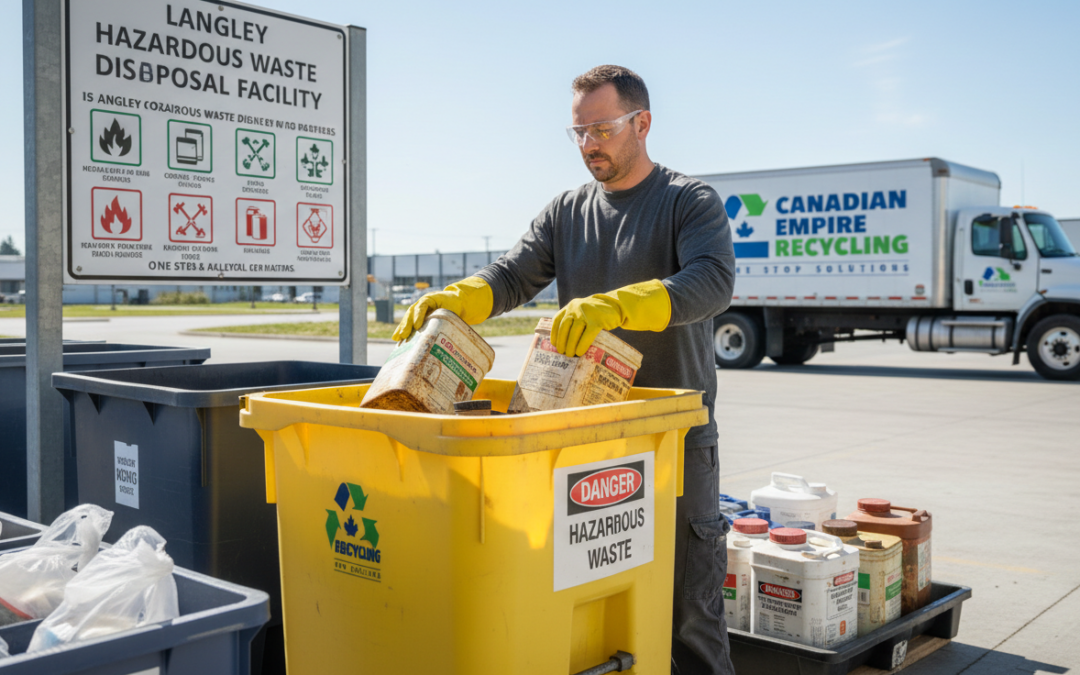
If you have old, expired, or unused pesticides and herbicides sitting in your garage, shed, or commercial storage area, you may be wondering what to do with them. These products are commonly used for lawn care, gardening, farming, and pest control—but once they are no longer needed, they become hazardous waste.
So, where can you dispose of old pesticides and herbicides in Langley? The answer depends on the quantity, type of product, and whether you are a homeowner or a business. Proper disposal is essential to protect the environment, comply with local regulations, and ensure community safety.
Why Proper Disposal Matters
Pesticides and herbicides contain chemicals designed to kill insects, weeds, fungi, and other organisms. Because they are toxic by nature, improper dispose can cause:
- Soil contamination
- Groundwater pollution
- Harm to pets and wildlife
- Health risks for sanitation workers
- Fines or legal penalties
Pouring leftover chemicals down the drain, into storm sewers, or tossing them in regular garbage is both unsafe and illegal in many cases.
In Langley, hazardous waste must be handled according to Metro Vancouver and BC environmental regulations.
What Qualifies as Old or Hazardous Pesticides and Herbicides?
Not all garden products are safe for curbside disposal. The following items are considered hazardous:
- Insect sprays and bug killers
- Weed control concentrates
- Rodent poisons
- Fungicides
- Lawn treatment chemicals
- Agricultural pesticides
- Partially used containers with chemical residue
- Banned or expired chemical products
Even empty containers may require special handling if they contain chemical residue.
Disposal Options for Residents in Langley
1. Household Hazardous Waste Depots
Langley residents can bring old pesticides and herbicides to designated household hazardous waste facilities. These facilities are equipped to handle toxic chemicals safely and prevent environmental contamination.
Before visiting:
- Keep products in their original containers if possible.
- Ensure lids are tightly sealed.
- Transport items upright in a secure box.
- Never mix chemicals.
Household hazardous waste Langley depots are generally intended for residential quantities only.
2. Community Recycling Events
From time to time, local communities host special recycling or hazardous waste collection events. These events may accept pesticides and herbicides along with paint, solvents, and other chemicals.
Check with local authorities for updated schedules and accepted items.
3. Agricultural Collection Programs
For farmers and agricultural operators, there are programs specifically designed for farm chemical waste disposal in Langley. These programs may handle larger volumes of pesticides and herbicides, as well as chemical containers.
Agricultural users should always follow provincial guidelines regarding the storage and transport of hazardous materials.
Disposal Options for Businesses in Langley
Commercial quantities of pesticides and herbicides cannot typically be dropped off at residential depots. Businesses, landscaping companies, property managers, and agricultural operations must use licensed hazardous waste disposal services.
Commercial disposal involves:
- Proper classification of chemicals
- Safe packaging and labeling
- Regulatory documentation
- Licensed transport
- Disposal at approved facilities
This ensures compliance with provincial environmental laws and workplace safety regulations.
What NOT to Do
When disposing of old pesticides and herbicides, avoid these dangerous mistakes:
Do not pour chemicals down household drains.
Do not dump them outdoors or into storm drains.
Do not burn chemical containers.
Do not mix different products.
Do not place them in regular trash bins.
Improper dispose can contaminate water systems and result in significant fines.
Environmental Impact of Improper Disposal
Langley is known for its agricultural land, natural spaces, and waterways. When pesticides and herbicides enter soil or water systems, they can:
- Harm beneficial insects like bees
- Affect fish populations
- Damage crops and plant life
- Pollute the groundwater used for drinking
- Disrupt ecosystems
Responsible disposal protects not only your property but the entire community.
Signs It’s Time to Dispose of Old Chemicals
You should consider disposal if:
- The product has expired.
- The label is unreadable.
- The chemical has changed color or odor.
- The container is damaged or leaking.
- The product is no longer approved for use.
Storing old chemicals indefinitely increases the risk of leaks or accidental exposure.
Tips for Safe Storage Before Disposal
Until you are ready to dispose of pesticides and herbicides:
- Store them in a cool, dry place.
- Keep them away from children and pets.
- Avoid direct sunlight.
- Keep them in original containers.
- Keep them separate from food and household items.
Safe storage reduces risk while you arrange proper disposal.
Why Professional Disposal Is Often the Best Option
For larger quantities or commercial operations, hiring a professional hazardous waste disposal Langley ensures:
Compliance with BC environmental regulations
Safe transportation
Proper documentation
Environmentally responsible disposal
Reduced liability
Professional services eliminate guesswork and reduce risks associated with handling toxic chemicals.
So, where can you dispose of old pesticides and herbicides? Residents can use household hazardous waste facilities or local collection events, while businesses and agricultural operators should rely on licensed hazardous waste disposal services. Proper handling protects the environment, prevents legal trouble, and ensures community safety.
If you need reliable assistance with hazardous chemical disposal, Canadian Empire Recycling offers professional hazardous waste removal services for residential and commercial clients. Their experienced team ensures safe handling, compliant transport, and responsible dispose of pesticides, herbicides, and other regulated materials. Contact Canadian Empire Recycling today to schedule safe and environmentally responsible dispose of hazardous waste.