Businesses generate many types of waste every day, from packaging and office materials to construction debris, chemicals, batteries, and contaminated items. Most commercial waste can follow standard disposal or recycling processes, but certain materials require additional care because they can pose risks to workers, the environment, and the public.
So, when does commercial waste become hazardous waste in Coquitlam? The answer depends on the material’s properties, how it is contaminated, and whether it can create risks such as toxicity, flammability, corrosiveness, or environmental contamination.
Understanding this difference helps businesses choose the appropriate handling and disposal method instead of placing potentially dangerous materials into regular waste streams.
What Makes Commercial Waste Hazardous?
Commercial waste may be considered hazardous when it contains substances or properties that can cause harm if handled, transported, stored, or disposed of incorrectly. Examples can include certain chemicals, solvents, oils, paints, contaminated materials, batteries, and other products that require specialized handling.
The risk is not always obvious. A container that looks like ordinary business waste may still contain chemical residue or other hazardous substances. This is why businesses should identify questionable materials before putting them into general garbage or recycling.
For businesses arranging Hazardous Waste Disposal Coquitlam, proper identification is an important first step. Separating hazardous materials from ordinary commercial waste can reduce workplace risks and help ensure that waste is directed through the appropriate disposal or recovery process.
Common Commercial Materials That May Require Special Handling
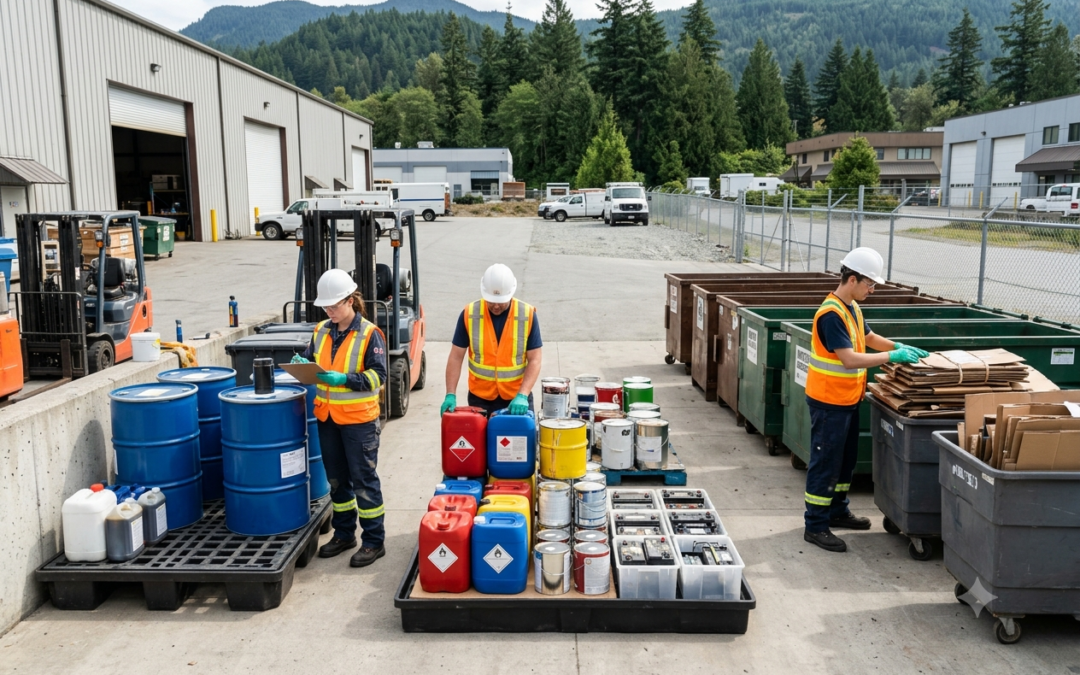
Different industries generate different types of potentially hazardous waste. Automotive businesses may deal with used oils, solvents, automotive fluids, and contaminated materials. Construction and renovation companies can encounter paints, adhesives, chemical products, and contaminated debris.
Manufacturing, maintenance, property management, and other commercial operations may also generate materials that require specialized handling.
Some common examples include:
- Used oils and petroleum-based products
- Solvents and chemical cleaners
- Certain paints and coatings
- Batteries and chemical-containing products
- Contaminated absorbents and materials
- Chemical containers with residual contents
- Certain industrial chemicals
- Materials contaminated with hazardous substances
Businesses should avoid assuming that every product can be placed in the same waste stream. The correct approach depends on the material, its condition, and applicable disposal requirements.
Why Businesses Should Separate Hazardous Materials Early
One of the easiest ways to improve commercial waste management is to separate potentially hazardous materials before they become mixed with general waste. Once hazardous substances are mixed with other materials, identifying and managing the waste can become more complicated.
A business can establish designated collection areas for different waste categories and train employees to recognize materials that require special handling. Clear labeling and appropriate storage can also help prevent accidental exposure, spills, or cross-contamination.
This approach is particularly useful during office cleanouts, facility renovations, equipment replacement, maintenance projects, and commercial property upgrades.
What Should Businesses Know About Hazardous Waste Drop-Off?
Some businesses may search for a Hazardous Waste Drop-Off Depot Coquitlam when they need to determine where specific materials can be taken. However, not every hazardous material is accepted at every drop-off location, and commercial waste may have different requirements from residential waste.
Before transporting hazardous materials, businesses should confirm that the receiving facility accepts the specific type and quantity of waste involved. Proper packaging, labeling, transportation, and documentation may also be necessary depending on the material.
For larger quantities or ongoing commercial waste generation, arranging professional collection can be more practical than attempting to transport hazardous materials independently.
When Should Businesses Consider Professional Waste Collection?
Professional waste collection can be especially useful when a business generates hazardous materials regularly or has a large volume of waste that needs to be sorted. It can also help when employees are not equipped to safely handle unknown, contaminated, or potentially dangerous materials.
Businesses should consider professional assistance when:
- Waste contains chemicals or unknown substances
- Containers are damaged, leaking, or improperly labeled
- Large quantities need to be removed
- Hazardous materials have become mixed with other waste
- A renovation or facility cleanout generates unusual waste
- Employees do not have the appropriate equipment or training
- The business needs a reliable recurring collection solution
Taking action before waste accumulates can make the process more organized and reduce unnecessary handling risks.
How Commercial Waste Disposal Can Become More Efficient
Effective waste management starts before the waste leaves the property. Businesses can reduce disposal complications by auditing their waste streams, separating recyclable materials, identifying hazardous products, and keeping hazardous and non-hazardous waste apart.
It is also useful to maintain an inventory of chemicals and other potentially hazardous products used at the workplace. This gives staff a better understanding of what materials may require specialized disposal when products expire, containers become damaged, or a facility is being renovated.
For businesses planning Commercial Waste Disposal Coquitlam, separating waste by category can also improve recycling opportunities and prevent materials that could have been recovered from being unnecessarily sent for disposal.
Why Proper Classification Matters in Coquitlam
Incorrectly classifying waste can create problems for businesses. Hazardous materials should not simply be treated as ordinary garbage because doing so can increase the risk of exposure, spills, environmental contamination, and improper handling further along the waste chain.
Businesses operating in Coquitlam can benefit from having a clear waste-management procedure that explains how employees should identify, separate, store, and arrange collection for different waste categories.
When there is uncertainty about a particular material, it is better to obtain professional guidance before placing it into a general waste stream.
Commercial waste does not automatically become hazardous simply because it comes from a business. The deciding factor is the nature and condition of the material and the risks associated with handling or disposal. Identifying hazardous materials early allows Coquitlam businesses to keep them separate from ordinary waste and choose a more appropriate management method.
If your business needs help managing commercial or potentially hazardous materials, Canadian Empire Recycling & Disposal can help you determine the appropriate waste-handling solution for your project. Contact Canadian Empire Recycling & Disposal to discuss your commercial waste requirements and arrange a suitable collection or disposal service in Coquitlam.