
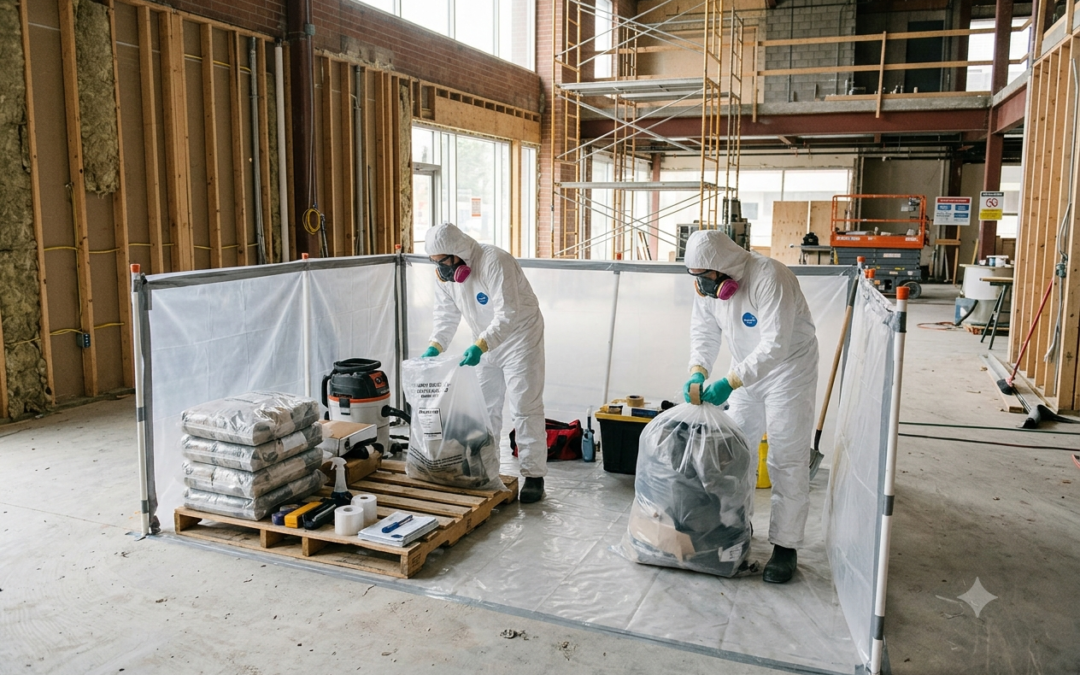
Commercial renovation, maintenance, and redevelopment projects often operate according to tight schedules. A delay in one stage can affect contractors, inspections, material deliveries, tenants, and the completion date. When asbestos-containing materials are identified on a commercial property, waste management can become an important part of keeping the project organized.
For Coquitlam businesses, asbestos should never be treated like ordinary construction debris. Materials suspected or confirmed to contain asbestos require appropriate handling, containment, transportation, and disposal procedures. Planning these requirements early can help businesses avoid unnecessary interruptions once work begins.
Why Can Asbestos Waste Affect Commercial Project Timelines?
Asbestos-containing materials may be discovered in older commercial buildings during planned work. Depending on the building’s age and previous renovations, asbestos may be present in various building materials.
If asbestos is discovered unexpectedly, work in the affected area may need to stop while the material is assessed and the appropriate next steps are arranged.
Potential sources can include:
- Insulation materials
- Floor tiles and related materials
- Roofing products
- Pipe insulation
- Cement-based materials
- Drywall-related materials
- Ceiling materials
- Older building components
The exact requirements depend on the material, condition, location, and applicable regulations. This is why businesses should account for potential asbestos management before beginning major work on older properties.
Identify Potential Asbestos Before Work Starts
One of the most effective ways to reduce project delays is to investigate potential asbestos-containing materials before renovation, demolition, or major maintenance begins.
Property owners and project managers should determine whether previous building assessments or records are available. Where appropriate, qualified professionals can assess materials before intrusive work begins.
Early identification gives the project team more time to plan the required controls and arrange appropriate waste management.
Instead of discovering asbestos after demolition has already started, businesses can incorporate asbestos-related requirements into the original project schedule.
Do Not Treat Asbestos Waste Like Regular Construction Debris
Asbestos-containing materials should not simply be placed into a general construction waste container.
Businesses arranging Commercial Waste Disposal Coquitlam should make sure asbestos-containing materials are identified and kept separate from ordinary commercial and construction waste.
Mixing asbestos waste with other debris can complicate the waste stream and create additional handling concerns. Keeping materials separated from the beginning makes it easier to manage them according to their specific requirements.
Plan Waste Removal Before the Project Begins
Waste removal should be included in the project plan rather than treated as an afterthought.
Before work starts, businesses can consider:
- What materials are expected to be removed
- Whether asbestos-containing materials may be present
- How the materials will be packaged and contained
- Where waste will be temporarily managed
- When collection will be required
- What documentation may be needed
- Who will coordinate the waste removal
Having these details established in advance can reduce the risk of waiting for waste arrangements after work has already begun.
Coordinate Contractors and Waste Providers
Commercial projects often involve several parties, including property owners, contractors, consultants, demolition crews, and waste service providers.
Communication between these parties is important when asbestos-containing materials are involved.
The project manager should ensure everyone understands which areas contain asbestos or require special precautions and which materials are being directed to specialized waste handling.
Clear communication can help prevent situations where one contractor assumes another party is responsible for arranging asbestos waste removal.
Keep Asbestos Waste Separate From Other Materials
Proper segregation is an important part of asbestos waste management.
Materials containing asbestos should be handled according to applicable requirements and kept separate from regular construction debris. This can be particularly important during larger projects where multiple waste streams are being generated at the same time.
For businesses planning Asbestos Waste Disposal Coquitlam, organizing the waste stream before removal can help make the overall project easier to coordinate.
It also reduces the chance of asbestos-containing materials accidentally becoming mixed with recyclable materials or general waste.
Build Extra Time Into the Project Schedule
Even with good planning, commercial projects can encounter unexpected issues.
Businesses working on older properties may benefit from allowing some flexibility in their schedules for assessment, preparation, waste collection, and other asbestos-related requirements.
This does not mean every project will experience delays. Instead, recognizing asbestos waste as a potential project consideration allows businesses to plan more realistically.
A small amount of preparation before work begins can be much easier to manage than an unexpected interruption after contractors are already on site.
Why Older Commercial Properties Require Extra Planning
Older commercial buildings can present additional challenges because building materials may have been installed many years ago, sometimes before current asbestos awareness and management practices were widely implemented.
Previous renovations may also have left behind a mixture of newer and older materials.
As a result, businesses should not rely only on visual inspection to determine whether a material contains asbestos. Where asbestos is suspected, appropriate professional assessment should be considered before disturbing the material.
This is especially relevant when projects involve demolition, flooring replacement, mechanical upgrades, wall removal, roofing work, or other activities that disturb existing building materials.
What Should Businesses Do If Asbestos Is Discovered Mid-Project?
If suspected asbestos is discovered after work has started, businesses should avoid disturbing the material further and follow the appropriate site procedures.
The project team should determine what material has been identified and whether professional assessment or other controls are required.
Once the material has been appropriately managed, businesses can arrange its waste handling and disposal separately from ordinary construction debris.
The key is not to improvise. Attempting to remove, break apart, or dispose of suspected asbestos materials as regular waste can create unnecessary risks and potentially disrupt the project even further.
How Can Better Planning Reduce Commercial Waste Delays?
A well-organized waste plan can make commercial projects easier to manage from beginning to end.
Businesses can:
- Review the property’s history before major work.
- Identify materials that may require specialized handling.
- Arrange appropriate assessments before disturbing suspect materials.
- Include asbestos waste planning in the project schedule.
- Keep asbestos-related materials separate from general debris.
- Communicate responsibilities clearly among contractors.
- Arrange waste collection before materials begin accumulating.
- Maintain appropriate project and waste documentation.
These steps help turn waste management into a planned part of the project rather than an unexpected obstacle.
Choose the Right Waste Management Approach
Asbestos waste requires more careful planning than ordinary commercial debris. Businesses should make sure the service they arrange is appropriate for the type of waste being generated and that the materials are handled according to applicable requirements.
For Coquitlam businesses, planning can make it easier to coordinate asbestos waste with the rest of a commercial renovation, demolition, or property improvement project.
The goal is not simply to remove waste quickly. It is to ensure that each waste stream is handled appropriately without creating avoidable interruptions to the project.
Keep Your Coquitlam Commercial Project on Schedule
Asbestos-related waste does not have to derail a commercial project when it is identified and planned for early. Understanding the potential presence of asbestos, coordinating contractors, separating specialized waste, and arranging appropriate removal before work begins can help businesses maintain better control over their project timelines.
Whether a property is being renovated, upgraded, demolished, or prepared for its next stage, waste planning should be part of the project from the beginning.
If your business needs help managing asbestos-related waste or other commercial materials, Canadian Empire Recycling & Disposal can help you plan an appropriate waste management solution. Contact Canadian Empire Recycling & Disposal to discuss your Commercial Waste Disposal Coquitlam and asbestos waste requirements.