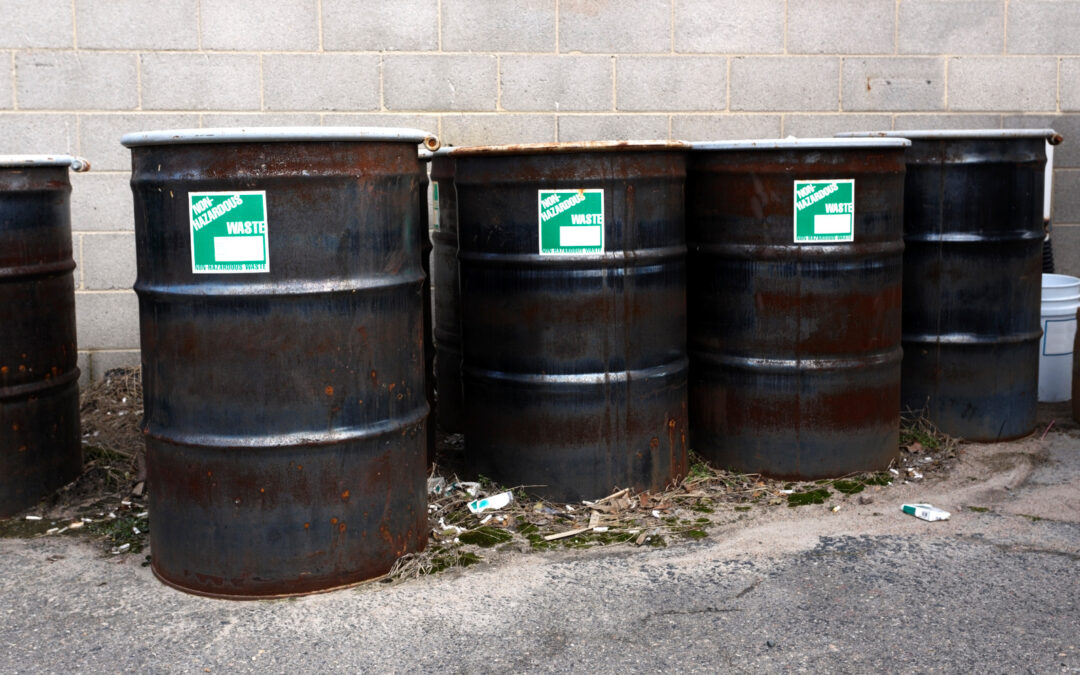
Not everything that looks like ordinary waste belongs in a regular garbage bin.
Businesses, property managers, contractors, workshops, and commercial facilities can accumulate materials that require specialized handling because they contain hazardous substances. Throwing these items into general waste can create risks for employees, collection crews, waste facilities, and the environment.
Understanding what should stay out of regular bins is an important first step toward responsible hazardous waste disposal in Coquitlam.
Why Some Waste Cannot Go Into Regular Bins
Regular garbage systems are designed for common, non-hazardous waste. Hazardous materials can behave very differently during collection, transportation, processing, or disposal.
For example, a container with leftover chemicals may leak. Certain materials can react with other substances, while some products can release harmful vapours or create fire hazards if handled incorrectly.
Even when a hazardous product appears to be empty, residue may remain inside the container. That is why businesses should not automatically treat old containers, chemical products, or contaminated materials as ordinary garbage.
What Should Never Go Into a Regular Commercial Bin?
The exact disposal requirements depend on the material and applicable regulations, but several common categories deserve particular attention.
1. Leftover Chemicals
Businesses may accumulate cleaning chemicals, solvents, degreasers, laboratory products, or other chemical substances.
If these products are no longer needed, expired, damaged, or unidentified, they should not automatically be poured down a drain or placed into general garbage.
Keeping incompatible chemicals separated and arranging an appropriate disposal route can help reduce handling risks.
2. Flammable Liquids
Paint-related products, solvents, fuels, and other flammable liquids require careful management.
Putting containers containing flammable residues into regular garbage can expose collection and sorting workers to unnecessary hazards. Commercial properties should identify these materials before waste is consolidated.
3. Batteries
Batteries are another category that should receive special attention.
Different battery types can present different hazards, particularly when damaged, crushed, punctured, or exposed to other materials. Businesses that generate large quantities of batteries should establish a separate collection and disposal process rather than placing them into ordinary garbage.
4. Used Oils and Petroleum Products
Used motor oil, certain petroleum products, and oil-contaminated materials can require specialized waste handling.
These materials should not be casually poured into drains, dumped outdoors, or mixed into regular garbage. Keeping them contained and directing them toward an appropriate disposal stream is an important part of responsible commercial waste management.
5. Contaminated Materials
Sometimes the hazardous substance is not the main product itself.
Absorbent materials, rags, containers, soil, packaging, or other debris can become contaminated through contact with hazardous substances. Depending on the material and level of contamination, these items may require different handling from ordinary waste.
This is one reason businesses should evaluate the waste itself rather than relying only on its appearance.
What About Paint and Chemical Containers?
Old paint cans and chemical containers are common examples of items that can confuse.
A container may appear empty, but leftover product or residue can remain inside. Businesses should avoid assuming that every container can simply be placed into a regular bin rental service in Coquitlam.
Instead, determine what the container previously held and whether any product remains. When the contents are unknown, treating the material cautiously is preferable to guessing.
Electronic Waste Is Another Category to Watch
Some electronic products contain components or materials that require specialized recycling or disposal programs.
Computers, monitors, certain equipment, batteries, and other electronic products should not automatically be mixed with general commercial garbage simply because they are no longer useful.
Separating electronic waste from ordinary garbage can help ensure that it reaches the appropriate recycling or waste-management stream.
What If You Are Not Sure Whether Something Is Hazardous?
This is a common situation during commercial cleanouts.
A business may discover an old container in a storage room, an unlabeled bottle in a maintenance area, or several products left behind after a tenant moves out. Without knowing the contents, putting the material into a regular bin can create unnecessary risk.
Instead:
- Keep unknown materials separate from general waste.
- Do not mix different chemicals.
- Avoid opening damaged or unidentified containers unnecessarily.
- Keep the area controlled so unauthorized people do not handle the material.
- Determine what the material is before selecting a disposal method.
- Contact an appropriate waste-management provider when specialized disposal is required.
The safest disposal route depends on the characteristics of the material.
Why Businesses in Coquitlam Should Plan Ahead
Hazardous waste can appear during routine operations, renovations, facility closures, property cleanouts, or changes in tenancy.
Waiting until the regular garbage pickup is scheduled can create problems if hazardous materials have already been mixed into the waste stream.
A better approach is to identify potentially hazardous materials early and separate them from ordinary garbage. Businesses can then determine the appropriate collection, transportation, recycling, or disposal option for each category.
This also makes waste management easier when several different materials are generated at the same time.
What Should You Do Before Disposal?
Start by looking at the waste from a safety and identification perspective.
Ask:
What is it?
Identify the product, material, or substance whenever possible.
Is it still in its original container?
Labels, product names, and safety information can make identification easier.
Is the container damaged or leaking?
Damaged containers may require additional precautions.
Has the material been mixed with anything else?
Contamination or mixing can change how waste needs to be managed.
Where is it supposed to go?
Do not assume that a regular landfill or garbage collection service accepts every type of commercial waste.
These basic questions can prevent hazardous materials from entering the wrong waste stream.
Responsible Disposal Starts Before the Bin
The most important step in hazardous waste management often happens before the waste reaches a bin.
Once a hazardous material has been identified, keeping it separate from ordinary garbage allows the appropriate disposal route to be considered. This can help protect workers and reduce the chance of hazardous substances entering a waste stream that was never designed to handle them.
For Coquitlam businesses, proper waste planning is especially useful when dealing with old chemicals, oils, batteries, contaminated materials, paints, or other potentially hazardous products.
If your business has hazardous materials that need proper handling and disposal, contact Canadian Empire Recycling & Disposal to help you determine the appropriate waste-disposal options for your project. Call 604-889-2377 to discuss your requirements or Book Online to get started.