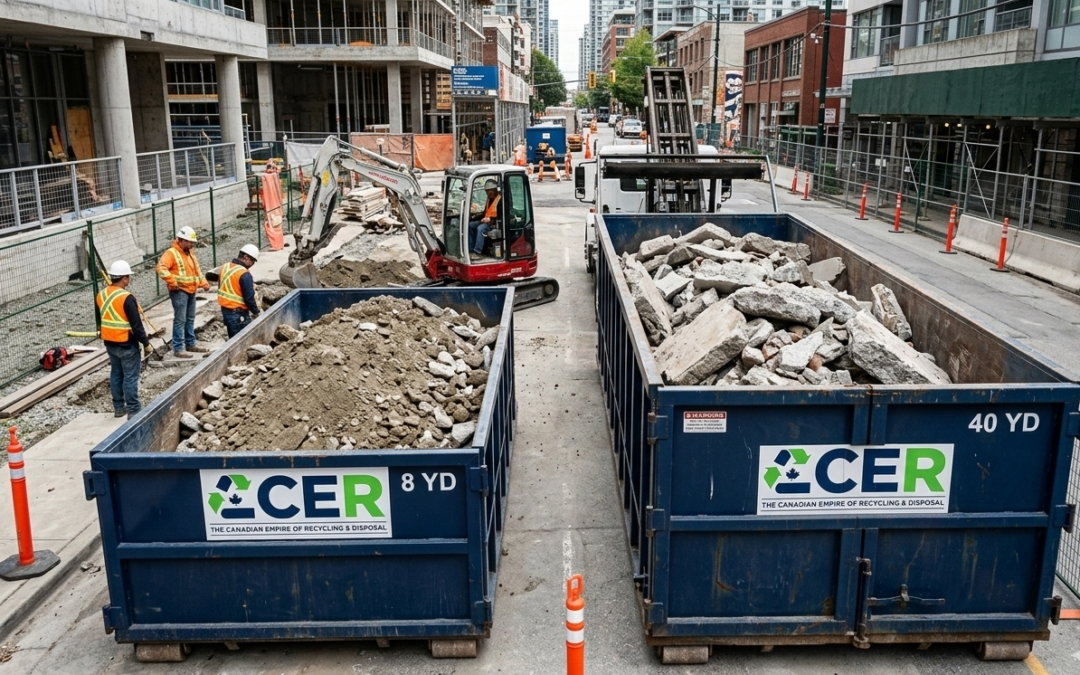
Construction, landscaping, and renovation projects often generate heavy materials such as dirt, soil, rocks, and concrete. Unlike regular household waste, these materials are extremely dense and require proper disposal solutions. Choosing the right bin size is one of the most important decisions when planning waste removal for your project. If the dumpster is too small, you may need multiple pickups. If it is too large, you might end up paying for unused capacity.
Two of the most commonly used sizes for heavy materials are 8-yard and 40-yard. Each option serves a different purpose depending on the size of the project and the amount of debris involved. Understanding the differences between these dumpsters can help homeowners, contractors, and property managers select the best solution for efficient waste management.
Why Bin Size Matters for Dirt and Concrete
Dirt and concrete are significantly heavier than most other types of construction waste. For example, a small pile of soil can weigh hundreds of kilograms, and broken concrete slabs can quickly add up to several tons. Because of this weight, waste bins for heavy materials must be selected carefully.
A properly sized dumpster helps:
- Prevent overloading that can make transportation unsafe
- Reduce the number of pickups required
- Keep project sites organized and clean
- Ensure compliance with disposal regulations
Choosing the correct size ensures that your waste removal process runs smoothly while staying within weight limits.
Understanding the 8-Yard Bin
An 8-yard is one of the smaller options available for construction waste disposal Vancouver. Despite its compact size, it is extremely useful for projects involving heavy materials.
Best Uses for an 8-Yard Bin
This dumpster size is commonly used for:
- Small concrete removal projects
- Backyard landscaping work
- Sidewalk or driveway repairs
- Minor home renovations
- Garden soil removal
Because dirt and concrete are so heavy, smaller bins are often recommended. An 8-yard can safely hold dense materials without exceeding weight limits.
Benefits of an 8-Yard Bin
Easy placement: Smaller bins can be placed in driveways, small construction sites, or tight residential areas.
Ideal for heavy debris: The smaller capacity helps prevent overloading when disposing of dense materials like soil or concrete.
Cost-effective: For small projects, renting a smaller bin can be more affordable than ordering a large container.
Many homeowners and landscapers use this bin size for dirt removal Vancouver projects such as backyard grading, garden redesign, or soil excavation.
Understanding the 40-Yard Bin
A 40-yard bin is one of the largest waste containers available for construction and demolition projects. It is designed to handle large volumes of debris from major projects.
Best Uses for a 40-Yard Bin
Large bins are typically used for:
- Commercial demolition projects
- Major construction sites
- Large renovation projects
- Industrial cleanup
- Bulk construction debris disposal
While 40-yard bins are capable of holding a large amount of waste, they are not always ideal for heavy materials like concrete and soil unless weight limits are carefully managed.
Benefits of a 40-Yard Bin
Large capacity: Ideal for projects generating large volumes of debris.
Fewer pickups: A larger container can reduce the need for multiple waste removal trips.
Efficient for mixed materials: Useful when projects produce a combination of materials such as wood, drywall, metal, and packaging waste.
Contractors working on building renovations often use large dumpster alongside specialized services such as concrete removal Vancouver, when disposing of structural materials.
Comparing 8-Yard vs. 40-Yard Bins
While both bin sizes are useful, they serve very different purposes depending on the project.
8-Yard Bin
- Ideal for heavy materials like soil and concrete
- Best for small to medium projects
- Easier to place in residential areas
- Lower cost for smaller jobs
40-Yard Bin
- Best for large construction or demolition projects
- Handles large volumes of lighter materials
- Suitable for commercial job sites
- Requires more space for placement
In many cases, contractors may choose multiple smaller dumpster instead of one large container when dealing with dense materials. This approach helps avoid exceeding transportation weight limits.
Choosing the Right Bin for Your Project
Selecting the right bin depends on several factors:
1. Type of Material
Heavy materials such as soil, gravel, and concrete require a smaller dumpster due to weight restrictions.
2. Project Size
Small landscaping or driveway projects usually require smaller containers, while large demolition jobs may require a larger dumpster.
3. Space Availability
The amount of space available at your project site will also affect the size you can use.
4. Local Waste Disposal Regulations
Certain municipalities have regulations regarding waste disposal and placement. Working with a professional waste management provider ensures that these rules are followed.
Benefits of Professional Bin Rental Services
Using professional bin rental Services Vancouver provides several advantages for construction and landscaping projects.
Convenience
Dumpsters are delivered directly to your site and picked up when the project is complete, saving time and effort.
Safety
Proper waste containers help keep construction sites clean and reduce hazards caused by scattered debris.
Efficient Waste Management
Professional waste management companies ensure that materials are transported to the appropriate recycling or disposal facilities.
Environmental Responsibility
Many construction materials, including concrete and metal, can be recycled instead of sent to landfills.
Supporting Efficient Construction and Landscaping Projects
Vancouver continues to grow with new homes, commercial buildings, and infrastructure developments. As construction and renovation projects increase, responsible waste management becomes even more important.
Choosing the correct size for dirt and concrete disposal helps keep job sites organized, safe, and environmentally responsible. By selecting the right container and working with experienced waste management professionals, contractors and homeowners can simplify their cleanup process while ensuring proper disposal practices.
If you are planning a landscaping project, driveway replacement, or construction job in Vancouver, having the right waste management solution is essential. Canadian Empire Recycling & Disposal offers reliable dumpster rental services designed to handle heavy construction debris, soil, and concrete. Their experienced team provides convenient delivery, flexible bin sizes, and responsible waste disposal solutions. Contact Canadian Empire Recycling & Disposal today to find the right dumpster rental for your dirt or concrete removal project.
Frequently Asked Questions
Can dirt and concrete be placed in the same bin?
Yes, but it depends on the bin size and weight restrictions. It is best to check with your waste management provider to ensure safe loading limits.
How long can I keep a rental bin?
Rental periods vary depending on the company, but most providers offer flexible rental durations ranging from a few days to several weeks.
Do I need a permit to place a bin on my property?
If the bin is placed on private property, such as a driveway, permits are usually not required. However, permits may be needed if the bin is placed on public streets.
Are construction materials recycled?
Many materials, such as concrete, metal, and wood, can be recycled at specialized facilities, reducing environmental impact and landfill waste.