
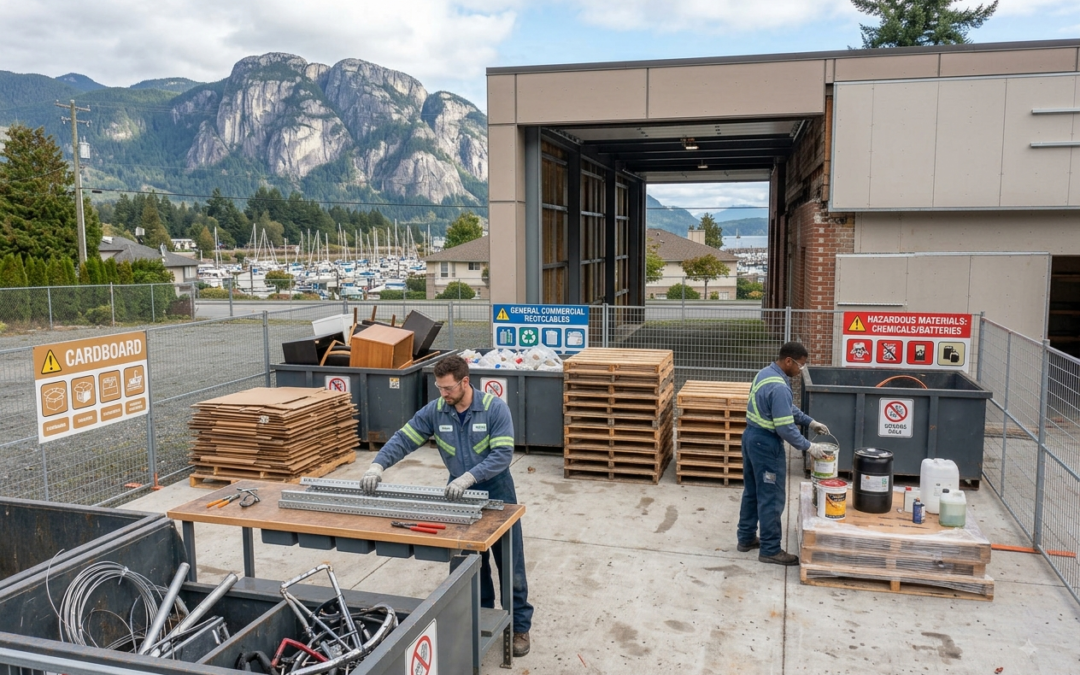
Commercial properties in Squamish can generate many different types of waste, but not every material can be handled through the same waste stream. Chemicals, batteries, contaminated materials, certain equipment, and other potentially hazardous items may require specialized handling rather than being placed with ordinary commercial garbage.
For local businesses, knowing which materials need special attention is an important part of responsible waste management. It can also help prevent hazardous materials from becoming mixed with recyclable or general commercial waste.
Whether a business is renovating, maintaining equipment, cleaning out a facility, or simply managing its regular operations, understanding its waste streams can make the entire process more organized.
What Makes Commercial Waste Hazardous?
A material may require specialized handling because of characteristics such as toxicity, flammability, corrosiveness, chemical reactivity, or contamination.
The classification of a particular material depends on what it contains and the circumstances in which it is being managed.
For businesses, the important takeaway is simple: not everything that looks like ordinary junk should go into a regular commercial waste bin.
A container that appears empty may still contain chemical residue. An old battery may contain hazardous components. Contaminated absorbent materials may require different handling from ordinary paper or packaging.
When there is uncertainty about a material, businesses should avoid guessing and seek appropriate professional guidance.
Which Commercial Materials May Need Special Handling?
The exact waste streams vary by industry, but several categories commonly deserve closer attention.
1. Chemical Products and Residues
Commercial facilities may accumulate cleaning chemicals, solvents, coatings, adhesives, degreasers, or other chemical products.
Unused, expired, or partially used containers should not automatically be placed into general garbage. Even when a container appears nearly empty, residual material may still require appropriate handling.
Businesses should keep chemical products identified and separated until they can be managed through the appropriate waste process.
2. Used Oils and Automotive Fluids
Automotive businesses, equipment operators, maintenance departments, and industrial facilities can generate used oils and related fluids.
These materials should be kept separate from general waste because they can contaminate other waste streams and may require specific collection and disposal procedures.
Keeping containers secure and clearly identified can also help prevent accidental spills.
3. Batteries
Commercial properties can generate many types of batteries from equipment, vehicles, tools, emergency systems, and electronic devices.
Batteries should not automatically be treated as ordinary garbage. Some types can create fire, leakage, or environmental concerns if they are damaged, improperly stored, or mixed with other waste.
Businesses should establish a separate collection point for batteries and determine the appropriate recycling or disposal route.
4. Contaminated Materials
Absorbents, rags, packaging, soil, or other materials can become contaminated through contact with chemicals, oils, or other hazardous substances.
Once a normally recyclable or disposable material becomes contaminated, it may no longer belong in the same waste stream.
This is one reason businesses should consider the condition of a material rather than looking only at what the material is made from.
5. Certain Electronic Equipment
Old commercial electronics may contain components that require specialized recycling or handling.
Computers, monitors, electrical equipment, control systems, and other electronic devices should be assessed before being placed into general commercial waste.
Whenever possible, businesses should separate electronics from regular garbage and determine whether they can enter an appropriate recycling stream.
Commercial Waste Recycling Squamish: What Can Be Recovered?
Not every material generated by a commercial property is hazardous.
A strong waste-management system separates materials that may be recyclable from those requiring specialized handling.
Commercial Waste Recycling Squamish can help businesses divert suitable materials from general disposal streams. Depending on the material and its condition, recyclable categories may include:
- Scrap metal
- Cardboard
- Paper
- Wood
- Certain plastics
- Appliances and equipment
- Other recoverable commercial materials
The important point is that recyclable and hazardous materials should not simply be mixed together.
For example, a metal container may normally have recycling value, but if it contains hazardous residue, its handling requirements can be different.
Why Mixing Waste Streams Creates Problems
A commercial property may have multiple waste streams operating at the same time.
General garbage, recyclable materials, construction debris, electronics, chemicals, batteries, and contaminated materials may all require different handling.
When these materials are mixed together, several problems can develop.
Contamination
Hazardous substances can contaminate otherwise recyclable materials.
Increased Handling Requirements
A mixed load may require additional sorting or specialized management.
Storage Confusion
Employees may not know which materials belong in which containers.
Increased Cleanup Challenges
Spills, damaged containers, or improperly stored hazardous materials can create additional work.
Creating clear separation from the beginning is usually easier than trying to sort everything after materials have been mixed.
How Squamish Businesses Can Improve Waste Separation
Businesses do not necessarily need a complicated system to improve waste management.
Start by identifying the main waste streams generated at the property.
For example, a business may establish separate areas for:
- General commercial waste
- Recyclable materials
- Scrap metal
- Electronics
- Batteries
- Chemicals
- Contaminated materials
- Construction or renovation debris
The exact categories should reflect the business’s actual operations.
Clear internal procedures can also help employees understand what should happen when they encounter an unfamiliar material.
What About Renovation and Construction Projects?
Commercial renovations can significantly increase the amount of waste produced by a business.
Old fixtures, flooring, drywall, insulation, equipment, packaging, and other construction materials may be generated quickly.
At the same time, renovation work can uncover materials that require specialized handling.
This makes waste planning particularly important before demolition begins.
Project managers should identify potential hazardous materials, determine how different waste streams will be separated, and arrange appropriate collection before large quantities begin accumulating.
Hazardous Waste Disposal Squamish: Why Professional Handling Matters
For materials requiring specialized management, businesses should not rely on ordinary garbage collection.
Hazardous Waste Disposal Squamish involves appropriate handling of materials that may pose environmental, health, safety, or contamination concerns.
Professional waste services can help businesses determine how specific waste streams should be managed and coordinate removal from the commercial property.
This is particularly valuable when a business has accumulated materials over time or is dealing with a large cleanout, renovation, equipment replacement, or operational change.
Questions Businesses Should Ask Before Removing Hazardous Materials
Before arranging waste removal, commercial operators can review a few basic questions:
What exactly is the material?
Knowing the product, substance, or equipment involved can help determine the appropriate waste stream.
Is the material contaminated?
A recyclable material may require different handling if it has been exposed to chemicals, oils, or other hazardous substances.
Is the container damaged or leaking?
Damaged containers require additional attention and should not simply be moved with ordinary waste.
Can the material be recycled?
Some materials may have recovery value, but recycling should only be considered when the material can safely enter the relevant recycling stream.
Has the material been stored for an extended period?
Long-term accumulation can increase storage and management challenges.
Why Regular Waste Reviews Help Commercial Properties
Businesses often focus on waste when bins are full or a renovation is underway. However, periodic waste reviews can identify problems much earlier.
A review can help determine:
- Which materials are being generated most frequently
- Which waste streams are increasing
- Whether recyclable materials are being separated
- Whether hazardous materials are accumulating
- Whether employees understand the disposal process
- Whether storage areas remain organized
These reviews can also reveal opportunities to reduce waste generation altogether.
For example, a business may discover that a particular product is regularly purchased in excess or that reusable materials are being discarded unnecessarily.
A More Organized Approach to Commercial Waste
Good commercial waste management is not about putting everything into the nearest available container.
It is about understanding what materials a business generates and directing each waste stream toward the appropriate handling process.
For Squamish businesses, this can mean separating recyclable materials from hazardous waste, identifying contaminated items early, maintaining organized storage, and arranging professional removal when specialized handling is required.
A consistent process can make waste management easier for employees while reducing the likelihood of incompatible materials being mixed.
Commercial properties in Squamish can generate everything from recyclable packaging and scrap metal to chemicals, batteries, used oils, and contaminated materials. The key is recognizing that these materials do not all belong in the same waste stream.
By identifying potentially hazardous materials, separating recyclable items, and planning appropriate removal, businesses can maintain a more organized and responsible waste-management system.
If your business has accumulated hazardous materials, commercial junk, or recyclable waste that needs professional handling, Canadian Empire Recycling & Disposal can help. Contact Canadian Empire Recycling & Disposal to discuss your requirements and find an appropriate waste-management solution for your Squamish commercial property.