
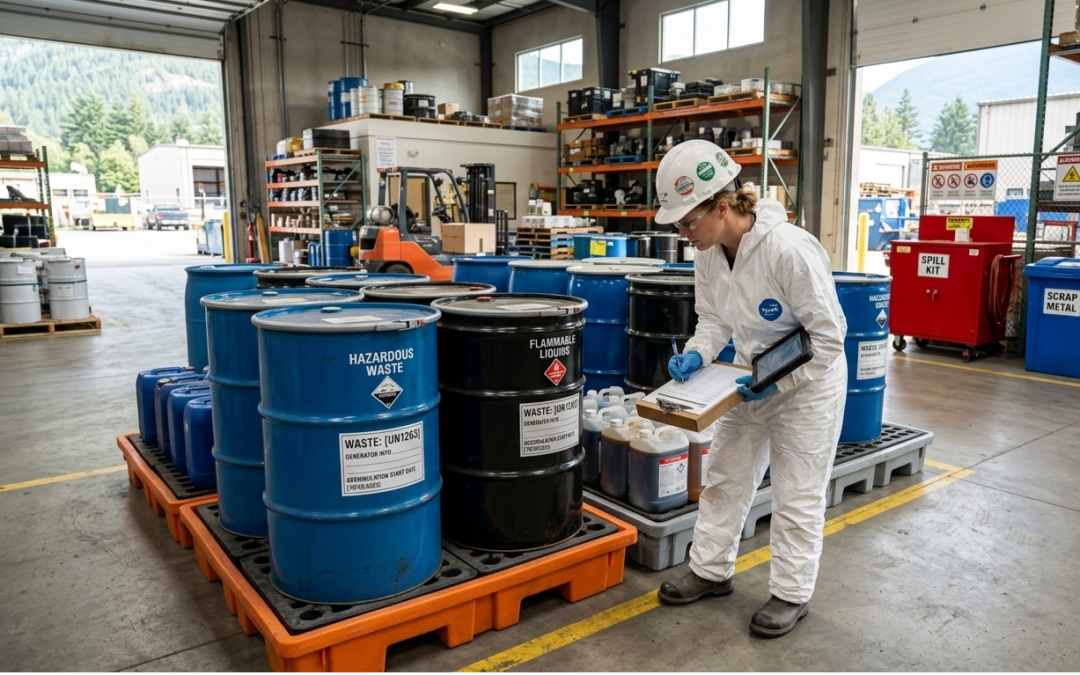
Managing hazardous waste is about more than simply removing unwanted materials. Businesses that generate chemicals, solvents, oils, batteries, paints, aerosols, or contaminated materials must ensure those wastes are identified, stored, documented, and disposed of properly. One of the most effective ways to achieve this is through a commercial hazardous waste audit.
For businesses in Squamish, regular waste audits help reduce environmental risks, improve operational efficiency, and support compliance with provincial regulations. Whether you operate a manufacturing facility, automotive shop, healthcare practice, construction company, or industrial warehouse, a structured waste audit can identify opportunities to improve your waste management process.
What Is a Commercial Hazardous Waste Audit?
A hazardous waste audit is a systematic review of how hazardous materials are generated, handled, stored, transported, and disposed of within a business. Rather than waiting for problems to arise, an audit helps identify risks before they become costly violations or safety hazards.
The process evaluates:
- Types of hazardous waste produced
- Waste storage methods
- Container labeling and condition
- Collection frequency
- Employee handling procedures
- Disposal documentation
- Opportunities for waste reduction
Why Businesses in Squamish Should Conduct Regular Audits
Hazardous waste management requirements can change as business operations grow. New equipment, production processes, or chemical products may introduce additional waste streams that require different handling procedures.
Regular audits help businesses:
- Identify compliance gaps
- Reduce unnecessary disposal costs
- Improve workplace safety
- Prevent environmental contamination
- Streamline waste collection schedules
- Maintain organized waste storage areas
These improvements often reduce operational risks while making day-to-day waste management more efficient.
Common Problems Audits Can Identify
Many businesses unknowingly develop waste management issues over time.
An audit may reveal:
- Incorrectly labeled containers
- Overfilled hazardous waste bins
- Expired chemicals remaining in storage
- Mixing incompatible hazardous materials
- Improper secondary containment
- Missing disposal records
- Inefficient waste segregation
Correcting these issues early helps avoid expensive cleanup costs and operational disruptions.
Industries That Benefit Most
Commercial hazardous waste audits provide value across many industries, including:
- Automotive repair facilities
- Manufacturing plants
- Construction companies
- Medical and dental clinics
- Laboratories
- Property management companies
- Educational institutions
- Warehousing and logistics facilities
Any business generating regulated waste should periodically review its waste management practices.
Environmental Benefits
Proper audits don’t just improve compliance—they also reduce environmental impact.
Businesses often discover opportunities to:
- Reduce hazardous waste generation
- Increase recycling where appropriate
- Separate recyclable materials from hazardous waste
- Improve storage practices
- Prevent accidental spills
These improvements support long-term environmental responsibility while protecting local ecosystems.
Reducing Business Costs Through Better Waste Management
Many companies assume audits create additional expenses. In reality, they often reduce overall disposal costs by identifying inefficient handling practices and unnecessary waste generation.
Businesses can lower costs by:
- Consolidating waste streams
- Improving inventory management
- Reducing chemical over-purchasing
- Preventing contaminated recyclable materials
- Scheduling collections more efficiently
An organized waste management program often delivers measurable long-term savings.
Supporting Regulatory Compliance
Maintaining proper documentation and following approved disposal procedures are essential components of responsible hazardous waste disposal in Squamish operations.
Routine audits help businesses remain prepared for inspections while ensuring hazardous materials are managed safely throughout their lifecycle.
The Role of Professional Waste Management Partners
Conducting an effective audit requires experience and knowledge of hazardous waste handling practices. Professional waste management providers can help businesses evaluate existing procedures, recommend improvements, and develop practical disposal strategies that align with operational needs.
Working with experienced professionals also gives businesses confidence that waste is being managed responsibly from collection through final disposal.
Build a Safer Waste Management Program
A commercial hazardous waste audit is an investment in workplace safety, environmental responsibility, and operational efficiency. By identifying risks early, businesses can improve waste handling procedures, reduce unnecessary costs, and strengthen long-term compliance.
Canadian Empire Recycling & Disposal works with businesses throughout Squamish to provide dependable hazardous waste management solutions, helping organizations handle regulated materials safely, efficiently, and responsibly. Contact Canadian Empire Recycling & Disposal team to discuss your commercial waste management requirements and develop a disposal strategy that supports your business goals.