
Quick Answer
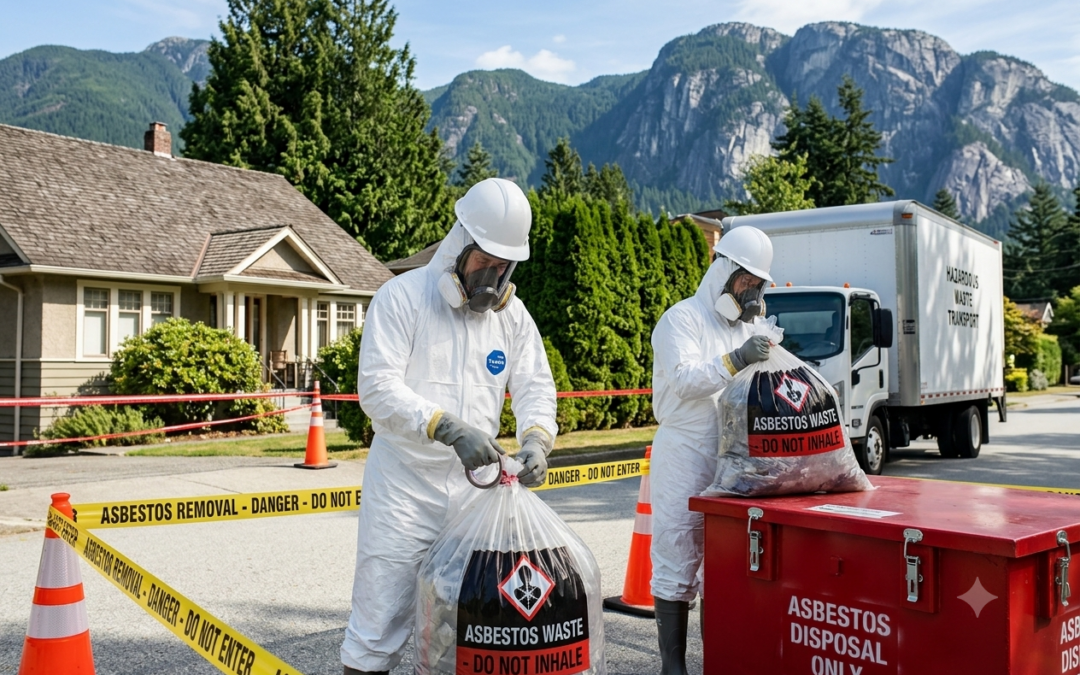
No. Asbestos waste should never be placed in a regular dumpster or mixed with general construction debris. Because asbestos fibres can become airborne when disturbed, British Columbia has strict regulations governing the handling, packaging, transportation, and disposal of asbestos-containing materials. Whether you’re renovating a home or managing a commercial project, following the correct disposal process helps protect workers, the public, and the environment.
Why Proper Asbestos Disposal Matters in Squamish
Squamish has experienced significant residential and commercial development over the past several years. While many older properties are being renovated or redeveloped, these projects often uncover building materials that contain asbestos.
Improper disposal creates serious health and environmental risks. That’s why property owners searching for Asbestos Waste Disposal Squamish should understand the legal requirements before beginning demolition or renovation work.
Managing asbestos correctly not only protects people but also helps prevent costly project delays and regulatory issues.
Why Can’t You Throw Asbestos Waste Into a Regular Dumpster?
A standard construction dumpster is designed for ordinary renovation debris such as wood, drywall, concrete, and metal.
Asbestos-containing materials require completely different handling procedures because damaged materials can release microscopic fibres into the air.
Placing asbestos waste into a regular dumpster can result in:
- Airborne fibre contamination
- Cross-contamination of other construction waste
- Health risks for workers
- Environmental pollution
- Regulatory penalties
- Additional cleanup costs
Even small amounts of asbestos should never be mixed with general waste.
What Materials May Contain Asbestos?
Many buildings constructed before the 1990s may contain asbestos in various products.
Common examples include:
- Pipe insulation
- Vinyl floor tiles
- Ceiling texture
- Roofing materials
- Cement sheets
- Heating duct insulation
- Drywall joint compound
- Boiler insulation
- Exterior siding
Because asbestos cannot always be identified visually, professional testing is recommended before renovation begins.
Proper Packaging Is the First Step
Safe disposal begins long before waste leaves the property.
Asbestos-containing materials should be carefully removed without breaking or crushing them whenever possible.
Proper packaging generally includes:
- Heavy-duty sealed bags
- Leak-proof wrapping
- Clearly labelled containers
- Secure storage away from public areas
Correct packaging reduces the possibility of fibre release during handling and transportation.
Should You Rent a Dedicated Asbestos Waste Bin?
For larger renovation or demolition projects, using a dedicated waste container often provides the safest solution.
Businesses and contractors planning major projects frequently choose Asbestos Waste Bin Rental Squamish services because specialized containers help separate regulated materials from ordinary construction debris.
Dedicated bins also improve site organization while supporting safe collection procedures.
How Should Asbestos Waste Be Transported?
Once asbestos waste has been properly packaged, it must be transported carefully to minimize the risk of fibre release. Safe transportation involves using sealed containers, secure loading methods, and handling procedures that comply with provincial requirements.
Businesses and contractors requiring Asbestos Waste Transportation Squamish should work with experienced professionals who understand how regulated materials must be handled throughout the transportation process. Proper transportation protects workers, nearby communities, and the surrounding environment while reducing the risk of contamination.
Is Asbestos Considered Hazardous Waste?
Although asbestos is regulated under specific provincial requirements, it also demands many of the same careful handling practices used for hazardous materials.
Projects involving asbestos often require a comprehensive waste management plan that includes proper identification, secure storage, controlled handling, and approved disposal methods.
Many property owners also require Hazardous Waste Disposal Squamish services during renovation or demolition projects because older buildings may contain additional regulated materials alongside asbestos.
Planning helps reduce project delays while improving workplace safety.
What Mistakes Should Property Owners Avoid?
One of the most common mistakes is assuming every renovation material can be disposed of in the same way.
Other costly mistakes include:
- Breaking asbestos materials into smaller pieces
- Mixing asbestos with regular construction debris
- Leaving waste uncovered on-site
- Using damaged or unsealed bags
- Delaying disposal after removal
- Failing to identify asbestos before demolition begins
Avoiding these mistakes protects workers and helps prevent expensive cleanup or regulatory issues.
Why Responsible Waste Management Matters
Proper asbestos disposal is about more than meeting legal requirements.
Responsible waste management helps:
- Protect public health
- Reduce environmental contamination
- Improve construction site safety
- Support sustainable building practices
- Minimize long-term liability
Choosing the correct disposal process demonstrates a commitment to both workplace safety and environmental responsibility.
Can Recycling Reduce Construction Waste?
While asbestos itself cannot be recycled, many other materials generated during renovation projects can often be diverted from landfill.
Wood, clean metal, concrete, cardboard, and certain approved construction materials may be suitable for recycling when separated correctly.
Businesses committed to sustainable building practices often incorporate Commercial Waste Recycling Squamish into their overall project planning to reduce landfill waste and improve environmental performance.
Separating recyclable materials from regulated waste also helps improve disposal efficiency.
Placing asbestos waste in a regular dumpster is never a safe or responsible option. Following proper removal, packaging, transportation, and disposal procedures helps protect workers, property owners, and the Squamish community while ensuring compliance with applicable regulations.
If you’re planning a renovation, demolition, or commercial construction project, contact Canadian Empire Recycling & Disposal for professional Asbestos Waste services. Our experienced team provides dependable waste management solutions that prioritize safety, environmental responsibility, and regulatory compliance, helping you complete your project with confidence.