Quick Answer
Richmond businesses can clear out old inventory without disrupting daily operations by planning the cleanout in stages, separating recyclable materials from general waste, scheduling removal outside peak business hours, and using an appropriate commercial waste service. A structured approach allows employees to continue their normal responsibilities while outdated stock, damaged items, packaging, and unwanted equipment are gradually removed.
For larger cleanouts, Commercial Junk Removal Richmond services can help businesses manage bulky or accumulated materials efficiently. Combining junk removal with recycling can also reduce the amount of usable material sent for disposal and keep the workplace more organized.
Why Can Old Inventory Become a Problem for Richmond Businesses?
Businesses often accumulate inventory that is no longer useful. Products may become outdated, damaged, discontinued, overstocked, or unsuitable for current operations.
Keeping this material on-site can create several challenges. Storage areas become crowded, employees may have less room to work, and finding current inventory can become more difficult. In warehouses and retail environments, unnecessary items can also occupy valuable floor or shelving space.
The longer old inventory remains untouched, the more difficult a large-scale cleanout can become. Instead of waiting until storage becomes a serious problem, businesses can incorporate periodic inventory cleanouts into their regular operations.
How Can Businesses Plan a Cleanout Without Interrupting Work?
The best approach is to treat the cleanout as a planned business activity rather than an emergency task.
Start by identifying which inventory needs to be removed and divide the work into manageable sections. A business may choose to clean one storage area, department, or warehouse section at a time.
Scheduling removal during quieter periods can further reduce disruption. Depending on the business, this could mean arranging collection before opening, after closing, or during a planned low-traffic period.
Businesses should also avoid moving everything at once if employees still need access to the area. A phased approach allows normal operations to continue while the cleanout progresses.
What Types of Commercial Junk Can Be Removed?
Old inventory cleanouts can generate many different types of unwanted materials.
Common examples include:
- Outdated or damaged products
- Broken shelving and storage fixtures
- Old office furniture
- Unused displays and retail fixtures
- Packaging materials
- Cardboard and paper
- Damaged equipment
- Empty storage containers
- Unwanted promotional materials
- Miscellaneous business debris
Some materials may be recyclable rather than simply treated as junk. Sorting them before collection can make the overall waste process more efficient.
How Can Businesses Separate Recyclable Materials?
Not everything removed during a commercial cleanout needs to go into the same waste stream.
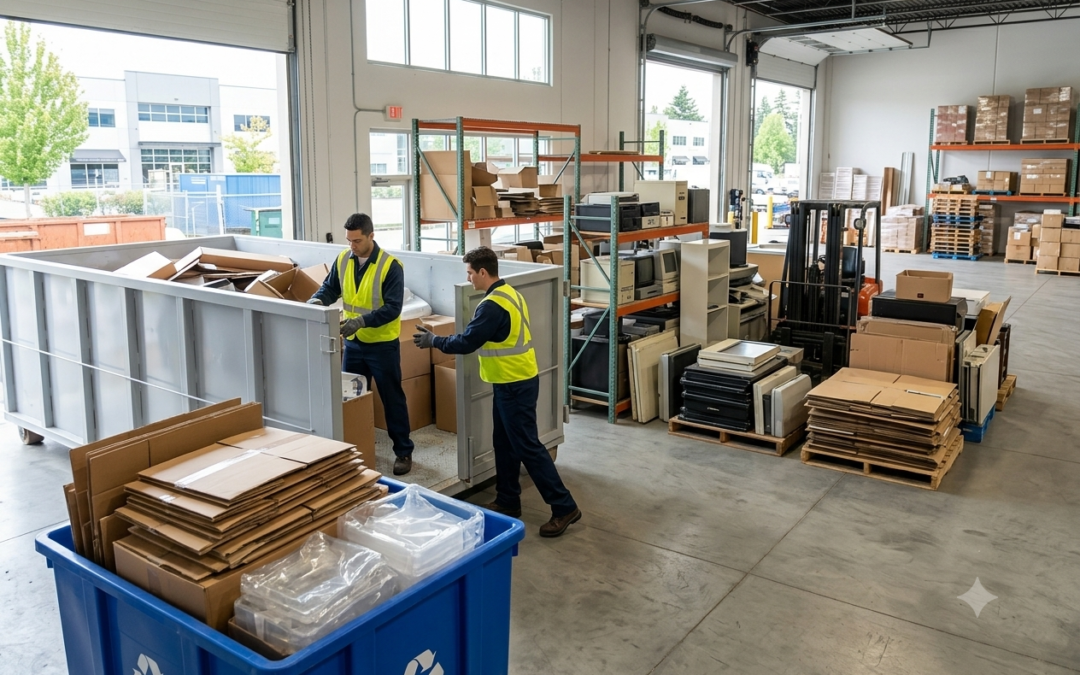
Businesses should separate materials such as cardboard, paper, clean metals, certain plastics, and suitable electronics where recycling options are available. Items that cannot be reused or recycled can then be handled as general commercial waste.
Using Commercial Waste Recycling Richmond services can help businesses manage recyclable materials separately during larger cleanouts.
This approach can reduce the volume of material requiring final disposal while helping businesses make better use of materials that still have recycling value.
Why Is Commercial Junk Removal Useful for Large Cleanouts?
A small amount of unwanted inventory may be manageable with internal staff. A large commercial cleanout is different.
Bulky furniture, shelving, equipment, large quantities of packaging, and accumulated inventory can take considerable time and effort to move. Employees may also need to leave their normal duties to handle the removal.
Professional Junk Removal Services Richmond businesses can use for commercial cleanouts can provide a more organized solution for removing unwanted materials. This allows employees to focus on their regular responsibilities while the cleanout is handled as a separate process.
Professional removal can be particularly useful when a business is preparing for a renovation, relocation, warehouse reorganization, lease turnover, or major inventory update.
How Can Businesses Keep Their Operations Running?
A cleanout should be planned around the business rather than forcing the business to work around the cleanout.
Consider these practical steps:
1. Identify Low-Traffic Periods
Determine when customer activity and employee movement are lowest. Schedule major removal activities during those periods whenever possible.
2. Clean One Area at a Time
Avoid blocking the entire workplace. Divide the property into sections and complete each area before moving to the next.
3. Create Separate Sorting Zones
Keep recyclable materials, general junk, reusable items, and materials requiring different handling separated from the beginning.
4. Schedule Collection in Advance
Knowing when unwanted materials will be removed helps prevent piles of junk from accumulating around the workplace.
5. Communicate With Employees
Let staff know which areas are being cleaned and when. Clear communication helps employees avoid unnecessary disruption and keeps the process organized.
When Should Richmond Businesses Schedule Junk Removal?
The best time depends on the volume of material and the business’s operating schedule.
For a small office cleanout, removal may be completed relatively quickly. Larger warehouses, retail spaces, and commercial facilities may require multiple collection stages.
Businesses should consider scheduling removal when:
- Storage areas are becoming overcrowded
- Old inventory is taking up usable space
- A renovation is approaching
- The business is relocating
- A lease is ending
- Equipment is being replaced
- A warehouse is being reorganized
- Seasonal inventory is being cleared
Planning removal before these situations become urgent gives businesses more flexibility.
How Can Businesses Reduce the Amount of Junk They Generate?
The easiest junk to manage is material that does not accumulate unnecessarily in the first place.
Businesses can review inventory regularly and identify slow-moving or obsolete items before they become a large storage problem. Reusable items can be redirected to another department or location where appropriate.
Packaging should also be separated for recycling instead of being mixed with general waste. When equipment or furniture is replaced, businesses can determine whether the old items can be reused, recycled, or otherwise recovered before arranging removal.
A consistent inventory management process can make future cleanouts smaller and easier to handle.
What Should Businesses Consider Before a Large Cleanout?
Before starting, businesses should estimate the approximate volume and type of materials being removed. This helps determine the equipment, containers, labour, and collection schedule that may be required.
It is also important to identify materials that should not be mixed with ordinary commercial junk. Certain chemicals, batteries, contaminated materials, or other regulated items may require specialized handling.
Businesses should keep these materials separate and arrange the appropriate waste management process rather than placing everything into one collection stream.
How Can a Planned Cleanout Save Time?
A well-organized cleanout reduces unnecessary handling. Instead of employees repeatedly moving the same materials, items can be sorted once and directed into the appropriate stream.
Planning also reduces interruptions caused by overflowing storage areas or unexpected removal requirements.
For Richmond businesses, combining inventory review, recycling, junk removal, and scheduled collection can create a more predictable process. The result is a cleaner workplace without requiring employees to stop normal operations for an extended period.
Clearing old inventory does not have to interfere with daily business operations. By planning the cleanout in stages, separating recyclable materials, choosing appropriate removal times, and arranging professional collection when needed, Richmond businesses can reclaim valuable workspace while keeping their teams focused on everyday operations.
Contact Canadian Empire Recycling & Disposal to help Richmond businesses manage commercial junk, recyclable materials, and larger facility cleanouts with practical waste management solutions designed around their project needs.
Frequently Asked Questions
Can commercial junk be recycled instead of disposed of?
Yes. Depending on the material and its condition, items such as cardboard, paper, metals, certain plastics, and some equipment may have recycling options. Proper sorting helps identify recyclable materials.
When should a business schedule commercial junk removal?
Businesses should consider scheduling removal when storage areas become overcrowded, during office relocations, before renovations, after equipment upgrades, or when large amounts of outdated inventory need to be cleared.
How can junk removal reduce workplace disruption?
Scheduling collection during low-traffic periods, cleaning one area at a time, and using professional removal services can reduce the amount of time employees spend dealing with unwanted materials.
What should businesses do with hazardous materials found during a cleanout?
Potentially hazardous materials should be kept separate from ordinary commercial junk and handled according to applicable requirements. Businesses should arrange an appropriate waste management solution rather than placing unknown or hazardous materials into a general waste stream.