Paint waste is a common by-product of commercial renovations, maintenance projects, manufacturing, and property management. Unfortunately, many businesses still dispose of leftover paint, paint containers, and related materials incorrectly, increasing disposal costs and creating unnecessary environmental risks.
Separating paint waste before recycling is one of the simplest ways to improve waste management while supporting sustainability goals. For businesses seeking reliable Paint Recycling Richmond services, proper waste segregation helps maximize recycling opportunities, reduce contamination, and ensure materials are managed responsibly.
Why Paint Waste Should Never Be Mixed with General Waste
Paint products contain different ingredients depending on their type and intended use. While some dried paint materials may be managed differently, liquid paint, solvents, and contaminated containers often require specialized handling.
When paint waste is mixed with cardboard, plastics, scrap metal, or general garbage, it can contaminate recyclable materials and increase processing costs. Proper separation improves recycling efficiency and helps divert more waste from landfills.
Types of Paint Waste Businesses Should Separate
Commercial facilities often generate various forms of paint-related waste, including:
- Water-based paint
- Oil-based paint
- Spray paint cans
- Paint containers
- Paint rollers and trays
- Brushes containing paint residue
- Paint thinners
- Solvents
- Protective plastic sheeting
Sorting these materials before collection makes recycling safer and more efficient.
Benefits of Separating Paint Waste
Improves Recycling Efficiency
Clean, properly sorted paint waste is easier to process. Separating recyclable materials from contaminated waste helps recycling facilities recover more valuable resources.
Businesses participating in Commercial Waste Recycling Richmond programs often achieve better recycling rates simply by improving waste segregation practices.
Reduces Disposal Costs
Mixed waste frequently requires additional sorting and specialized processing. By separating paint waste before collection, businesses can reduce contamination and avoid unnecessary disposal expenses.
Supports Workplace Safety
Paint products may contain chemicals that require careful storage before disposal.
Keeping paint waste in designated collection areas helps reduce:
- Accidental spills
- Fire risks
- Chemical exposure
- Workplace accidents
Organized storage also makes waste collection more efficient.
When Paint Waste May Require Specialized Handling
Not every paint product belongs in a standard recycling stream.
Businesses should be especially careful with:
- Oil-based paints
- Industrial coatings
- Paint thinners
- Solvents
- Chemical cleaners
- Contaminated paint containers
These materials may require Hazardous Waste Disposal Richmond to ensure they are managed safely and in accordance with environmental regulations.
Knowing the difference between recyclable paint materials and hazardous waste helps businesses avoid costly disposal mistakes.
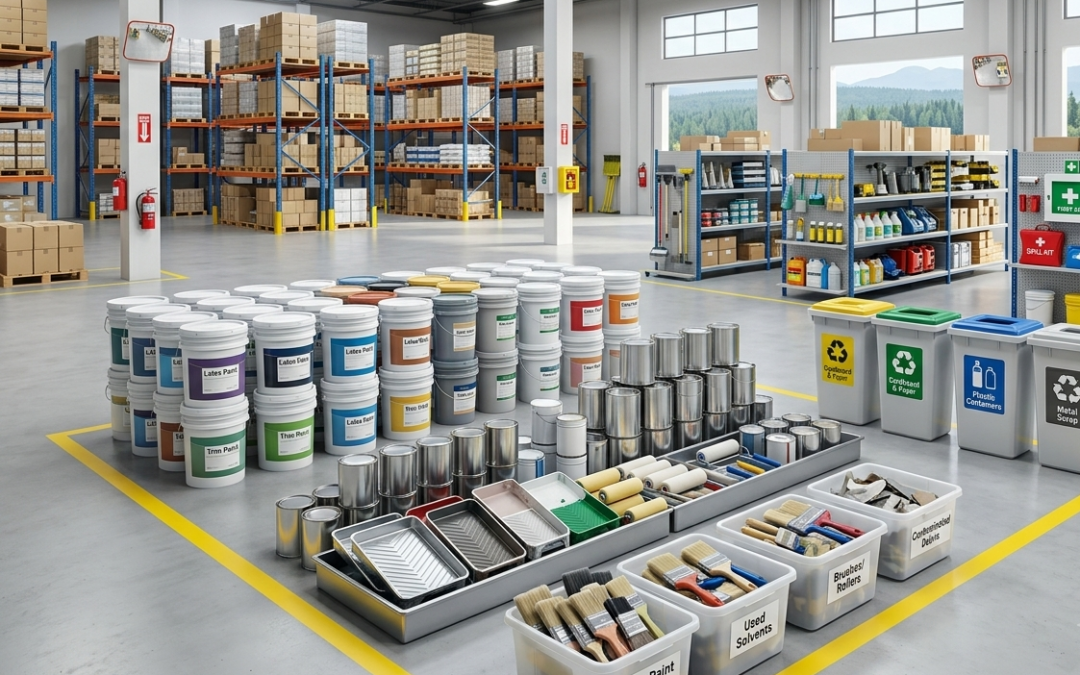
Create a Dedicated Paint Collection Area
A designated collection area makes recycling easier while reducing contamination.
Best practices include:
- Clearly labelled paint waste containers
- Separate storage for liquid and dried paint
- Secure lids on partially used containers
- Protection from rain and direct sunlight
- Routine inspections for leaks or damaged containers
Proper storage helps maintain safety until materials are collected.
Train Employees on Paint Waste Separation
Even the best recycling program depends on employee participation.
Training should explain:
- Which paint products can be recycled
- Which materials require special handling
- Where paint waste should be stored
- How to prevent contamination
- Who to contact when disposal questions arise
Simple workplace training can significantly improve recycling performance.
Review Your Waste Management Process
Businesses should regularly evaluate how paint waste is generated and handled.
Questions to consider include:
- Are recyclable materials being separated correctly?
- Are hazardous products stored safely?
- Are collection containers clearly identified?
- Are employees following disposal procedures?
Regular reviews help identify opportunities to improve recycling and reduce unnecessary waste.
Environmental Benefits of Proper Paint Recycling
Separating paint waste doesn’t only benefit your business—it also helps protect the wider community.
Effective paint recycling can:
- Reduce landfill waste
- Recover reusable materials
- Lower environmental pollution
- Improve resource conservation
- Support Richmond’s sustainability initiatives
Small improvements in waste handling can make a significant long-term environmental impact.
Partner with Canadian Empire Recycling & Disposal
Effective paint recycling begins with the right waste management partner. Contact Canadian Empire Recycling & Disposal for dependable Paint Recycling services, helping businesses manage paint waste responsibly while improving recycling performance. Whether you’re renovating a commercial property, operating a warehouse, or managing multiple facilities, their experienced team can help you implement practical recycling solutions that support your sustainability goals.
Frequently Asked Questions
Can all paint be recycled?
Not always. Acceptance depends on the type and condition of the paint. Some products require specialized handling.
When is hazardous waste disposal required for paint?
Oil-based paints, solvents, paint thinners, and certain industrial coatings may require Hazardous Waste Disposal Richmond instead of standard recycling.
How does paint recycling benefit businesses?
A well-managed commercial waste recycling program helps businesses reduce landfill waste, improve sustainability, and create more efficient waste management processes.
How can businesses improve paint recycling?
Businesses can improve results by separating paint waste at the source, training employees, storing materials correctly, and working with an experienced recycling provider.