Commercial properties in Port Coquitlam can generate many different types of waste during renovations, property cleanouts, maintenance work, and demolition. Cardboard, scrap metal, wood, packaging, fixtures, and general construction debris may all form part of a typical commercial waste stream.
Asbestos-containing materials are different. They require additional consideration because disturbing or improperly handling asbestos can create serious exposure concerns. Unlike ordinary commercial waste, asbestos-related materials should be identified, separated, contained, transported, and disposed of through an appropriate waste-management process.
For businesses and contractors working in Port Coquitlam, understanding this difference before a project begins can help prevent asbestos waste from becoming mixed with ordinary debris.
Why Is Asbestos Waste Different From Regular Commercial Waste?
The biggest difference is the potential for asbestos fibres to become airborne when asbestos-containing materials are damaged or disturbed.
Regular commercial waste may often be sorted into recyclable, reusable, or general disposal categories. Asbestos-containing waste requires a more controlled approach.
Depending on the material and project, asbestos waste management can involve:
- Identification of suspected asbestos-containing materials
- Appropriate assessment
- Controlled removal
- Proper containment and packaging
- Separation from other waste
- Suitable transportation
- Disposal through an appropriate facility
This means businesses cannot simply treat asbestos-containing materials as another type of demolition debris.
Where Can Asbestos-Containing Materials Be Found?
Asbestos was historically incorporated into a wide variety of building products. Older commercial properties may therefore contain asbestos in materials that are not immediately obvious.
Potential examples include:
- Certain insulation products
- Flooring materials
- Ceiling products
- Pipe insulation
- Roofing materials
- Cement-based products
- Textured coatings
- Certain adhesives
- Some older building compounds
Not every older material contains asbestos, and appearance alone cannot reliably confirm its presence.
If a material is suspected to contain asbestos, businesses should obtain appropriate professional assessment before disturbing it.
Why Older Commercial Properties Require More Planning
A commercial property may have undergone several renovations over its lifetime. Different building materials could have been installed at different periods, and some older products may remain hidden behind newer finishes.
This can make asbestos identification more challenging during:
- Office renovations
- Retail renovations
- Building upgrades
- Commercial cleanouts
- Interior demolition
- Mechanical upgrades
- Flooring replacement
- Structural work
A project that initially appears straightforward can therefore reveal specialized waste once walls, ceilings, floors, or other building components are opened.
What Should Businesses Do If They Suspect Asbestos?
If workers encounter a material that may contain asbestos, they should avoid unnecessarily disturbing it.
Cutting, drilling, breaking, sanding, or removing the material simply to determine what it is can create unnecessary exposure concerns.
Instead, the material should be appropriately assessed, and the project team should determine what controls and procedures are required before work continues.
This early response can also prevent potentially contaminated debris from being mixed with the rest of the renovation waste.
Why Asbestos Waste Should Be Kept Separate
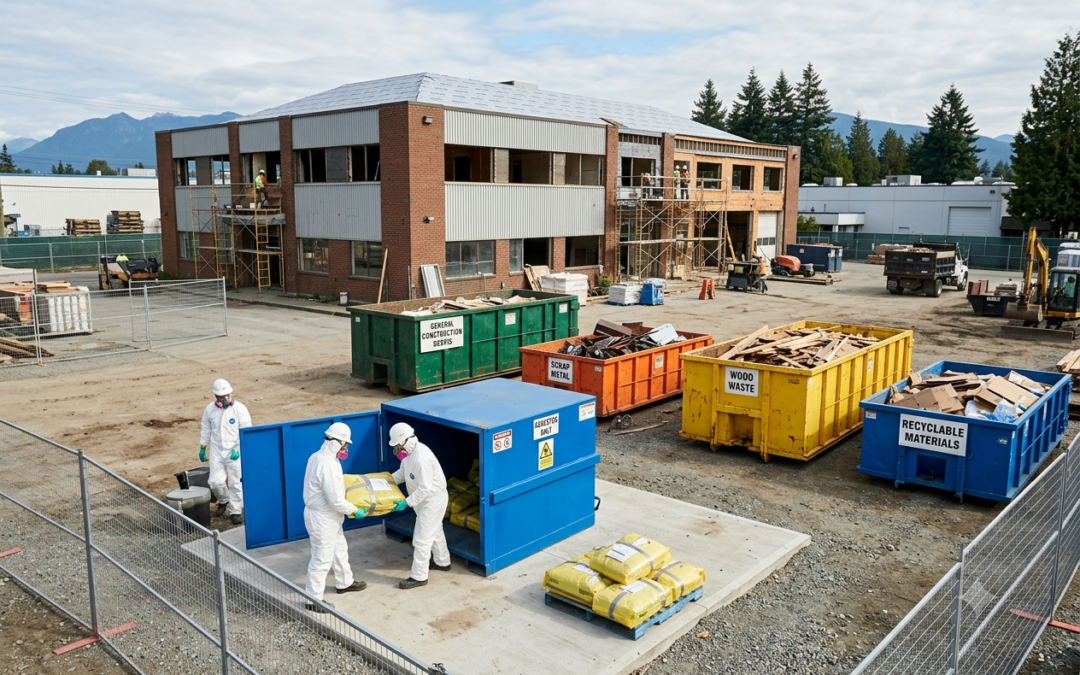
Commercial projects often generate multiple waste streams simultaneously.
For example, a demolition project may produce:
- Scrap metal
- Wood
- Cardboard
- Concrete
- Drywall
- Packaging
- Fixtures
- General debris
These materials can have different recycling or disposal options.
Asbestos-containing materials should remain separate from these streams. Once asbestos waste becomes mixed with ordinary construction debris, sorting and handling can become significantly more complicated.
Source separation therefore plays an important role in keeping a commercial project organized.
How Is Asbestos Waste Different During a Commercial Cleanout?
Commercial cleanouts can reveal materials that have been stored for years.
A business may be clearing out an older warehouse, office, retail unit, workshop, or industrial property and discover building materials that were previously hidden or forgotten.
Unlike ordinary unwanted inventory, suspected asbestos-containing materials should not simply be loaded into the same container as furniture, cardboard, fixtures, or general debris.
A pre-cleanout inspection can help identify areas where specialized materials may be present and allow the business to plan the appropriate waste-management process before removal begins.
Why Proper Disposal Matters
Once asbestos-containing waste has been appropriately removed and prepared, it needs to follow the correct disposal route.
Businesses searching for Asbestos Waste Disposal Port Coquitlam should consider more than simply finding a company that can remove material from the property.
They should understand how the waste will be contained, collected, transported, and directed to the appropriate disposal facility.
Providing accurate information about the waste can help the waste-management provider determine the appropriate service requirements.
What About General Commercial Waste?
Asbestos waste may require specialized handling, but a commercial project will usually contain many other types of waste.
Businesses can improve their overall waste-management process by separating materials into appropriate categories.
For example:
Recyclable Materials
Cardboard, scrap metal, and other suitable materials may have recycling opportunities.
General Commercial Waste
Non-recyclable materials that do not require specialized handling can be managed through the appropriate general waste stream.
Construction and Demolition Waste
Wood, concrete, drywall, fixtures, and other renovation debris may require separate management depending on the project.
Specialized Waste
Asbestos-containing materials and other potentially hazardous materials require additional consideration.
This separation helps prevent specialized waste from contaminating otherwise recyclable or manageable materials.
How Can Port Coquitlam Businesses Prepare?
Businesses can take several steps before starting a renovation or commercial cleanout.
Review the Building
Consider the age and renovation history of the property before disturbing older construction materials.
Identify Areas Being Renovated
Determine which walls, ceilings, flooring, insulation, roofing, or mechanical systems will be affected.
Arrange Appropriate Assessment
If suspect materials are present, determine whether professional asbestos assessment is required.
Plan Separate Waste Streams
Decide how asbestos-related waste will be separated from recyclable and general commercial waste.
Coordinate Disposal Before Work Starts
Having a waste-management plan in place before demolition begins can help prevent unnecessary project delays.
Common Mistakes to Avoid
Assuming Every Old Material Contains Asbestos
The age of a building does not automatically establish that a particular material contains asbestos.
Assuming Everything Is Safe Because It Looks Normal
Asbestos-containing materials can resemble ordinary construction products.
Mixing Asbestos With General Waste
Specialized asbestos waste should not be treated as ordinary commercial debris.
Starting Demolition Without Waste Planning
Unexpected asbestos discoveries can complicate a project when there is no disposal plan in place.
Choosing a Service Based Only on Container Size
Asbestos waste requires consideration of material type and handling requirements, not just the volume of waste.
How Asbestos Can Affect Project Scheduling
Discovering asbestos after demolition has started can affect more than waste collection.
The project may need additional assessment, specialized removal arrangements, waste containment, transportation coordination, and disposal planning.
The extent of the impact depends on the type and quantity of material and the scope of work involved.
Planning allows contractors to build these requirements into the renovation schedule rather than dealing with them unexpectedly.
Why Commercial Waste Planning Should Start Early
Good waste management begins before the first piece of material is removed.
A pre-project review can help businesses understand what waste they are likely to generate and determine which materials need separate handling.
This is particularly important for older commercial properties where the renovation may disturb hidden building materials.
For businesses arranging Commercial Waste Disposal Port Coquitlam, separating asbestos-related waste from ordinary commercial materials can help make the entire waste-management process more efficient.
A Simple Approach for Commercial Projects
Port Coquitlam businesses can think of asbestos waste planning as a five-step process:
Identify → Assess → Separate → Contain → Dispose
First, identify materials that may require special attention. Then arrange appropriate assessment where necessary. Keep specialized waste separate from ordinary debris, ensure it is appropriately contained, and arrange the correct disposal route.
This approach can help reduce confusion and keep the project organized.
Asbestos waste is different from ordinary commercial waste because it requires additional precautions throughout the waste-management process. Businesses should not assume that asbestos-containing materials can be placed into a standard construction waste stream.
For Port Coquitlam renovation, demolition, and commercial cleanout projects, early identification and proper separation can help businesses manage specialized materials more effectively while keeping recyclable and general waste streams organized.
If your business needs help managing asbestos-containing materials or other specialized commercial waste, Canadian Empire Recycling & Disposal can help you plan an appropriate waste-management solution. Contact Canadian Empire Recycling & Disposal to discuss your project and Asbestos Waste Disposal requirements.