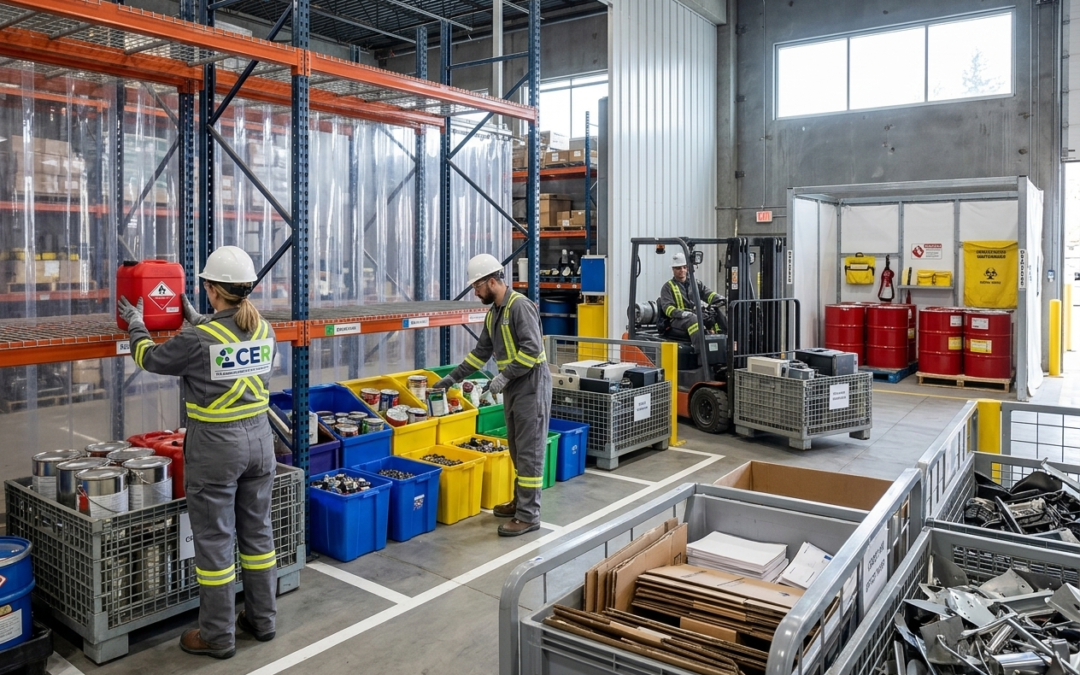
Commercial properties can generate far more than ordinary garbage. A warehouse may accumulate chemicals and batteries, a workshop may store oils and solvents, and a renovation project may leave behind paints, adhesives, contaminated materials, and other products that require additional attention.
The challenge is recognizing which materials should be separated before they enter a regular commercial waste stream.
For businesses looking into Commercial Hazardous Waste Disposal Port Coquitlam, understanding the difference between general waste, recyclable materials, and potentially hazardous products is an important first step. Proper sorting can reduce contamination, improve workplace safety, and help businesses avoid sending materials to an inappropriate disposal route.
What Makes Commercial Waste Require Special Handling?
Not every unwanted commercial product is hazardous. However, certain materials can create risks because of their chemical or physical characteristics.
Materials may require special handling when they are:
- Flammable
- Corrosive
- Toxic
- Reactive
- Pressurized
- Environmentally harmful
- Contaminated with hazardous substances
The condition of the material also matters. A sealed, clearly labelled product may be easier to identify and manage than a leaking or deteriorating container with an unknown substance.
Businesses should therefore avoid judging waste solely by appearance or quantity.
Chemicals and Solvents
Chemicals are among the most obvious materials that should not automatically enter regular garbage.
Businesses may accumulate chemical products through cleaning, manufacturing, maintenance, construction, automotive work, or other operations.
Examples can include:
- Solvents
- Degreasers
- Industrial cleaners
- Adhesives
- Chemical treatments
- Paint-related products
- Certain pesticides
- Chemical mixtures
Before removal, businesses should identify the products whenever possible and keep incompatible materials separated.
An old chemical container should not be opened simply to determine whether it is still usable or empty.
Paints, Coatings, and Thinners
Commercial renovation and maintenance projects frequently leave behind partially used paints, coatings, stains, and thinners.
Some products can contain substances that require specific management after they become waste.
Businesses should keep containers closed and in suitable condition while determining the appropriate handling route.
If a container is damaged or leaking, employees should avoid unnecessary contact and follow appropriate workplace safety procedures.
Used Oils and Automotive Fluids
Automotive businesses, fleet operators, equipment-maintenance facilities, and other companies can generate used oils and fluids.
Potential examples include:
- Used motor oil
- Coolant
- Hydraulic fluids
- Lubricants
- Certain fuels
- Automotive chemicals
These materials should never be poured onto the ground or into storm drains.
They should also be kept separate from recyclable materials such as cardboard, scrap metal, and clean plastics to prevent contamination.
Batteries
Commercial facilities can accumulate batteries from equipment, vehicles, tools, electronics, emergency systems, and other applications.
Batteries should not simply be mixed with general garbage.
Some battery types can create fire or chemical risks if damaged, crushed, improperly stored, or mixed with incompatible materials.
Businesses should identify battery types and use an appropriate recycling or handling route.
Electronics and Electrical Equipment
Old electronics are another material category that deserves attention during commercial cleanouts.
Businesses may have computers, monitors, printers, networking equipment, cables, control systems, chargers, and other electronic components.
Instead of automatically treating these items as garbage, businesses should determine whether they can be reused, refurbished, recycled, or require specialized handling.
There is also a data-security issue. Computers, storage devices, and certain electronic equipment can contain confidential company information.
Businesses should securely remove sensitive data before equipment leaves the premises.
Pressurized Containers
Some commercial facilities use or store pressurized containers as part of their operations.
Depending on the product, these can include certain gas cylinders, aerosol containers, and other pressurized products.
Even when a container appears empty, it should not automatically be treated as ordinary garbage.
Businesses should avoid puncturing, crushing, or modifying unfamiliar pressurized containers.
Contaminated Materials
Sometimes the material itself is not inherently hazardous, but it becomes problematic because it has been contaminated.
For example, absorbent pads, rags, cardboard, soil, containers, or other materials can become contaminated after coming into contact with chemicals or fluids.
Once contamination occurs, the material may no longer be suitable for the same recycling or disposal process.
This is one reason source separation is so important.
Why Recyclables Should Be Kept Separate
Hazardous waste management should not mean sending everything to disposal.
Businesses also have an opportunity to recover materials through recycling.
Commercial Waste can include the proper separation of materials such as:
- Cardboard
- Scrap metal
- Clean plastics
- Wood
- Certain electronics
- Other recoverable commercial materials
Keeping these materials separate from chemicals and contaminated waste can reduce cross-contamination and improve recycling opportunities.
For example, a warehouse cleanout may produce large quantities of cardboard and metal alongside old chemicals. Combining everything into one waste stream can make it harder to recover the recyclable materials.
What Happens When Waste Streams Are Mixed?
Mixing different waste categories can create several problems.
A leaking chemical container can contaminate cardboard, wood, or plastic. Contaminated materials may then require different handling.
Mixed waste can also make it more difficult for workers to identify hazards.
In addition, businesses may lose opportunities to recycle materials that could otherwise have been recovered.
A simple sorting system can help prevent these problems.
How to Set Up a Safer Commercial Waste Sorting System
Businesses do not necessarily need a complicated system to improve waste separation.
Start by creating clearly defined categories for:
Recyclables: Clean cardboard, metal, plastics, and other recoverable materials.
General waste: Materials that are not suitable for recycling or special handling.
Hazardous or potentially hazardous materials: Chemicals, solvents, batteries, oils, and other materials requiring additional assessment.
Unknown materials: Unidentified containers or substances that should not be mixed with other waste.
Employees should understand what belongs in each category and what to do when they are uncertain about a material.
What to Do With Unknown Containers
Unknown containers are one of the most important situations to address carefully.
A business may discover an unlabeled drum, bottle, can, or container during a warehouse cleanout or property transition.
Employees should not:
- Open the container unnecessarily
- Mix its contents with other chemicals
- Pour the contents into another container
- Place it into regular garbage
- Assume it is harmless because it is old
Instead, keep the material secured and gather any available information that could help identify it, such as old labels, inventory records, or Safety Data Sheets.
If the container is leaking, damaged, or creating an immediate hazard, additional safety precautions may be necessary.
Why Businesses Should Plan Before a Cleanout
Commercial cleanouts often happen under time pressure.
A business may be relocating, closing, renovating, changing tenants, or preparing a property for another use.
When everything is left until the last minute, employees may be tempted to place all unwanted materials into one container.
Planning ahead provides time to identify hazardous materials and separate recyclable items.
Before a major cleanout, businesses should walk through the property and identify:
- Chemicals
- Batteries
- Oils and fluids
- Electronics
- Scrap metal
- Cardboard
- General waste
- Unknown containers
- Contaminated materials
This simple inventory can make the removal process much more organized.
How Professional Waste Support Can Help
Businesses do not always have the expertise to identify every difficult waste material.
Professional waste support can be particularly useful when a company discovers large quantities of chemicals, old industrial products, contaminated materials, or unknown containers.
It can also help during:
- Warehouse cleanouts
- Commercial renovations
- Business closures
- Facility relocations
- Equipment upgrades
- Property redevelopment
- Long-term storage cleanouts
The goal is to determine the appropriate handling route before materials become mixed with other waste.
Building a Better Waste Strategy in Port Coquitlam
Responsible commercial waste management starts with knowing what is leaving the property.
Chemicals, batteries, solvents, oils, pressurized containers, electronics, and contaminated materials may require different handling from ordinary garbage. At the same time, clean cardboard, scrap metal, and other recoverable materials should be kept separate wherever practical.
By combining Commercial Waste Recycling Port Coquitlam with proper hazardous-material identification, businesses can reduce contamination and create a more organized waste-management process.
If your business has chemicals, old equipment, recyclable materials, or other difficult-to-manage waste in Port Coquitlam, Canadian Empire Recycling & Disposal can help you determine an appropriate approach for your commercial waste needs. Contact Canadian Empire Recycling & Disposal to discuss your recycling, removal, and hazardous-material management requirements.