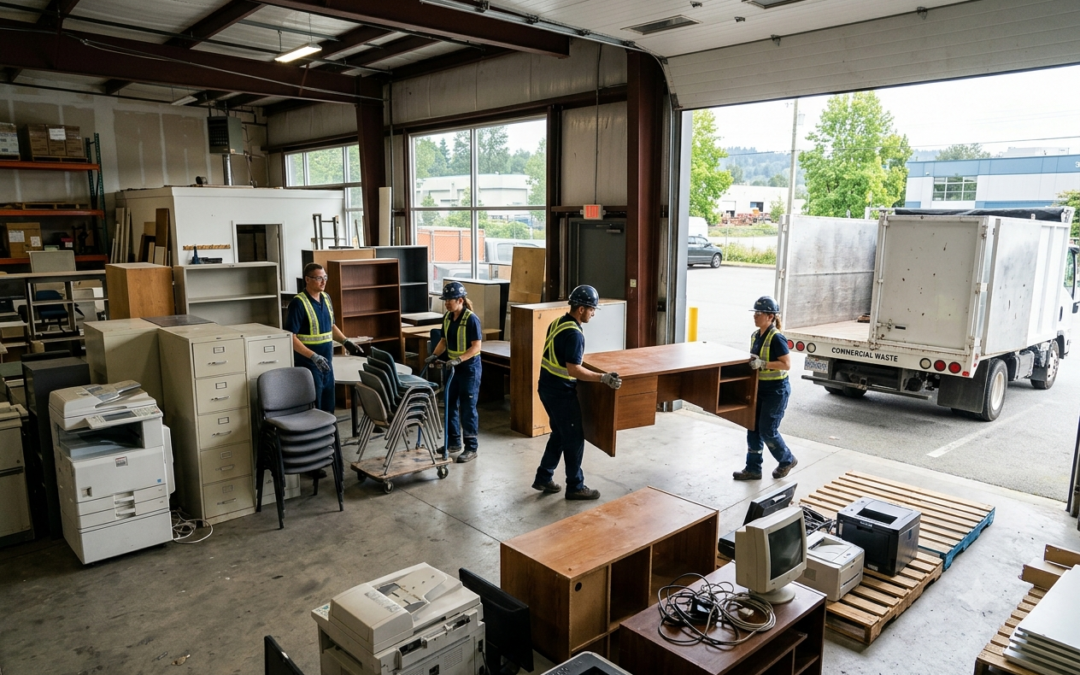
Businesses often accumulate furniture, equipment, storage items, and other materials that are no longer useful. Over time, these items can take up valuable floor space, make storage areas difficult to organize, and complicate office relocations, renovations, or property cleanouts.
For Port Coquitlam businesses, clearing out unused items does not always mean simply putting everything in a garbage container. Office furniture, appliances, shelving, equipment, packaging materials, and other commercial items may need to be sorted before they can be removed.
A planned cleanout can help businesses identify what can be reused, recycled, donated, or removed as waste while making the entire process more efficient.
Why Do Businesses Accumulate Unused Equipment and Furniture?
Unused commercial items can build up for many reasons. Businesses may upgrade their equipment, renovate their offices, change their layouts, relocate to a new property, or simply stop using certain items.
Common examples include:
- Desks and office chairs
- Filing cabinets
- Shelving units
- Tables and workstations
- Computers and other electronics
- Appliances
- Display fixtures
- Storage containers
- Broken or outdated equipment
- Excess packaging and miscellaneous materials
Keeping these items indefinitely can reduce usable workspace and create clutter in areas that could otherwise serve a more productive purpose.
Start With a Business-Wide Inventory
Before arranging removal, businesses should identify everything that needs to leave the property.
An inventory can be divided into categories such as:
Reusable items: Furniture or equipment that could be used elsewhere within the business.
Donatable items: Items that remain functional but are no longer needed.
Recyclable materials: Items containing materials such as metal, cardboard, or other recyclable components.
General waste: Broken or unusable items that cannot reasonably be reused or recycled.
Specialized waste: Electronics, batteries, chemicals, or other materials that may require separate handling.
This simple sorting process can prevent useful materials from being thrown away unnecessarily.
Separate Furniture From Other Commercial Waste
Not all commercial junk should automatically go into the same waste stream.
For example, an old metal shelving unit may have recycling value, while a damaged office chair may require a different disposal route. Electronics and certain equipment may also need specialized recycling or handling.
Businesses arranging Commercial Waste Disposal Port Coquitlam can make the process easier by separating materials before collection.
Pre-sorting also helps waste providers understand what type of load they will be handling and can reduce confusion during pickup.
What Should Businesses Do With Old Office Furniture?
Office furniture is one of the most common sources of commercial junk during a cleanout.
Businesses may have:
- Desks
- Chairs
- Conference tables
- Reception counters
- Filing cabinets
- Cubicle components
- Bookcases
- Storage units
If an item is still in usable condition, businesses can consider whether it can be relocated to another department, stored for future use, donated, or passed to another organization.
Items that are damaged beyond practical reuse may need to be removed as commercial junk.
Handling Outdated Business Equipment
Equipment can become obsolete quickly, particularly when businesses upgrade technology or replace older machinery.
Before removing equipment, businesses should determine whether it contains sensitive information, batteries, electrical components, or other materials that require special handling.
Computers, printers, monitors, and other electronic equipment should not automatically be treated as ordinary garbage. Businesses should determine the appropriate recycling or disposal route for these materials.
Where equipment contains confidential business information, data should also be securely removed before the equipment leaves the property.
Plan for Larger Cleanouts
A small office cleanout may involve only a few unwanted desks and chairs. Larger commercial properties can generate substantially more material.
A large cleanout may happen when a business:
- Relocates to another property
- Closes a branch
- Renovates an office
- Changes its commercial layout
- Replaces outdated equipment
- Vacates a leased property
- Prepares a building for a new tenant
In these situations, creating a removal schedule can prevent the cleanout from interfering with normal business operations.
Items can be grouped by room or category and moved toward a designated collection area before the scheduled pickup.
Why Professional Junk Removal Can Make Commercial Cleanouts Easier
Large quantities of furniture and equipment can be difficult for employees to move on their own. Bulky items may require multiple people, suitable vehicles, and careful handling to avoid damaging walls, floors, doors, or other property.
Professional Junk Removal Services can provide a practical option when businesses need to clear substantial amounts of unwanted furniture and equipment.
Instead of employees spending working hours transporting bulky items, a planned removal service can help streamline the cleanout and keep staff focused on regular business responsibilities.
Think About Recycling Before Disposal
A commercial cleanout does not necessarily mean everything has to be discarded.
Businesses can often identify materials that may have recycling or reuse potential. Metal furniture, cardboard, certain equipment components, and other materials may be suitable for recycling depending on their condition and composition.
Sorting materials before removal gives businesses a better opportunity to divert recyclable items from disposal.
This approach can also make the final waste load more organized and help businesses manage their overall waste more responsibly.
Avoid Mixing Problem Materials With General Junk
Businesses should pay particular attention to items that could require specialized handling.
If a cleanout uncovers chemicals, paints, solvents, batteries, oils, or other potentially hazardous materials, these should not simply be mixed with furniture and general commercial junk.
Instead, identify and separate questionable materials before the main junk removal takes place.
This is especially important when an office, warehouse, workshop, or industrial space has been occupied for many years and the business is unsure what materials may have accumulated in storage areas.
Prepare the Property Before Collection
A little preparation can make commercial junk removal much more efficient.
Before the scheduled pickup, businesses should:
- Identify everything that needs to be removed.
- Separate reusable, recyclable, and disposable items.
- Remove confidential information from equipment.
- Keep hazardous or questionable materials separate.
- Consolidate smaller items where practical.
- Make sure removal areas are accessible.
- Communicate any large or unusually heavy items in advance.
Clear access is particularly important for large commercial cleanouts because bulky furniture and equipment may need to pass through narrow doors, elevators, loading areas, or shared building spaces.
How Can Businesses Reduce Future Commercial Junk?
The easiest junk to manage is often the junk that does not accumulate in the first place.
Businesses can reduce future clutter by reviewing storage areas regularly, maintaining accurate equipment inventories, and avoiding unnecessary purchases of duplicate furniture or supplies.
When equipment is replaced, businesses can also establish a plan for the outgoing items before new equipment arrives. This prevents old and new items from occupying the same space for extended periods.
Regular cleanouts can also help identify unused furniture and equipment before the volume becomes difficult to manage.
Make Commercial Cleanouts More Organized
Unused furniture and equipment can quickly become a significant problem when a business is preparing for a move, renovation, closure, or property handover. Without a plan, valuable time can be spent figuring out what should be reused, recycled, or removed.
A structured cleanout allows businesses to sort materials, protect usable items, separate specialized waste, and arrange removal based on the property’s needs.
For businesses looking for Junk Removal Services Port Coquitlam, planning the cleanout can make the removal process more efficient and reduce disruption to daily operations.
If your business needs help clearing unwanted furniture, equipment, or other commercial materials, Canadian Empire Recycling & Disposal can help you plan an appropriate waste removal solution. Contact Canadian Empire Recycling & Disposal to discuss your commercial cleanout and disposal needs.