Quick Answer
Unexpected hazardous materials can turn a routine commercial cleanout into a more complicated project. Mission businesses may discover old chemicals, batteries, contaminated materials, solvents, oils, or other potentially hazardous items while clearing offices, warehouses, workshops, and storage areas.
The safest approach is to stop mixing these materials with ordinary commercial waste, identify what has been discovered, keep potentially hazardous items appropriately separated, and arrange the right waste management service. Planning for Hazardous Waste Disposal Mission before the cleanout begins can also help businesses avoid unnecessary delays and handling problems.
Why Do Hazardous Materials Appear During Commercial Cleanouts?
Businesses can accumulate materials over many years without realizing how much has been stored on-site. A facility cleanout often brings these items to light because storage rooms, maintenance areas, cabinets, and forgotten corners are being emptied.
Unexpected materials may include:
- Old chemical containers
- Used batteries
- Paints and coatings
- Oils and solvents
- Contaminated absorbents
- Certain fluorescent lamps
- Chemical cleaning products
- Damaged equipment containing potentially hazardous components
- Containers with unknown contents
The presence of these materials does not necessarily mean the entire cleanout has to stop. However, they should be separated from ordinary junk until their appropriate handling requirements are determined.
What Should a Mission Business Do When It Finds Hazardous Waste?
The first step is to avoid placing the material into a regular commercial waste container.
Instead, workers should stop handling the questionable item unnecessarily and keep it separated from general waste and recyclable materials. If the contents are unknown, businesses should not open, mix, or attempt to transfer them simply to make the cleanout easier.
The material should then be assessed and managed through the appropriate waste stream.
This simple approach can prevent accidental mixing and reduce the possibility of creating a larger waste management problem during the cleanout.
How Should Businesses Separate Hazardous and General Waste?
A cleanout is easier to manage when different waste streams are identified from the beginning.
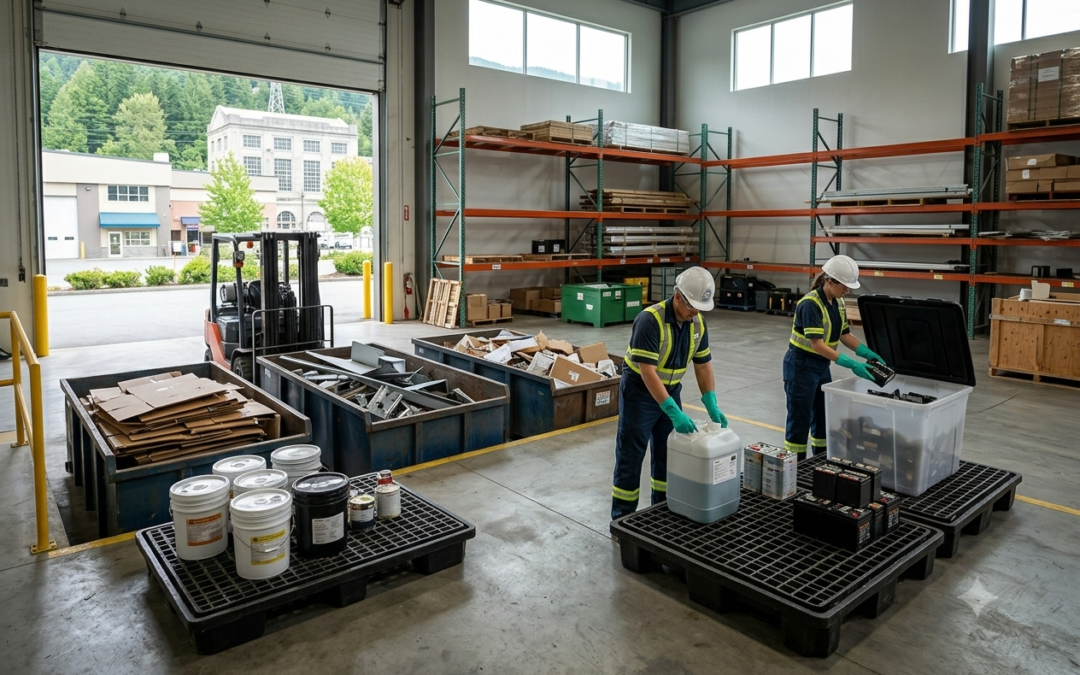
Businesses can establish separate areas for:
General commercial waste:
Non-regulated materials that are no longer needed and cannot reasonably be reused or recycled.
Recyclable materials:
Suitable cardboard, paper, metals, plastics, electronics, and other materials that may have recycling options.
Potentially hazardous materials:
Chemicals, batteries, contaminated materials, and other items requiring specialized handling.
Keeping these categories separate helps prevent hazardous materials from entering ordinary waste or recycling streams.
Why Is Hazardous Waste Planning Important Before a Cleanout?
Hazardous materials are often discovered when a cleanout is already underway. Without a plan, workers may not know where to place them or who should arrange their removal.
Planning gives businesses time to review storage areas and identify materials that may require special handling. It also allows waste collection to be coordinated with the overall cleanout schedule.
For larger facilities, this can be particularly important because a cleanout may involve multiple rooms, departments, contractors, and waste streams.
What Happens If Hazardous Materials Are Mixed With Commercial Waste?
Mixing hazardous materials with ordinary commercial waste can create additional handling and disposal complications.
For example, a leaking container placed alongside general junk could contaminate other materials. Batteries, chemicals, oils, or contaminated items may also require different handling from ordinary office or warehouse waste.
That is why businesses should establish clear sorting procedures before workers begin clearing the property.
Proper separation makes it easier to determine which materials can be recycled, which can be handled as general waste, and which require specialized management.
How Does Commercial Waste Disposal Fit Into the Cleanout?
A large business cleanout rarely produces only hazardous materials. Most projects also generate ordinary commercial waste such as damaged furniture, packaging, unwanted fixtures, broken equipment, and miscellaneous debris.
This is where Commercial Waste Disposal Mission planning becomes useful. Businesses can arrange a suitable solution for their general commercial waste while keeping potentially hazardous materials in a separate stream.
Managing these waste categories independently can create a more efficient workflow and reduce the risk of unsuitable materials being placed together.
What Should Businesses Do With Unknown Containers?
Unknown containers deserve extra caution. A business may find an old drum, bottle, can, or other container without a clear label or with a label that is no longer readable.
Employees should not assume that an unknown substance is harmless.
Instead, the container should remain separated and handled according to the appropriate safety and waste management procedures. Businesses should provide as much available information as possible about where the container was found and what it may have been used for.
This information can help determine the appropriate next step without unnecessary handling.
How Can Businesses Prepare Employees for a Cleanout?
Employees do not need to become hazardous waste specialists to contribute to an organized cleanout. They should, however, understand basic sorting instructions.
Before work begins, businesses can explain:
- Which materials belong in general waste
- Which items should be recycled
- Which materials should be set aside
- What to do if an unknown container is discovered
- Who should be contacted when potentially hazardous material is found
- Which areas should remain restricted during the cleanout
Clear instructions reduce the chance of employees making assumptions about unfamiliar materials.
How Can Businesses Prevent Cleanout Delays?
Unexpected hazardous materials do not have to derail a project when businesses build some flexibility into their waste plan.
A practical process can include:
- Inspect storage areas before the cleanout.
- Create separate waste categories.
- Identify potentially hazardous materials early.
- Arrange appropriate waste collection before work begins.
- Keep hazardous and general waste separated.
- Coordinate pickup with the project schedule.
- Keep relevant records and documentation organized.
These steps give the cleanout team a clear process to follow when unexpected materials appear.
When Should Businesses Arrange Hazardous Waste Removal?
Businesses should arrange hazardous waste management as early as possible when potentially hazardous materials are known or expected to be present.
This is especially important during:
- Warehouse cleanouts
- Office relocations
- Commercial renovations
- Facility closures
- Equipment upgrades
- Property turnovers
- Maintenance-area cleanouts
- Industrial or workshop reorganizations
Scheduling waste services in advance gives businesses more control over timing and can prevent unwanted materials from accumulating on-site after the cleanout is complete.
Can Businesses Recycle Other Materials During the Same Cleanout?
Yes. A commercial cleanout can include significant quantities of recyclable material alongside hazardous waste.
Cardboard, clean metals, certain plastics, paper, and eligible equipment may have recycling options depending on their condition and composition.
The important point is to keep recyclable materials separate from potentially hazardous or contaminated items. Recycling should complement hazardous waste management rather than replace it.
A well-planned cleanout can therefore address multiple waste streams at once while keeping each material in the appropriate channel.
Why Is Professional Waste Management Helpful?
Commercial cleanouts can become complicated when businesses have multiple types of waste to manage at the same time. Professional waste management support can help businesses organize collection and determine the appropriate approach for different waste streams.
This is particularly useful when unexpected hazardous materials are discovered after the cleanout has already started.
Rather than treating every item as ordinary junk, businesses can use a planned process that prioritizes identification, separation, recycling where appropriate, and proper disposal.
Unexpected hazardous materials can make a Mission business cleanout more challenging, but early planning and proper separation can help keep the project organized. Businesses should avoid mixing potentially hazardous materials with general waste, identify questionable items before removal, and arrange appropriate collection based on the materials involved.
For businesses that need reliable support with commercial waste and hazardous material management, contact Canadian Empire Recycling & Disposal to help coordinate practical waste solutions for cleanouts, renovations, facility changes, and ongoing commercial needs.