
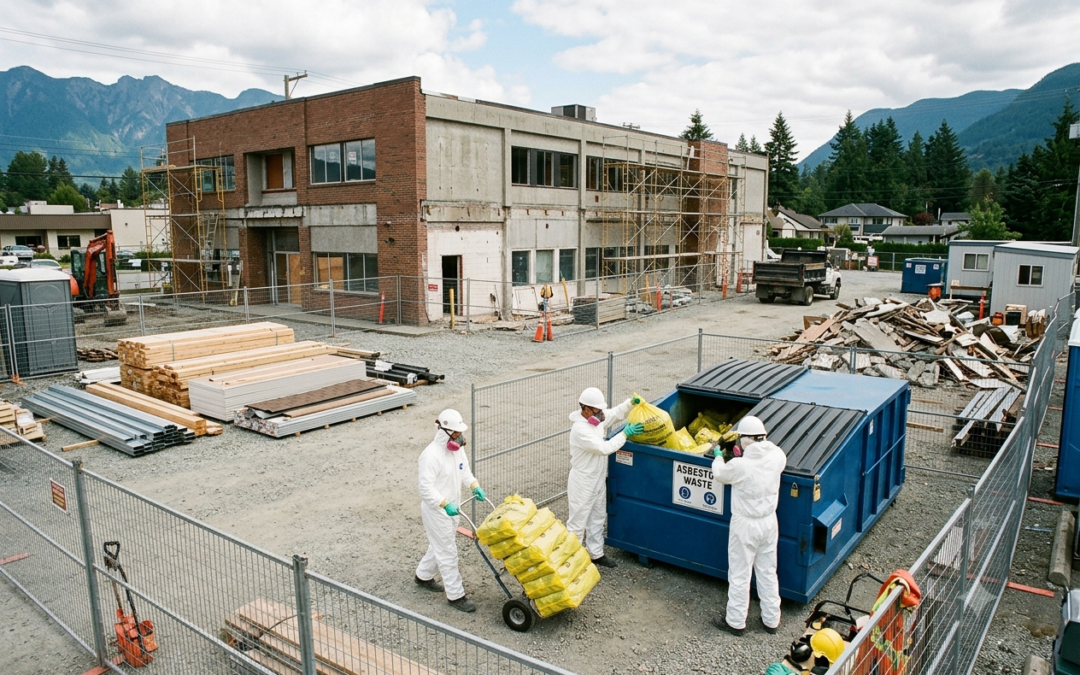
Commercial renovations are often planned around timelines, budgets, contractors, and material deliveries. But when asbestos-containing material is discovered after work has already started, the project can quickly require a different approach to waste management.
This situation can be particularly serious when renovating older commercial buildings in Mission. Materials hidden behind walls, beneath flooring, around mechanical systems, or within other building components may not be obvious during an initial walkthrough.
If asbestos is suspected or confirmed, businesses should avoid treating the material like ordinary renovation debris. The next steps should focus on appropriate assessment, controlled handling, separation of waste streams, and compliant disposal.
Understanding what happens after asbestos is discovered can help Mission property owners and contractors respond more effectively without unnecessarily disrupting the entire renovation.
Why Asbestos Can Be Discovered During Renovation
Many older buildings contain materials that were manufactured or installed decades ago. Asbestos was historically used in numerous construction products because of its durability and resistance to heat and fire.
During a renovation, contractors may uncover previously hidden materials when they:
- Remove flooring
- Open walls or ceilings
- Replace insulation
- Modify mechanical systems
- Remove older roofing materials
- Demolish partitions
- Upgrade plumbing or electrical systems
- Remove older fixtures or building components
The fact that a material is old does not automatically mean it contains asbestos. However, when a suspect material is encountered, it should not simply be disturbed because it looks like ordinary construction material.
What Should Happen When Suspected Asbestos Is Found?
The first priority should be to prevent unnecessary disturbance of the suspect material.
Workers should not continue cutting, breaking, drilling, or removing the material simply to determine what it is. The appropriate next step is to obtain professional assessment and guidance based on the circumstances of the project.
Once the material has been properly identified, the project team can determine whether specialized asbestos removal procedures are required.
This early response can prevent the material from becoming mixed with a much larger quantity of general demolition debris.
Why Identification Before Removal Matters
Not every older building material contains asbestos, and visual inspection alone may not be sufficient to confirm its presence.
Professional assessment can help determine whether a particular material requires asbestos-related controls.
This distinction matters because unnecessary handling can increase risks, while failing to identify asbestos-containing materials can create much more significant problems once renovation work continues.
For commercial property owners in Mission, identifying potentially asbestos-containing materials before major demolition or renovation is therefore an important part of project planning.
What Happens to the Waste After Asbestos Is Confirmed?
Once asbestos-containing material has been identified and removed through the appropriate process, the resulting waste should not be treated as ordinary construction debris.
The waste needs to be appropriately contained, prepared, transported, and directed toward an approved disposal route according to the applicable requirements.
This is where Asbestos Waste Disposal Mission becomes an important part of the renovation plan.
The waste-management provider needs accurate information about the material being collected, including its type, approximate quantity, condition, and preparation requirements.
Providing this information in advance helps ensure the correct disposal arrangements are made.
Why Asbestos Waste Should Stay Separate
A commercial renovation can generate a large amount of ordinary waste, including:
- Drywall
- Wood
- Metal
- Flooring
- Packaging
- Cardboard
- Fixtures
- Concrete
- General demolition debris
These materials may have different recycling or disposal routes.
Asbestos-containing waste should remain separate from these general materials. Mixing the waste streams can create additional handling complications and make sorting more difficult.
Separating asbestos-related waste from recyclable and general materials also allows businesses to manage the remainder of the renovation waste more efficiently.
How Asbestos Can Affect a Renovation Timeline
Discovering asbestos does not necessarily mean an entire renovation must stop indefinitely.
The impact on the schedule depends on where the material is located, how much is present, what work needs to be performed, and how quickly the required assessment and removal arrangements can be completed.
However, unexpected asbestos can create delays if the project was not prepared for it.
Potential scheduling issues can include:
- Additional assessment requirements
- Specialized removal arrangements
- Waste-container coordination
- Additional site controls
- Changes to demolition sequencing
- Specialized transportation and disposal
- Coordination between multiple contractors
Planning for the possibility of asbestos before renovation begins can therefore reduce surprises later.
What If Asbestos Is Found After Demolition Has Started?
This situation requires particular attention because the material may already have been disturbed.
If workers encounter suspect asbestos after demolition has begun, they should avoid continuing to disturb the affected material and follow the appropriate professional assessment and control process.
The surrounding debris may also need to be evaluated depending on the circumstances.
This is one reason experienced contractors and property managers should include asbestos considerations in the pre-renovation planning process rather than treating them as an issue that can be addressed only if something goes wrong.
How Should Businesses Plan the Waste Container?
The amount and type of asbestos waste can vary significantly between projects.
A small interior renovation may produce a limited quantity of asbestos-containing waste, while a major commercial demolition could generate substantially more material.
Before arranging a container or collection service, businesses should know:
- What type of material is being removed.
- Approximately how much waste is expected.
- How the material will be packaged.
- Where the waste container can safely be positioned.
- When the waste will be ready for collection.
- What disposal facility or route will be used.
The container should be suitable for the specific waste and project requirements rather than selected solely based on volume.
What About the Rest of the Commercial Renovation Waste?
Asbestos may be the most specialized waste stream on a renovation project, but it is rarely the only one.
Once asbestos-related materials have been separated, businesses can focus on managing the remaining renovation debris.
Depending on the material, this may include recycling or disposal of:
- Scrap metal
- Cardboard
- Wood
- Concrete
- Clean drywall
- Packaging
- Fixtures
- General commercial debris
A well-organized waste plan can help keep recyclable materials from becoming unnecessarily contaminated and reduce the amount of material entering general disposal.
This is an important consideration when arranging Commercial Waste Disposal Mission for a renovation or commercial property cleanout.
Why Pre-Renovation Planning Is Better Than Last-Minute Response
The best time to think about asbestos waste is before demolition starts.
A pre-renovation assessment can help identify materials that may require specialized handling and allow the project team to incorporate removal into the overall schedule.
It can also help businesses plan:
- Qualified asbestos-related work
- Waste containment
- Separate waste streams
- Collection schedules
- Disposal arrangements
- Communication between contractors
This preparation can reduce the chance that workers will discover a major waste-management issue halfway through the project.
Common Mistakes to Avoid
Continuing Work Around Suspect Material
If a material may contain asbestos, continuing to disturb it without appropriate assessment can create unnecessary risks.
Mixing Asbestos Waste With Demolition Debris
Specialized waste should not simply be added to a general construction bin.
Assuming Older Materials Are Safe
Age alone cannot confirm whether a material contains asbestos, and appearance is not a reliable substitute for appropriate assessment.
Waiting Until the End of the Project to Arrange Disposal
Asbestos waste can require specialized preparation and disposal arrangements. Leaving planning until the final stage can create avoidable delays.
Failing to Communicate With the Waste Provider
The waste-management provider should know what material is being collected so the appropriate disposal process can be arranged.
A Practical Response Plan for Mission Businesses
If asbestos is discovered during a commercial renovation, a structured response can help the project move forward:
Stop unnecessary disturbance → Assess the material → Plan appropriate removal → Separate the waste → Arrange suitable disposal → Resume renovation when appropriate
This approach keeps the asbestos issue separate from the broader renovation process.
It also allows contractors and property owners to review the rest of their waste streams and ensure recyclable and general materials are managed independently.
Finding asbestos during a commercial renovation does not have to derail an entire project, but it does require the renovation team to adjust its waste-management plan. Suspect materials should be appropriately assessed, asbestos-containing waste should be kept separate from ordinary demolition debris, and disposal arrangements should be established before the material is transported.
For Mission businesses, planning these steps can make renovation projects more predictable and reduce the risk of last-minute waste-management complications.
If your commercial renovation has generated asbestos-containing materials or other specialized waste, Canadian Empire Recycling & Disposal can help you plan the appropriate waste-management solution. Contact Canadian Empire Recycling & Disposal to discuss Asbestos Waste Disposal Mission and commercial renovation waste requirements.