Businesses in Mission generate many different types of waste every day, from cardboard and packaging to old equipment, containers, chemicals, batteries, and maintenance materials. Most commercial waste can be sorted into appropriate recycling or disposal streams, but some materials require much more careful handling.
The important question is not simply “Can this business waste be recycled?” It is also “Could this material be hazardous?”
Understanding the difference can help Mission businesses prevent contamination, protect employees, and choose an appropriate waste-management solution.
When Does Commercial Waste Become Hazardous?
Commercial waste may require special handling when it contains substances or properties that can create risks to people, property, or the environment.
Examples can include certain:
- Chemical products
- Solvents and cleaners
- Paint and coatings
- Batteries
- Oils and petroleum-based materials
- Pesticides
- Contaminated containers
- Laboratory or industrial materials
- Pressurized containers
- Products with hazardous residues
A material does not necessarily become hazardous simply because it comes from a commercial property. Its actual composition, condition, and intended handling method matter.
Businesses should therefore avoid guessing when an unfamiliar material is involved.
Why Can’t Hazardous Materials Go Into Regular Recycling?
Recycling depends on materials being separated into suitable streams. Hazardous substances can contaminate otherwise recyclable materials and create risks during collection, transportation, sorting, processing, or storage.
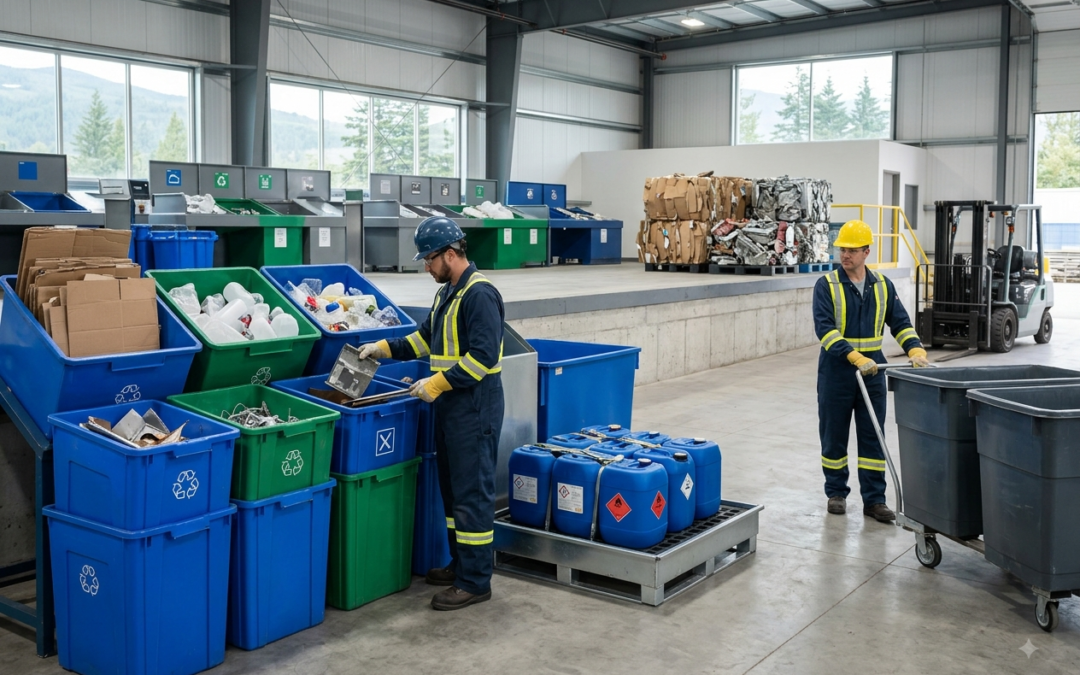
For example, placing a container with chemical residue alongside cardboard or metal could contaminate the recycling load. Batteries can also create fire risks if they are incorrectly placed in waste or recycling containers.
This is why businesses should identify unusual or potentially hazardous materials before combining them with ordinary commercial waste.
Which Business Materials Should Be Separated?
A good commercial waste plan begins with sorting.
Batteries and Electronic Equipment
Businesses often accumulate computers, monitors, printers, rechargeable batteries, power equipment, and other electronics. These materials may require specific recycling or take-back options rather than regular garbage disposal.
Paints, Chemicals, and Solvents
Old maintenance products, cleaning chemicals, paints, coatings, and solvents should be identified before a commercial cleanout. Containers that still contain product or residue may require special handling.
Oils and Automotive Fluids
Businesses involved in vehicle maintenance, equipment servicing, or industrial operations may generate used oils and other fluids. These should be kept separate from general recyclable materials.
Pressurized Containers
Some commercial operations use propane cylinders, aerosols, compressed-gas containers, or other pressurized products. These should not simply be placed into ordinary waste containers.
How Can Mission Businesses Improve Commercial Waste Recycling?
Businesses do not need to wait until a major cleanup to improve their waste-management practices.
1. Create Separate Waste Categories
Employees should know where to place ordinary recyclables, general waste, electronic materials, batteries, and potentially hazardous products.
2. Label Containers Clearly
Clearly identifying waste containers can reduce accidental mixing. Staff should also understand which materials are prohibited from each container.
3. Inspect Waste During Cleanouts
Large commercial cleanouts often uncover old products that have been sitting in storage for years. Before everything is loaded together, inspect boxes, cabinets, storage rooms, and maintenance areas for potentially hazardous materials.
4. Keep Unknown Materials Separate
If employees cannot identify a substance or container, it should not automatically be added to regular garbage or recycling. Keeping it isolated until the appropriate handling requirements are confirmed is a safer approach.
5. Plan Waste Removal in Advance
A commercial property generating multiple waste streams may need different removal arrangements. Planning before a cleanup can prevent hazardous materials from becoming mixed with ordinary debris.
What Is the Difference Between Recycling and Disposal?
Recycling and disposal are not interchangeable.
Recycling focuses on recovering materials that can be processed and used again. Disposal involves managing materials that cannot be recycled or that require a specific disposal method.
Some hazardous materials may have recycling or recovery options, while others require controlled disposal. The correct route depends on the material and applicable requirements.
For businesses arranging Hazardous Waste Disposal Mission, identifying the material before removal is an important part of responsible waste management.
What Happens During a Commercial Cleanout?
A business cleanout can produce a surprisingly wide range of materials.
An office may generate furniture, electronics, batteries, paper, cardboard, and cleaning products. A warehouse may have damaged inventory, packaging, containers, equipment, and maintenance materials. A workshop or industrial property can produce additional substances requiring specialized handling.
Instead of treating the entire load as one waste stream, businesses should separate materials according to their characteristics.
This approach can improve recycling opportunities while reducing the chance that hazardous materials end up mixed with ordinary waste.
Why Proper Sorting Matters for Commercial Waste Disposal
When recyclable and hazardous materials are mixed, businesses may lose recycling opportunities and create unnecessary handling complications.
Proper sorting can help businesses:
- Reduce contamination
- Improve material recovery
- Protect employees and contractors
- Identify hazardous products earlier
- Avoid improper disposal
- Keep waste streams organized
- Make commercial cleanouts more efficient
For larger projects, a planned approach to Commercial Waste Recycling Mission can make the process more straightforward.
What Should Businesses Do With Unidentified Materials?
This is one of the most important questions during a commercial cleanup.
If a business finds an old drum, container, bottle, chemical product, or unknown substance, employees should not open it, mix it with other materials, or attempt to dispose of it based solely on appearance.
Instead, identify the product if possible by checking its original label, documentation, or safety information. If the contents remain uncertain, seek appropriate professional guidance before handling or moving the material.
This is especially important for older commercial properties where products may have been stored for many years.
A Smarter Waste Strategy for Mission Businesses
The goal of commercial recycling should not be to put as much material as possible into one recycling container. Effective waste management starts with knowing what materials a business generates and separating them appropriately.
Cardboard, clean metal, electronics, furniture, packaging, chemicals, batteries, and other materials may all require different handling pathways.
By identifying potentially hazardous materials early, businesses can reduce contamination and create a more organized approach to recycling and disposal.
Commercial waste can become hazardous when it contains materials that require special handling because of their chemical, physical, or environmental characteristics. Mission businesses should avoid mixing potentially hazardous products with ordinary recyclables or general waste.
A better approach is to identify, separate, and manage each material according to its appropriate waste stream. This can make commercial cleanouts safer while helping businesses recover recyclable materials whenever possible.
For businesses that need assistance managing mixed commercial waste or potentially hazardous materials, Canadian Empire Recycling & Disposal can help you determine an appropriate waste-management approach. Contact Canadian Empire Recycling & Disposal to discuss your Hazardous Waste Disposal requirements and plan your next commercial cleanup responsibly.