
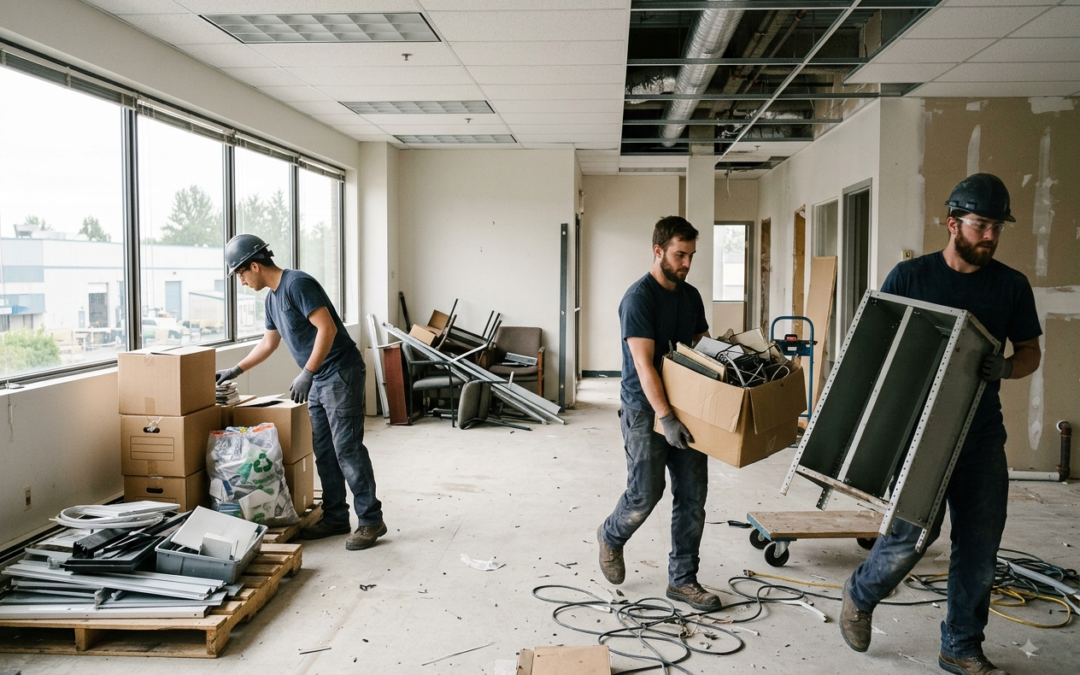
A commercial renovation can improve an office, retail space, warehouse, restaurant, or industrial property, but preparing the site requires more than moving furniture out of the way. Old fixtures, damaged equipment, unwanted inventory, packaging, scrap materials, and renovation debris can quickly create clutter and slow down the project.
For businesses planning a renovation in Delta, organizing unwanted materials before contractors begin can make the site safer, more accessible, and easier to manage. Commercial waste recycling Delta can help businesses identify what should be removed, what may be recyclable, and what requires separate handling.
Why Should Businesses Remove Junk Before Renovation?
Renovation projects work best when contractors have a clear and accessible workspace. Leaving unwanted materials inside the property can create several problems.
Old desks, shelving, cabinets, broken equipment, outdated displays, damaged furniture, and accumulated storage items can occupy valuable floor space. Construction crews may also need access to walls, electrical systems, flooring, ceilings, and other areas currently blocked by business junk.
A pre-renovation cleanout can help businesses:
- Create more usable working space
- Improve access for renovation contractors
- Reduce trip and obstruction hazards
- Make material sorting easier
- Prevent unwanted items from becoming mixed with renovation debris
- Prepare the property for demolition or construction
- Reduce the amount of unnecessary material going to disposal
A properly planned cleanout also allows business owners to identify materials that could potentially be reused or recycled instead of treating everything as garbage.
What Should Delta Businesses Clear Before Renovation?
The right cleanout list depends on the type of commercial property and renovation. However, several categories commonly deserve attention.
1. Old Office Furniture
Businesses often accumulate desks, chairs, filing cabinets, tables, shelving, reception furniture, and storage units over the years.
If these items will not be used after the renovation, removing them before work begins can create a cleaner and more accessible site. Items that remain in usable condition may also have reuse or donation potential.
2. Outdated Electronics and Equipment
Old computers, monitors, printers, copiers, telecommunications equipment, and other electronics should not automatically be placed into general waste.
Businesses should identify electronic materials separately so they can be directed toward appropriate recycling or take-back channels. Delta’s municipal information specifically identifies electronics, small appliances, power tools, batteries, and other materials as items handled through recycling and take-back programs rather than ordinary garbage collection.
3. Shelving, Cabinets, and Fixtures
Retail stores, offices, warehouses, and other commercial properties may have outdated shelving, cabinets, display fixtures, counters, and storage systems.
Removing these materials before renovation allows contractors to work without repeatedly relocating unnecessary items.
4. Flooring and Renovation-Related Materials
Carpet, rugs, laminate, tile, wood, drywall, cabinets, countertops, plumbing fixtures, doors, and other renovation materials can accumulate quickly during a commercial remodel.
Delta’s municipal guidance identifies several construction, demolition, and home-renovation materials as items that are not part of regular curbside collection.
That makes proper planning especially important when a business renovation generates a substantial volume of material.
5. Packaging and Accumulated Business Junk
Renovation preparation is also a good time to clear cardboard, unwanted packaging, miscellaneous storage materials, broken items, and obsolete inventory.
Removing these materials before construction begins can prevent them from becoming mixed with demolition debris and make the overall waste stream easier to manage.
What Should Not Be Mixed With Ordinary Junk?
One of the most important steps in a commercial cleanout is identifying materials that require special handling.
Businesses should not assume that every unwanted item can go into the same truck or waste stream. Paint products, hazardous liquids, batteries, motor oil, propane tanks, certain chemicals, and other potentially hazardous materials may require specific recycling or disposal procedures.
Delta’s recycling information specifically lists materials such as paint products, hazardous liquids, batteries, motor oil, propane tanks, and various other items separately from ordinary large-item collection.
If employees are uncertain about a material, it is better to identify it before removal rather than combining it with general commercial junk.
How Can Businesses Make a Pre-Renovation Cleanout More Efficient?
A little preparation can make Junk Removal Services Delta more efficient and potentially reduce unnecessary handling.
Create a Room-by-Room Inventory
Walk through the property and identify everything that will not remain after the renovation. Separate furniture, electronics, fixtures, recyclable materials, general junk, and potentially hazardous items.
Remove Business-Critical Items First
Before scheduling removal, protect documents, computers, equipment, inventory, and other materials that employees still need. Clearly mark anything that must remain on-site.
Separate Recyclable Materials
Metal, electronics, appliances, cardboard, and other recoverable materials should be identified separately where practical. This can help prevent useful materials from becoming mixed with general waste.
Consider the Renovation Schedule
The best time for a commercial cleanout is generally before demolition and construction create another layer of debris. Coordinating removal around the contractor’s schedule can reduce repeated handling.
Estimate the Volume
Businesses should have a reasonable idea of how much material needs to be removed. A small office cleanout and a warehouse renovation may require very different removal plans.
Professional junk removal services can help businesses determine the appropriate approach based on the type and volume of material involved.
Why Professional Commercial Junk Removal Can Help
Commercial renovations already involve contractors, schedules, permits, deliveries, and operational disruptions. Having employees spend valuable working hours moving heavy or unwanted materials can add another burden to the project.
Professional removal can help consolidate the cleanout process and keep unwanted materials from interfering with renovation work.
For businesses in Delta, the objective should not simply be to remove everything as quickly as possible. A better approach is to sort, recover, recycle, and responsibly handle materials wherever practical.
This is particularly important because Delta’s municipal collection programs have specific restrictions around construction and renovation materials, hazardous materials, electronics, liquids, and other categories.
A Better Pre-Renovation Strategy for Delta Businesses
A successful commercial renovation starts before the first wall is removed. Businesses should review their property, identify unwanted assets, separate recyclable and potentially hazardous materials, and schedule removal before construction activity becomes intense.
Whether you are preparing an office for modernization, clearing a retail location, reorganizing a warehouse, or completing a larger commercial renovation, a planned cleanout can help create a safer and more productive work environment.
For businesses looking for reliable Junk Removal, Canadian Empire Recycling & Disposal can help with commercial cleanouts and unwanted materials. Contact Canadian Empire Recycling & Disposal to discuss your renovation cleanout requirements and determine the right removal solution for your Delta business.