
An old recreational vehicle can become a surprisingly difficult item to deal with once it is no longer being used. A damaged motorhome, aging camper, or non-roadworthy RV can occupy valuable driveway, yard, or storage space while gradually becoming harder to maintain.
Before arranging RV Disposal Victoria, property owners should do more than simply schedule removal. An RV can contain household belongings, appliances, batteries, fluids, electronics, propane-related equipment, and other materials that may need to be separated before the vehicle is removed.
Knowing what to take out, what can potentially be recycled, and what requires special handling can make the removal process safer and more organized.
Why Preparing an Old RV Matters Before Removal
An RV is essentially a combination of several different material systems. It may contain metal framing, wood cabinetry, plastics, glass, electrical components, appliances, upholstery, batteries, and various fluids.
When an RV has been sitting unused for years, it can also accumulate unrelated household junk and stored belongings.
This means that an old RV should not automatically be treated as one uniform waste item.
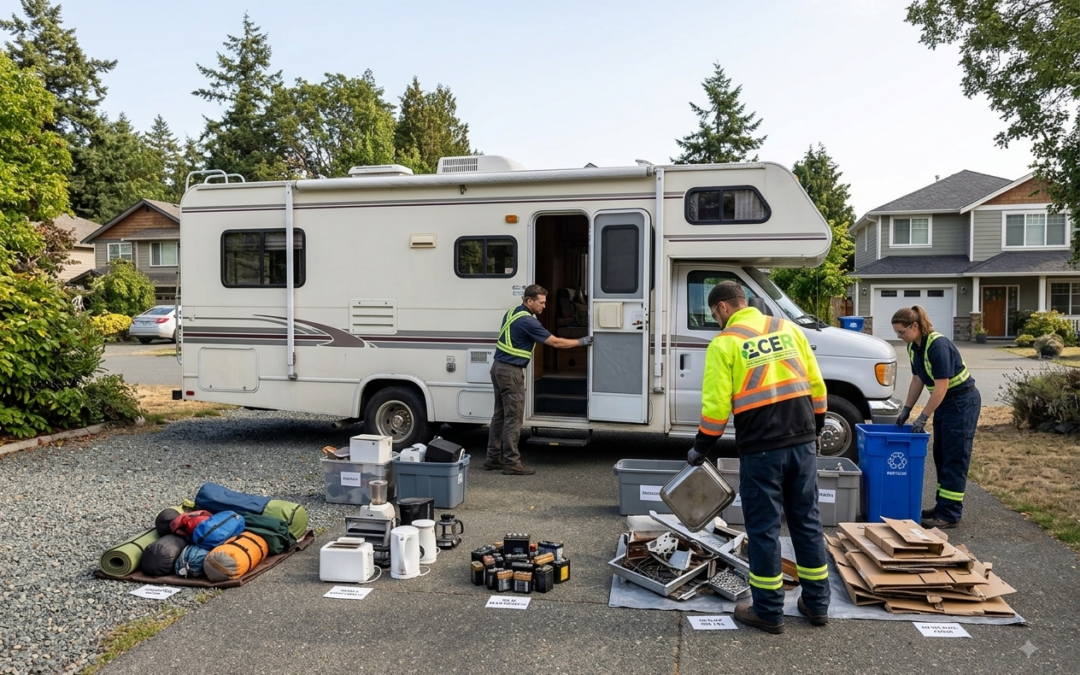
Before removal, property owners should inspect the interior and exterior and create separate categories for:
- Personal belongings
- Reusable items
- Recyclable materials
- Electronics
- Batteries
- Appliances
- Fluids and chemicals
- General waste
- Potentially hazardous materials
This initial sorting can make the entire removal process more efficient.
What Should You Remove From an Old RV First?
1. Personal Belongings
The first step is to remove everything that still belongs to you.
Check cabinets, drawers, storage compartments, sleeping areas, exterior compartments, and under-seat storage.
Old RVs can contain items that were forgotten years ago, including:
- Clothing
- Camping equipment
- Kitchenware
- Tools
- Documents
- Toys
- Outdoor equipment
- Personal supplies
Do not assume that an item has no value simply because it has been stored inside an unused RV for a long time.
2. Food and Perishable Items
If an RV has been sitting unused, inspect refrigerators, cabinets, coolers, and storage compartments for food.
Old food can create unpleasant odours, attract pests, and make the removal process more difficult.
Clean out food storage areas before the RV is moved, particularly if the vehicle has been sitting for an extended period.
3. Batteries
Older RVs can contain one or more batteries used for starting the vehicle or powering electrical systems.
Batteries should not simply be thrown into general garbage. Their type and condition should be considered when determining the appropriate handling route.
A damaged, leaking, swollen, or otherwise compromised battery requires additional caution.
If you are unsure about a battery’s condition, avoid unnecessary handling and seek appropriate guidance before removal.
4. Appliances and Electronics
An old RV may contain refrigerators, microwaves, televisions, radios, lighting equipment, converters, chargers, or other electrical components.
Some of these materials may have recycling or specialized handling requirements.
Before removing appliances or electronics, determine whether they can be reused or recycled and whether any components require separate management.
This is particularly important when an RV has been sitting unused for many years, and its electrical systems are no longer operational.
5. Propane-Related Equipment
Many RVs have systems designed for propane use.
Propane cylinders and related equipment should not be treated like ordinary household junk. Before removing or transporting them, homeowners should determine the appropriate handling requirements for the specific equipment and its condition.
Do not attempt to dismantle or modify unfamiliar gas equipment simply to make the RV easier to remove.
If a cylinder or connection appears damaged, corroded, or compromised, keep people away from it and seek appropriate professional guidance.
6. Automotive Fluids and Other Chemicals
An old RV may contain engine oil, coolant, fuel, cleaning chemicals, maintenance products, or other fluids.
These materials are especially important when planning Hazardous waste Disposal because they may require separate handling rather than being mixed with ordinary waste.
Look for containers in:
- Engine compartments
- Storage bays
- Maintenance cabinets
- Garages
- Exterior compartments
- Utility areas
Do not pour unwanted automotive fluids onto the ground or into drains.
If containers are unidentified, damaged, leaking, or in poor condition, avoid opening them simply to determine what they contain.
Can Parts of an Old RV Be Recycled?
Yes, many RV components contain materials with recycling potential, although the appropriate recycling route depends on the material and its condition.
Potentially recoverable materials can include:
- Scrap metal
- Certain plastics
- Cardboard
- Glass
- Wiring
- Metal fixtures
- Appliances
- Some electronic components
Metal can be particularly significant because RVs contain substantial amounts of steel, aluminum, and other metals.
However, recycling becomes more complicated when recyclable materials are contaminated with hazardous substances or mixed with general waste.
Sorting materials before removal can therefore improve the chances of recovering useful resources.
What About an RV That Has Been Sitting for Years?
Long-term storage can create additional concerns.
An RV that has been sitting outdoors may have:
- Rust
- Water damage
- Mold or deteriorated interior materials
- Damaged seals
- Flat or damaged tires
- Corroded components
- Degraded batteries
- Old fluids
- Structural deterioration
The longer an RV remains unused, the more difficult it may become to determine what can be reused and what needs to be removed.
Before attempting to move a severely deteriorated RV, property owners should consider its overall condition rather than assuming it can still be transported normally.
What Should Not Go Into Regular Garbage?
One of the most important parts of an RV cleanout is separating materials that should not enter a standard garbage stream.
Potential problem materials may include:
- Batteries
- Fuel
- Oils
- Solvents
- Certain paints
- Automotive fluids
- Pressurized containers
- Unknown chemicals
- Certain electronic components
- Contaminated materials
These items can create risks for workers and the environment if handled incorrectly.
The appropriate disposal method depends on the material, quantity, condition, and applicable local requirements.
How to Prepare an RV for Removal
A simple preparation process can make the removal considerably easier.
Step 1: Empty the Interior
Remove personal belongings, food, clothing, tools, and household items.
Step 2: Check Every Storage Area
Inspect cabinets, compartments, drawers, closets, and exterior storage bays.
Step 3: Separate Special Materials
Identify batteries, chemicals, fluids, electronics, and other items requiring additional consideration.
Step 4: Sort Recyclables
Separate metal, cardboard, glass, and other potentially recyclable materials where practical.
Step 5: Document Unknown Items
If you discover an unidentified container or substance, do not open it unnecessarily. Photographing the container and retaining any available label information can help with identification.
Step 6: Assess the RV’s Condition
Determine whether the RV is intact, damaged, dismantled, or severely deteriorated. This information can be useful when arranging removal.
Why DIY RV Dismantling Can Create Problems
It may be tempting to dismantle an old RV before removal to make it easier to handle.
However, dismantling can expose components that were previously contained within the vehicle.
Cutting into walls, removing appliances, disturbing electrical systems, or opening compartments containing fluids can create unexpected hazards.
If you do not know what a component contains or how it functions, it is better not to dismantle it unnecessarily.
A professional assessment can help determine what should be removed and what should remain intact for safe handling.
RV Removal After a Property Change
Old RVs frequently become an issue when a property changes ownership or when homeowners decide to reclaim unused space.
A new homeowner may inherit an unwanted camper from a previous owner. A family may decide that a motorhome that has not moved in years is no longer worth maintaining. A property owner may also need to clear an RV before landscaping, redevelopment, or selling the property.
In each situation, preparation matters.
Removing personal belongings and identifying potentially hazardous materials before the RV leaves the property can prevent unwanted surprises during the cleanout.
A More Responsible Approach to RV Disposal in Victoria
Getting rid of an old RV should not simply mean moving the entire vehicle from one location to another.
A better approach is to inspect the RV, remove personal belongings, separate recyclable materials, identify batteries and fluids, and determine whether any hazardous or restricted materials require specialized handling.
This can make the process safer while giving recyclable materials a better opportunity for recovery.
If your old camper or motorhome contains unwanted materials that need to be sorted before removal, Canadian Empire Recycling & Disposal can help you determine the appropriate approach for your waste and recycling needs. Contact Canadian Empire Recycling & Disposal to discuss your RV cleanout and removal requirements in Victoria.