
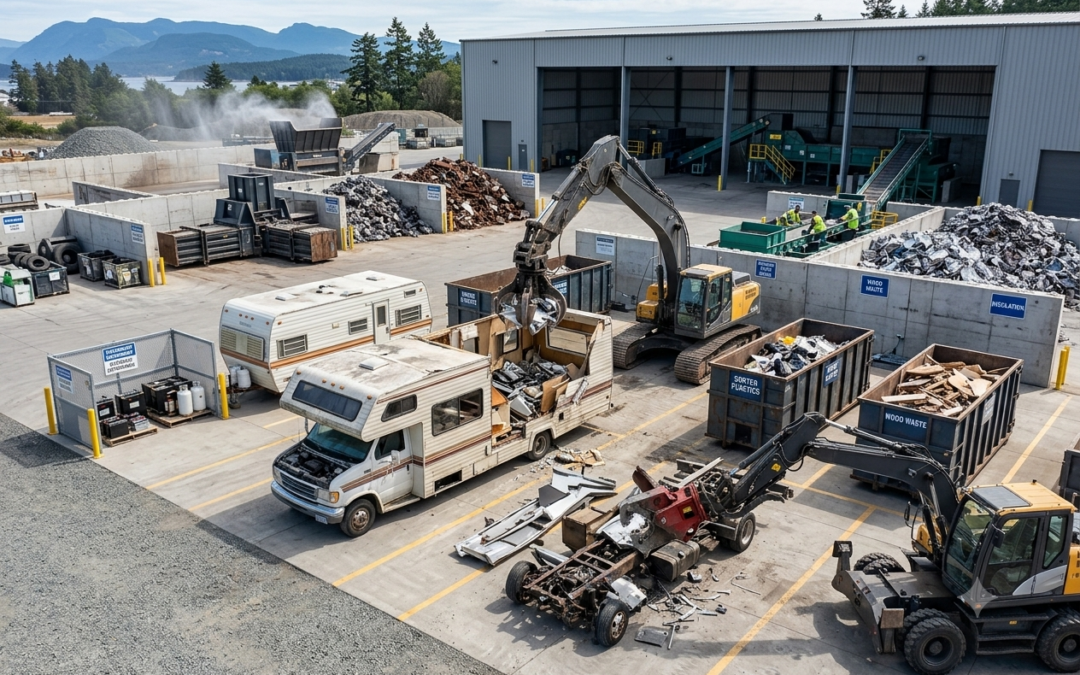
Recreational vehicles and campers provide freedom, convenience, and adventure, but there comes a time when every vehicle reaches the end of its useful life. Whether due to age, accident damage, mechanical failure, or costly repairs, owners eventually face the challenge of proper disposal.
Many people assume RVs and campers can be disposed of in the same way, but the process often differs depending on the vehicle type, construction materials, environmental considerations, and recycling opportunities. Understanding these differences can help owners make informed decisions while protecting the environment.
Understanding the Difference Between RVs and Campers
Although the terms are often used interchangeably, RVs and campers are not always the same.
Recreational Vehicles (RVs)
RVs are self-contained motorized vehicles designed for travel and temporary living.
Examples include:
- Class A motorhomes
- Class B camper vans
- Class C motorhomes
These vehicles contain engines, drivetrains, fuel systems, plumbing systems, electrical components, appliances, and living quarters.
Campers
Campers are typically towable units that rely on another transportation vehicle.
Examples include:
- Travel trailers
- Fifth-wheel trailers
- Pop-up campers
- Truck campers
Because campers generally lack engines and drivetrain components, their disposal process often differs from that of motorized RVs.
Why Proper Disposal Matters
Abandoned or improperly disposed of recreational vehicles can create serious environmental and safety concerns.
Older units may contain:
- Fuel residues
- Oils and lubricants
- Batteries
- Refrigerants
- Propane tanks
- Electrical components
- Hazardous materials
Proper disposal helps prevent environmental contamination while ensuring valuable materials can be recovered through recycling processes.
When Is It Time to Dispose of an RV or Camper?
Owners often postpone disposal decisions, hoping to repair or sell aging units. However, certain signs indicate disposal may be the most practical option.
Common reasons include:
- Extensive structural damage
- Water intrusion and mold
- Severe rust or corrosion
- Mechanical failure
- Fire damage
- Insurance write-offs
- High repair costs
- Long-term storage issues
When repair costs exceed the vehicle’s value, disposal and recycling often become the most economical solution.
The RV Disposal Process
Because RVs contain both vehicle and residential components, disposal typically involves multiple stages.
Vehicle Assessment
The condition of the RV is evaluated to determine whether components can be salvaged, recycled, or removed.
Fluid Removal
Fuel, coolant, oil, transmission fluid, and other automotive liquids must be safely extracted.
Hazardous Material Handling
Batteries, refrigerants, propane systems, and other regulated materials require proper disposal.
Material Recovery
Metal, aluminum, copper wiring, and other recyclable materials are separated and processed.
Professional RV Recycle Victoria services help ensure every stage is completed according to environmental standards.
The Camper Disposal Process
Campers often contain fewer regulated automotive materials, but they still require responsible dismantling and recycling.
The process generally includes:
- Structural assessment
- Appliance removal
- Propane system handling
- Material separation
- Metal recycling
- Waste diversion
Because campers often contain fiberglass, wood, aluminum, insulation, and mixed materials, specialized disposal methods may be required.
Professional Camper Recycling Victoria services help maximize recycling opportunities while reducing landfill waste.
Environmental Benefits of Professional Disposal
Recreational vehicles contain substantial amounts of reusable and recyclable materials.
These may include:
- Steel
- Aluminum
- Copper
- Plastics
- Electronics
- Appliances
Responsible disposal helps recover valuable resources while reducing environmental impact.
Many components that would otherwise enter landfills can be diverted into recycling streams and reused in future manufacturing processes.
Common Challenges During Disposal
Disposing of large recreational vehicles can be more complicated than many owners expect.
Potential challenges include:
Transportation Issues
Damaged vehicles may not be roadworthy and require specialized hauling equipment.
Hazardous Materials
Improper handling of fuel systems, batteries, and refrigerants can create safety risks.
Size Restrictions
Large RVs and campers often exceed standard waste facility acceptance requirements.
Material Separation
Mixed construction materials require careful sorting before recycling.
Working with experienced disposal professionals helps avoid delays and compliance issues.
Why Recycling Is Often the Best Option
Recycling offers significant environmental and economic benefits compared to abandonment or improper disposal.
Advantages include:
- Reduced landfill waste
- Resource recovery
- Environmental protection
- Responsible waste management
- Compliance with disposal regulations
Many aging recreational vehicles contain valuable recyclable materials that can be recovered and reused.
Choosing a Professional Disposal Provider
Not all disposal services have experience handling recreational vehicles.
When selecting a provider, consider:
- Recycling capabilities
- Environmental practices
- Vehicle removal services
- Experience with RVs and campers
- Material recovery processes
- Regulatory compliance
Professional disposal services help simplify the process while ensuring responsible handling of all vehicle components.
Although RVs and campers share similar purposes, their disposal requirements can differ significantly. Understanding these differences helps owners choose the most appropriate disposal solution while protecting the environment and maximizing recycling opportunities.
Whether you’re dealing with a damaged motorhome, an aging travel trailer, or a camper that has reached the end of its useful life, professional disposal services can make the process easier, safer, and more environmentally responsible.
For dependable RV and Camper Disposal services, trust Canadian Empire Recycling & Disposal. Their experienced team helps vehicle owners remove, recycle, and responsibly dispose of recreational vehicles while supporting sustainable waste management practices.
Contact Canadian Empire Recycling & Disposal today to discuss your RV or camper disposal needs and receive professional assistance with environmentally responsible recycling and removal solutions.