
Quick Answer
Squamish businesses should identify potentially hazardous materials before taking them to a waste drop-off facility and confirm that the facility accepts the specific type and quantity of waste involved. Commercial waste may include chemicals, batteries, oils, contaminated materials, and other products that require handling separately from ordinary garbage.
Before arranging a drop-off, businesses should sort their materials, keep potentially hazardous items separated, check applicable acceptance requirements, and plan transportation carefully. For larger quantities or commercial projects, Hazardous Waste Disposal Squamish may require a more suitable collection and disposal arrangement than a standard public drop-off option.
Why Should Businesses Identify Hazardous Waste Before Drop-Off?
Commercial properties can contain many materials that are not suitable for ordinary garbage disposal. Maintenance rooms, workshops, storage areas, warehouses, and offices may accumulate products that require special handling over time.
Common examples can include:
- Used batteries
- Chemical products
- Paints and coatings
- Oils and lubricants
- Solvents
- Contaminated absorbents
- Certain fluorescent lamps
- Chemical cleaning products
- Materials with unknown contents
The first step is identifying what the material actually is. Businesses should not assume that every unwanted liquid, container, battery, or chemical product can be taken to the same location.
Is Every Hazardous Waste Drop-Off Facility Suitable for Businesses?
No. One of the most important considerations is whether the facility accepts commercial or business-generated hazardous waste.
Some public hazardous waste programs are designed primarily for residential quantities and may have restrictions on commercial, industrial, or institutional waste.
Businesses should confirm acceptance requirements before transporting materials. This can include checking the type of waste accepted, quantity limits, packaging requirements, operating hours, and whether an appointment or prior arrangement is required.
This step can prevent a business from arriving with materials that the facility is unable to accept.
What Should Businesses Check Before a Drop Off?
Before arranging a Hazardous Waste Drop Off Squamish, businesses should gather basic information about the materials they need to remove.
Consider:
- What is the material?
Identify the product, substance, or waste stream whenever possible. - How much is there?
Estimate the number of containers or overall volume. - Is the material properly contained?
Check that containers are suitable and secure for transportation. - Does the facility accept commercial waste?
Confirm that business-generated material is eligible. - Are there quantity restrictions?
Larger amounts may require a different disposal arrangement. - Is booking required?
Some facilities may have specific procedures for receiving certain materials.
Checking these details in advance makes the process more predictable.
How Should Hazardous Materials Be Separated?
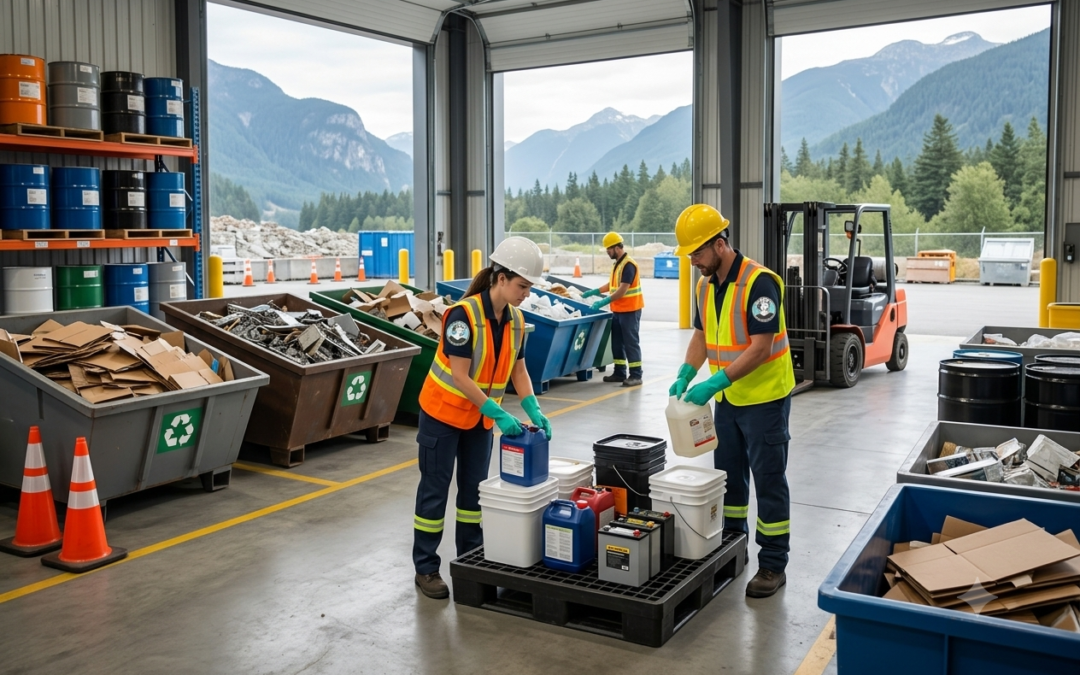
Businesses should keep potentially hazardous materials separate from regular commercial garbage and recyclable materials.
For example, chemical containers should not be mixed with cardboard, scrap metal, or general office waste. Batteries should also be kept separate from materials that could be damaged or contaminated by them.
If a business is completing a larger cleanout, establishing separate collection areas before work begins can make sorting easier.
Employees should also know what to do when they find an unfamiliar container or substance. Unknown materials should not automatically be opened, mixed, or placed into a general waste bin.
What About Commercial Waste From the Same Cleanout?
A business cleanout can produce several different waste streams at the same time.
Along with potentially hazardous materials, a business may have:
- Cardboard and paper
- Scrap metal
- Packaging
- Old office furniture
- Broken fixtures
- Unwanted equipment
- General commercial debris
These materials should be evaluated separately to determine whether they can be reused, recycled, or disposed of through an appropriate commercial waste service.
Commercial Waste Disposal Squamish planning can help businesses manage ordinary commercial waste while keeping potentially hazardous materials in their own waste stream.
Can Businesses Recycle Materials During a Hazardous Waste Cleanout?
Yes. Recycling can be an important part of a commercial cleanout, provided materials are suitable for the recycling stream.
Clean cardboard, paper, scrap metal, and certain plastics may be recyclable depending on their condition and local requirements.
However, contaminated materials or items that contain hazardous substances should not be placed into a recycling container simply because they appear recyclable. Businesses should first determine whether contamination or hazardous components affect how the material must be managed.
Separating recyclable materials from hazardous waste at the beginning can make the overall cleanout more efficient.
How Should Businesses Handle Unknown Containers?
Unknown containers require extra caution.
A container with a faded label, missing label, or unknown contents should not be treated as ordinary waste. Employees should avoid opening it or transferring its contents to another container.
Instead, keep it separated and provide as much information as possible about where it was found and how long it may have been stored.
This is particularly important during facility cleanouts, where businesses may uncover old products that have been stored for years.
Why Does Quantity Matter?
The amount of hazardous material being removed can affect the appropriate waste management approach.
A small amount of a permitted material may have different options from a large commercial quantity. Businesses should therefore estimate their waste volume before deciding how it will be transported and managed.
For larger projects, arranging professional collection may be more practical than trying to transport everything independently.
This is especially relevant for warehouses, workshops, manufacturing spaces, commercial renovations, and facility closures where substantial quantities of waste can accumulate.
How Can Businesses Prepare Hazardous Waste for Transportation?
Businesses should follow the applicable requirements for preparing hazardous materials for transportation. Materials should remain properly contained, secured, and separated to prevent spills, leaks, or accidental mixing.
Employees should not improvise packaging or combine different substances to reduce the number of containers.
If a business is unsure about transportation requirements, it should obtain appropriate guidance before moving the material.
Good preparation protects workers, reduces the chance of an incident, and makes the receiving process easier.
When Is Professional Hazardous Waste Collection a Better Option?
A professional collection service may be more appropriate when a business has a large volume of hazardous material, multiple waste types, limited transportation options, or materials that require specialized handling.
It can also be useful when hazardous waste is being generated as part of a renovation, equipment replacement, warehouse cleanout, or facility closure.
Rather than trying to determine everything at the last minute, businesses can plan the collection around the project schedule and keep the material properly separated until it is removed.
How Can Businesses Avoid Delays?
A few simple planning steps can make hazardous waste management much easier:
- Identify materials before the cleanout begins.
- Separate hazardous, recyclable, and general waste.
- Confirm facility acceptance requirements.
- Estimate quantities in advance.
- Check packaging and transportation requirements.
- Schedule collection or drop-off ahead of time.
- Keep relevant records organized.
These steps reduce the possibility of discovering at the last minute that a particular waste type cannot be accepted through the planned disposal route.
Taking hazardous waste to a drop-off facility requires more planning than disposing of ordinary commercial garbage. Squamish businesses should identify their materials, confirm acceptance requirements, keep waste streams separated, and consider professional collection when quantities or handling requirements make a standard drop-off impractical.
For businesses looking for reliable support with hazardous and commercial waste management, contact Canadian Empire Recycling & Disposal can help coordinate practical waste solutions for cleanouts, renovations, facility changes, and ongoing business needs.